
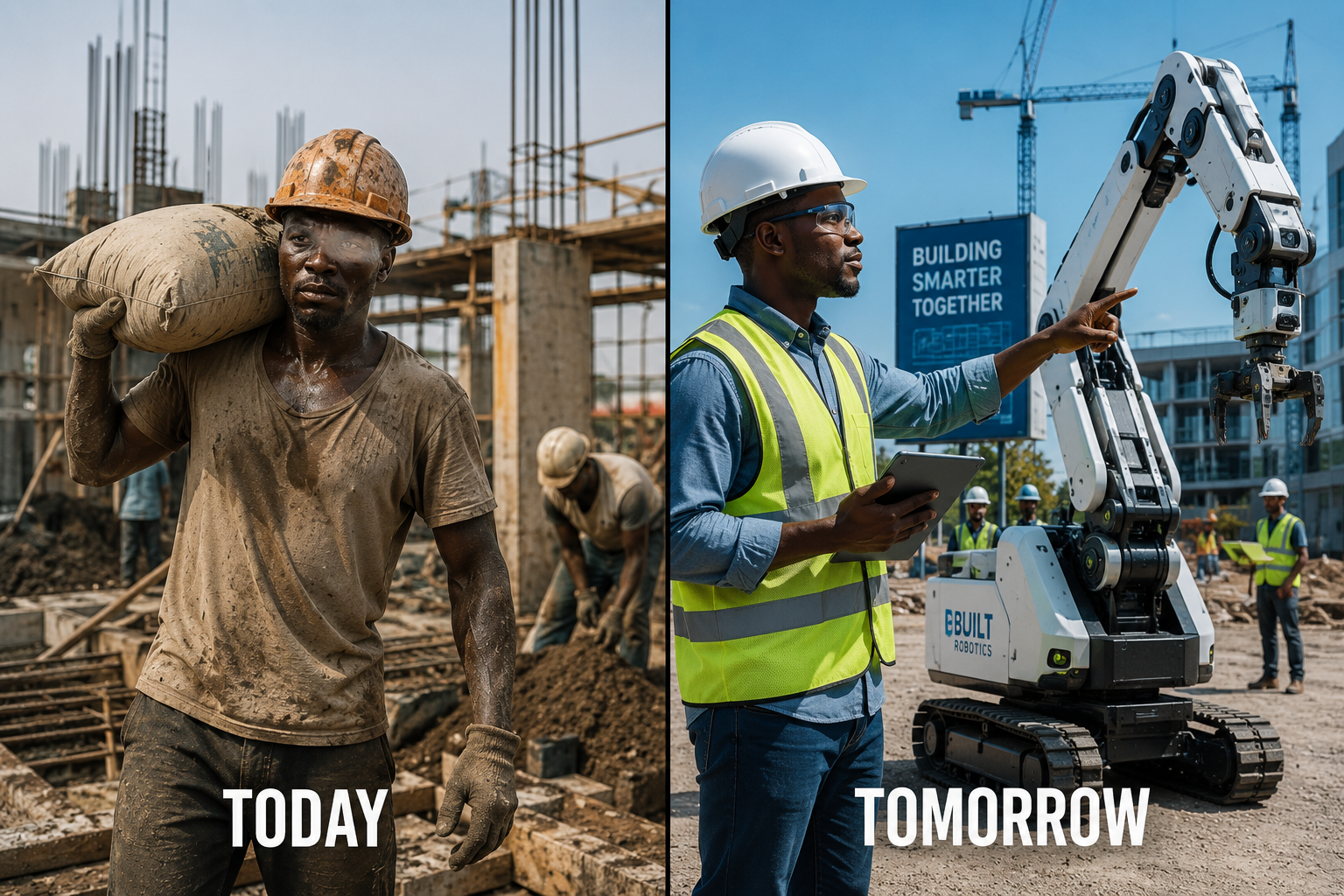
10 Jobs AI Will Replace Before 2035 — And Why African Parents Cannot Afford to Ignore This List

Are you aware of how these 10 jobs AI will replace before 2035 in Africa? This is the conversation happening in every serious economic planning room on the continent and in almost none of the homes where the children most affected by it are growing up.
That gap — between where the conversation is happening and where it needs to happen — is the most expensive silence in African parenting right now.
This is not the anxious technophobia of people who do not understand how economies adapt to disruption. It is the documented trajectory of automation across every economy that has moved through a major technological transition — and the African economy is moving through one right now whether or not the schools preparing African children for employment have acknowledged it yet.
Ten jobs. Disappearing before 2035. And the children currently being prepared for some of them deserve parents who know.

Why This List Matters More in Africa Than Anywhere Else
Before the ten jobs a context that changes how you read every item on the list.
African education systems are producing graduates optimized for exactly the roles AI eliminates fastest. The examination culture, the certificate obsession, the curriculum built around memorization and reproduction — all of it points graduates toward the entry level professional roles that require processing information, applying rules, and producing structured outputs. Precisely what AI does better, faster, and cheaper than any human being.
The Western economies facing this transition have social safety nets, retraining infrastructure, and diversified labor markets that absorb disruption imperfectly but meaningfully. African economies facing the same transition have none of those buffers at scale.
The displaced African worker has fewer options. The displaced African graduate has invested more family resources in preparation for a role that no longer needs them. The stakes of getting this wrong are higher here than anywhere the conversation is actually being held.
As we explored when examining what problem Africa most hopes AI will solve and when we wrote about the disadvantages of AI in Africa now the preparation gap is the central crisis. This list is what that gap looks like in specific job titles.
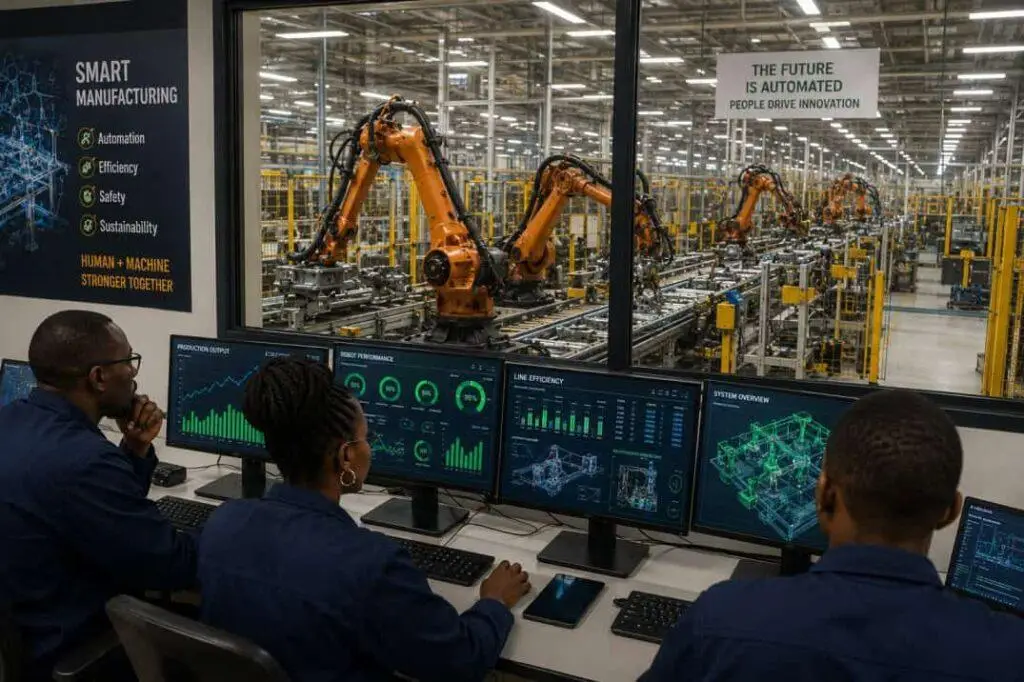
1. Data Entry Clerks and Administrative Assistants
This is the role absorbing the largest number of educated African graduates right now and it is the role AI is eliminating with the least friction.
Data entry requires attention, accuracy, and consistency. AI performs all three better than humans at a fraction of the cost. Optical character recognition, intelligent document processing, and AI powered administrative systems are already replacing these roles in multinational companies operating in Nigeria, Kenya, Ghana, and South Africa.
The Nigerian graduate who spent four years at university to enter a data entry role is not building toward a career. They are occupying a position that their employer is already planning to automate. The timeline varies by company size and budget. The direction does not vary at all.
2. Customer Service Representatives
Call centers across Africa employ hundreds of thousands of people handling customer inquiries, complaints, and support requests. AI chatbots, voice agents, and automated support systems handle the majority of common customer interactions faster, more consistently, and at a fraction of the cost of human agents.
The sophistication of these systems is increasing rapidly. The jobs AI will replace before 2035 include not just the entry level customer service agent but the supervisor managing them — as AI systems require less human oversight with every generation of improvement.
Fintech companies, telecoms, and banks operating across Africa are already deploying these systems. The displacement is happening now, quietly, through hiring freezes and contract non-renewals rather than dramatic mass layoffs.
3. Bank Tellers and Financial Processing Staff
Mobile banking has already restructured African banking employment significantly. AI completes the restructuring.
Loan processing, account management, fraud detection, transaction verification, and financial document analysis — all of these functions are being handled by AI systems that operate continuously without salary, leave, or human error. The bank teller role that represented stable respectable employment for a generation of African workers is functionally obsolete in institutions that have made the technology investment.
The irony is that African mobile money infrastructure — the leapfrog success story we reference when discussing Africa’s technological potential — is itself the infrastructure that makes human bank tellers unnecessary at scale.
4. Paralegals and Legal Research Assistants
Legal research is information processing. Finding precedents, analyzing case law, reviewing contracts for specific clauses, summarizing lengthy documents — AI performs these functions faster and with greater comprehensiveness than any human paralegal.
Nigerian and African law firms are beginning to adopt AI legal research tools. The adoption is slower than in Western markets because the technology infrastructure and the awareness are both still developing. But the direction is established and the timeline is within the decade.
The law graduate who planned to spend years as a paralegal building toward a legal career is entering a role whose scope is contracting faster than that career timeline allows.
5. Journalists and Content Writers Producing Routine Content
This one requires precision because it is frequently misunderstood.
AI is not replacing investigative journalists, opinion writers with genuine perspective, or reporters with deep community access and source relationships. It is replacing the production of routine content — financial summaries, sports recaps, weather reports, property listings, corporate announcements, and the category of content that follows a formula and requires information processing more than genuine reporting.
A significant portion of content currently produced by African digital media outlets falls into this category. The junior writer producing formulaic content for a digital platform is in a more vulnerable position than they typically recognize because the platform’s management is almost certainly already evaluating AI content tools.
The writer who develops genuine perspective, investigative capability, and the kind of culturally specific voice that AI cannot replicate — the writer who sounds like a specific human being with a specific point of view shaped by specific experience — is not being replaced. They are being freed from the formulaic work that AI handles so they can focus on the work only they can do.
6. Accounting Clerks and Bookkeepers
Routine accounting functions — recording transactions, reconciling accounts, generating standard reports, processing invoices, managing payroll calculations — are being automated comprehensively by AI powered accounting software that costs less annually than a single junior accountant’s monthly salary.
The chartered accountant who provides strategic financial advice, navigates complex tax situations, and interprets financial data in the context of business strategy is not being replaced. The bookkeeper recording daily transactions and the accounting clerk processing routine documentation are being replaced now.
Nigerian accounting graduates entering junior roles should understand clearly that the role they are entering is a transition point — either toward the strategic advisory functions AI cannot perform or toward displacement as the automation layer deepens.
7. Radiologists and Diagnostic Imaging Specialists
This one surprises people because it involves a specialized medical profession that requires years of training.
AI diagnostic systems analyzing medical images — X-rays, MRIs, CT scans — are performing at or above specialist human radiologist level for specific diagnostic tasks in documented research. The technology is not yet universally deployed but the trajectory is clear and the timeline for significant displacement in diagnostic radiology is within the decade.
For Africa specifically this has a complicated dimension. The continent has a critical shortage of radiologists. AI diagnostic tools could fill that gap and save lives in communities that currently have no access to specialist diagnostic capability. The technology replacing jobs in wealthy countries is creating access in underserved ones.
But the medical student spending years specializing in diagnostic radiology as a career strategy should understand that the economic value of that specialization is contracting even as its social value in underserved African communities remains significant.
8. Translation and Interpretation Services
Language AI has improved dramatically and continues improving. For common language pairs — English to French, English to Swahili, English to Hausa — AI translation quality is already sufficient for the majority of routine translation tasks.
The professional translator handling legal documents, marketing materials, and business communications for common language pairs is in a contracting market. The interpreter with deep cultural competence handling sensitive negotiations, community engagement, and the kind of nuanced cross-cultural communication where getting it wrong has real consequences — that role is more durable.
Africa’s linguistic diversity creates specific complexity that AI handles imperfectly for many language combinations. But the common language pairs that form the bulk of professional translation work in African business contexts are exactly where AI translation is most capable.
9. Security Guards and Surveillance Personnel
AI powered surveillance systems, facial recognition technology, automated access control, and drone based monitoring are restructuring physical security employment globally.
The security guard sector employs enormous numbers of people across African cities — in shopping malls, office complexes, residential estates, and commercial facilities. The technology replacing these roles is being adopted by exactly the types of facilities that employ the most security personnel.
This displacement hits a specific demographic particularly hard — young African men without tertiary education who entered security work as accessible employment. The alternatives available to displaced security workers are fewer and harder to access than for displaced office workers. The social consequence of this displacement deserves more attention than the economic conversation about AI job loss typically gives it.
10. Travel Agents and Tourism Booking Specialists
AI powered travel planning, automated booking systems, and sophisticated recommendation engines have already restructured this industry in Western markets. The same restructuring is underway in African markets as digital booking platforms displace the human travel agent for standard itinerary planning.
The travel professional who provides genuinely bespoke high-end service — curating experiences that require deep destination knowledge, personal relationships with providers, and the kind of taste and judgment that earns premium fees — is not being displaced. The agent processing standard bookings for routine travel is being disintermediated by technology that does it faster, cheaper, and without requiring an appointment.

What This List Is Not Saying
It is not saying African children should avoid all of these fields entirely. Medicine, law, finance, journalism, and language work all have durable dimensions that AI cannot absorb — the dimensions that require genuine understanding, ethical judgment, cultural intelligence, and the kind of human relationship that makes expertise trustworthy rather than just accurate.
It is saying that the path through these fields needs to be chosen and navigated with clear eyes about which dimensions AI is taking and which it is not. The medical student should specialize toward the judgment intensive clinical work rather than the diagnostic processing work. The law student should build toward the strategic advisory functions rather than the research processing functions. The journalist should develop the investigative and perspective driven capabilities rather than the routine content production capabilities.
The child who understands AI — who grows up familiar with what it can and cannot do, who has developed the conceptual framework for distinguishing the work AI performs from the work human beings do better — will navigate these fields with that clarity automatically.
The child who arrives at these fields without that understanding will make career choices based on the job market of their parents’ generation rather than the one they are actually entering.
The Preparation That Changes the Equation
Every job on this list is being replaced because it involves processing information, applying rules, and producing structured outputs. Every job that is not being replaced involves judgment, relationship, cultural intelligence, creativity, ethical reasoning, and genuine understanding rather than pattern matching.
The educational question this list forces is whether African schools are developing the second set of capabilities or optimizing for the first.
The honest answer is that most African schools are developing the first set — the capabilities AI replaces — while the second set receives lip service in curriculum documents and almost no genuine development in classrooms.
That gap is where The Prepared Child operates. Not by teaching children to avoid AI but by building the foundational relationship with technology that makes the distinction between replaceable and irreplaceable work intuitive rather than requiring explanation.
Visit For Parents to understand practically how to develop the judgment, creativity, and AI literacy at home that determines which side of this list your child ends up on. Visit For Schools to bring House of Chrys workshops into your child’s school before the 2035 deadline on this list makes the preparation conversation feel too late to matter.
The jobs are disappearing. The children who will be most affected are currently in primary school. The window for meaningful preparation is the one you are standing in right now.
In all things, prepare.