

Imagine your son staring at a textbook, his eyes glazing over. The words don’t connect. The lesson doesn’t stick. This isn’t laziness—it’s a system failing him.
By 2050, one in every three children on earth will be from this continent. That’s your child’s world. Yet right now, 86% of ten-year-olds in Sub-Saharan Africa cannot read a simple sentence. We are facing a foundational learning crisis of staggering proportions.
This demographic boom risks becoming a tidal wave of lost potential. But here is the truth: artificial intelligence offers a powerful tool to rewrite this narrative. It’s not just about coding. It’s about equipping your child with future-ready skills for a world we can barely imagine.
The time for passive hope is over. Understanding this shift is your first step to securing your child’s place. This is about personalized learning, supported teachers, and bridging gaps traditional methods cannot. Your informed action starts now.
Key Takeaways
- The coming demographic shift means your child’s future will be intensely connected to global trends.
- A deep learning crisis threatens to undermine this potential before it can even begin.
- Artificial intelligence presents a practical toolset, not a distant fantasy, for overcoming educational barriers.
- True preparation involves building adaptable problem-solving skills, not just memorizing facts.
- Access to quality learning resources is becoming the new dividing line for opportunity.
- Practical initiatives are already being deployed across the continent to make this a reality.
- As a parent, your awareness and advocacy are critical first steps in this journey.
The Demographic Imperative: Why Africa’s Learning Crisis is a Global Concern
The numbers tell a story of both immense promise and profound peril for the next generation. By 2050, one in every three children on the planet will call this continent home. This isn’t a distant forecast. It’s the world your child will inherit and lead.
This surge of young minds represents an unprecedented opportunity. Think of the innovation, the creativity, the new solutions for global challenges. But opportunity is not a guarantee. Right now, the foundation for that bright future is cracking.
2050: One in Three Children Will Be African
Let that statistic sit with you for a moment. One in three. The global workforce, the pool of future leaders and problem-solvers, will be dramatically reshaped. Communities across the continent are at the heart of this shift.
Your child is part of this historic generation. Their peers will shape markets, drive research, and build technologies. This demographic wave can fuel sustainable development for everyone. But only if these young people are equipped.
Without the right skills and knowledge, this potential evaporates. The world’s economy cannot afford to miss out on the talents of a third of its coming generation. The stakes are truly global.
The Foundational Learning Gap: 86% Cannot Read by Age 10
Here is the brutal truth. In Sub-Saharan Africa, 86 percent of children cannot read and understand a simple sentence by age ten. This is more than a statistic. It’s a direct roadblock to every child’s potential.
A child who struggles to read is being prepared for failure. They cannot access content, follow a curriculum, or build higher-order thinking skills. This learning crisis creates deep gaps before a child even reaches secondary school.
Traditional systems are not closing this gap. Classrooms are overcrowded. Resources are thin. Teachers are overstretched. The result? Millions of students are left behind every single year.
This foundational failure impacts everything. It limits access to future training and locks learners out of the digital market. Literacy is the non-negotiable floor for participation in the modern world.
| Region | % of Children Not Reading Proficiently by Age 10* | Key Challenge for Future Skills |
|---|---|---|
| Sub-Saharan Africa | 86% | Extreme scarcity of quality learning resources and trained instructors. |
| South Asia | 58% | Large student populations straining existing institutional capacity. |
| Latin America & Caribbean | 52% | Significant disparities in educational access between urban and rural areas. |
| North America & Europe | 14% | Focus shifts to advanced digital literacy and critical thinking gaps. |
*Illustrative data based on regional assessment reports. The scale of the challenge on the continent is unparalleled.
From Demographic Dividend to Crisis Without Intervention
Economists talk about the “demographic dividend.” This is the growth potential when a large, young population enters the workforce with strong skills. But that dividend is not automatic.
Without urgent intervention, this advantage becomes a demographic disaster. A vast youth population without basic literacy or numeracy faces mass unemployment. Inequality deepens. Social stability is threatened.
The labor market of tomorrow is global and digital. It rewards problem-solving and adaptability. It punishes those without foundational learning. We stand at a clear crossroads.
One path continues with broken models. It locks millions into poverty. The other path embraces smart, scalable solutions. It invests in technology and infrastructure designed for local context.
This crisis is deep, but it is not hopeless. Its very scale demands innovation of equal ambition. Your role as a parent is crucial. Seeing this problem with clear eyes is the first step.
Your awareness fuels the demand for better tools and smarter collaboration. It pushes for initiatives that actually reach your child. The imperative is clear. The time for action is now.
Artificial Intelligence as a Transformative Educational Tool
Think of a tool that doesn’t just teach but learns alongside your child, adapting to their every stumble. This is the promise of modern technology. It moves beyond old, broken models.
These systems offer a direct response to the learning crisis. They provide solutions built for scale and personal touch. Your child gets a guide that never tires.
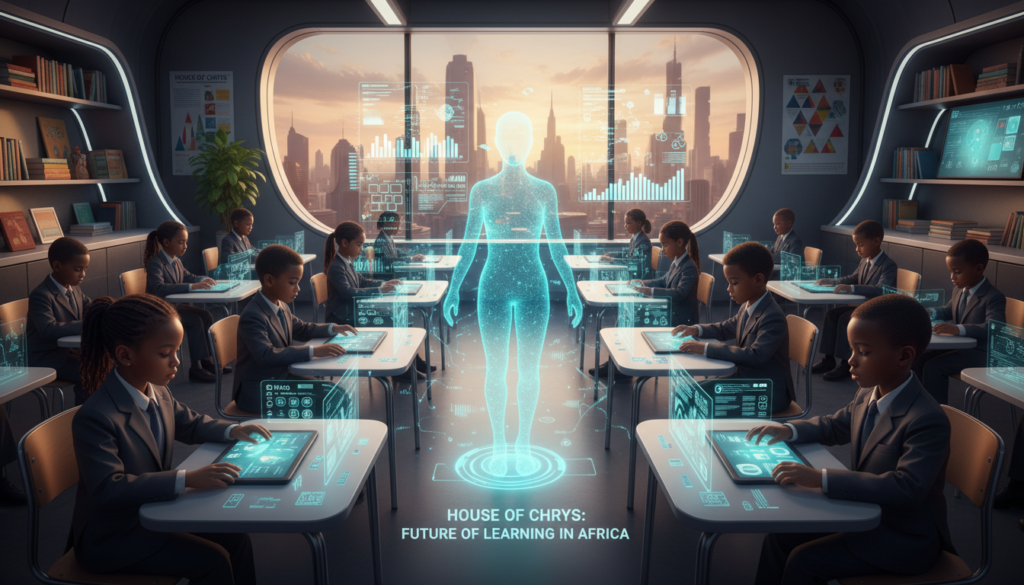
The intelligence here is practical. It analyzes data from your child’s work. It identifies gaps in their knowledge. Then, it delivers the right content at the right time.
This isn’t a distant fantasy. It’s a working tool being used in countries right now. The transformation is already underway.
Personalized Learning and Adaptive Tutoring Systems
Imagine a tutor that knows your child’s exact struggle in math. It adjusts the next lesson instantly. This is personalized learning.
Adaptive systems meet learners at their level. They don’t move forward until a concept is mastered. This ends the cycle of being left behind.
For you, the parent, this means a curriculum tailored to your child’s pace. It’s not a one-size-fits-all approach. It’s a design for their unique potential.
In Kenya, the EIDU app serves nearly 400,000 children. It’s a structured pedagogy solution with proven development gains. It shows what’s possible.
AI for Teacher Support and Administrative Efficiency
Artificial intelligence doesn’t replace teachers. It empowers them. These tools handle grading and attendance.
They free educators from administrative tasks. This gives teachers more time to inspire and mentor. They can focus on human connection.
Support systems can generate lesson plans. They identify students at risk of falling behind. They offer professional training resources.
This makes good teachers great. It helps overworked teachers become more effective. The quality of instruction rises for every child in the room.
Early Evidence of Efficacy from India, Kenya, and Nigeria
The proof is no longer just theoretical. Real-world initiatives are delivering results. They provide a beacon for sustainable development.
In Rajasthan, India, state authorities used an AI-powered tool. It scored paper worksheets for 4.5 million learners. This brought immense efficiency to assessment.
A World Bank after-school program in Edo, Nigeria, showed significant gains. Students improved their skills after just six weeks. The program combined smart tutoring with teacher guidance.
These cases from different countries share a core truth. When technology is designed for local context, it works. It delivers real-world outcomes for young people.
This transformation is about more than test scores. It’s about reigniting a love for study in your child. It’s about giving them the confidence to lead.
The Current State of AI Education in Africa
Forget waiting for solutions from overseas. The answers are being built right here, by local talent.
The landscape is alive with activity. Pioneering initiatives are proving the model works. Local hubs are solving problems with homegrown intelligence.
This is not a future promise. It is today’s reality. Your child’s classroom is the frontier.
Pioneering Initiatives: EIDU in Kenya and World Bank Programs
Look at Kenya. The EIDU app serves nearly 400,000 children. It is a structured pedagogy solution with proven development gains.
This tool delivers personalized learning. It adapts to each child’s pace. The data shows real improvement.
In Edo, Nigeria, a World Bank after-school program made a difference. Students improved their skills after just six weeks.
These are not pilot projects. They are scalable models. They demonstrate what targeted technology can achieve.
Such initiatives provide a beacon. They show that sustainable development is possible. They turn crisis into opportunity.
The Rise of Local AI Hubs and Innovation Challenges
Your child doesn’t need tools designed for another continent. They need solutions born from local context.
Hubs are sprouting in Lagos, Nairobi, Kigali, and Cape Town. These are homegrown engines of research and creation.
Young people in these spaces are tackling real challenges. They build for local languages. They design for offline use.
Innovation challenges unearth brilliant ideas. They empower African developers to lead. The next great educational tool could come from a hub down the road.
This movement builds local knowledge and capacity. It ensures the expertise to maintain these systems stays within the community.
Public-Private Partnerships: Models from Rwanda and South Africa
Lasting change requires smart collaboration. Public-purpose meets private tech prowess.
Rwanda’s government partnered with Anthropic. Kenya is working with Microsoft. These alliances blend policy with innovation.
Such partnerships are crucial. They ensure tools align with national curriculum. They move beyond short-term pilots.
Institutions like the African Institute for Mathematical Sciences (AIMS) are key. They create a new generation of African AI experts.
Google partners with universities for advanced training. This builds the workforce that will sustain progress.
These models create ecosystems. They combine government resources, academic research, and industry technologies.
| Initiative / Hub | Location | Primary Focus | Key Impact / Scale |
|---|---|---|---|
| EIDU App | Kenya | Structured Pedagogy & Adaptive Learning | Serving ~400,000 primary school children |
| World Bank After-School Program | Edo, Nigeria | Foundational Skills Remediation | Significant student gains measured within weeks |
| Kigali AI & Innovation Hub | Rwanda | Public-Private Collaboration & Local Solution Development | Fostering government-tech sector partnerships |
| Microsoft African Development Centre | Nairobi, Kenya | Local Engineering Talent & EdTech Solutions | Creating continent-relevant software and tools |
| African Institute for Mathematical Sciences (AIMS) | Multiple Countries | Advanced AI Training & Research | Graduating a new generation of data scientists |
| Google AI Training with Universities | South Africa & others | Building Academic Capacity & Curriculum | Equipping university students with cutting-edge skills |
The state of play is one of hopeful momentum. Building blocks for a continent-wide ecosystem are being laid.
One partnership, one hub, one initiative at a time. Your child’s access to world-class learning is being redefined.
The future is being built here. And it is being built now.
Bridging the Digital Divide: Infrastructure and Access Challenges
We must talk about the ground before we can build the future—the hard reality of power, connectivity, and cost.
The most brilliant digital tutor is useless if your child cannot power the device. A stable internet connection becomes a fantasy in many communities. This is the digital divide. It is the first and most brutal challenge for any technological solution.
Confronting this gap is not optional. It is the foundation for real access. Your child’s opportunity cannot be an afterthought in a lab on another continent.
The Low-Bandwidth and Offline Functionality Imperative
This is not about luxury. It is about necessity. Tools for this continent must be built for constraint.
Think of an app that downloads lessons overnight on a weak signal. It must work flawlessly all day without the internet. This is the offline-first imperative.
Smartphones that are years old must be able to run it. Data consumption must be minimal. This design philosophy is not a limitation.
It is an innovation catalyst. It forces developers to create smarter, more efficient technology. The result is more resilient systems for everyone.
Building for low-bandwidth environments makes solutions stronger. It ensures they reach learners where they actually live.
Disparities in Electricity and Internet Connectivity
The gap between cities and rural areas is stark. So is the divide between income levels. An equitable strategy must bridge this, not ignore it.
Reliable electricity is not a given. Internet coverage maps often show vast blank spaces. These are not minor challenges. They are fundamental barriers to learning.
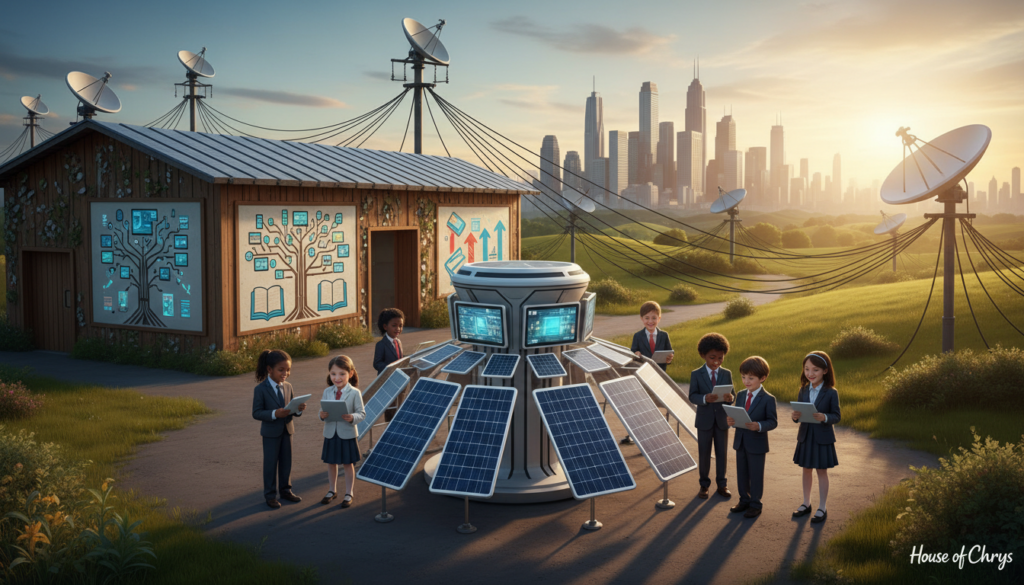
A strategy for artificial intelligence in education must account for this reality. It requires hybrid models. Solar-powered community hubs can become local resource centers.
Mesh networks can share connectivity. Planning must be local and contextual. The infrastructure must meet people where they are.
Cost Barriers for Learners and Institutions
Cost is a brutal barrier. Devices, data plans, software subscriptions—they add up quickly. They can put advanced tools out of reach for the families who need them most.
This affects students and institutions alike. A school’s budget for technology is often stretched thin. The access gap becomes an economic one.
Practical solutions exist. Government subsidies for educational devices can help. Partnerships with telecom companies can reduce data costs for learning platforms.
Open-source technologies lower the barrier for local developers. The goal is to make knowledge affordable. This is key for sustainable development.
Your child’s potential should not be capped by the price of a data bundle. Smart design and smart collaboration can solve this.
As a parent, you should demand that any intelligence tool promoted for your child works in your reality. Does it function with intermittent power? Can it use little to no data?
Building for these constraints is the hard, unglamorous work of making promise real. It ensures access for every child, not just the privileged few. Bridging this divide is the first step to bridging the skills gap for young people across continent.
The Data Desert: How AI Models Overlook African Contexts
A global intelligence is being built, yet it holds almost no memory of your continent. This isn’t a minor oversight. It’s a foundational flaw in the technology promised to your child.
The systems designed to teach are often trained on a world that doesn’t include them. This creates a data desert. Your child’s reality is missing from the machine’s mind.
The Stark Imbalance: Only 0.2% of Training Data from Africa
Here is the shocking truth. Only 0.2% of global training data comes from this continent and South America combined. The models powering so-called smart tools are built on an extreme imbalance.
This tiny fraction shapes everything. It determines what the artificial intelligence knows, sees, and values. Your child’s culture, language, and daily life are statistical outliers.
For learners, this means the content feels foreign. The knowledge base is not theirs. It is a form of digital exclusion built into the design.
Building effective solutions requires representative information. Without it, the technology cannot serve your community. It remains an imported tool, not a homegrown resource.
Cultural Irrelevance: From “Pizza” to “Chapati” in Lesson Plans
Imagine your child struggling with a math problem about pizza delivery in New York. The confusion isn’t about numbers. It’s about cultural context.
The intelligence has no memory of chapati, fufu, or the local market. It mangles African languages and ignores local proverbs. This failure disengages students instantly.
It tells your child their world is not important enough to be understood. Relevance in learning is non-negotiable. A lesson plan centered on unfamiliar concepts creates unnecessary gaps.
Educational tools must resonate. They must use examples from your community. This is not about translation. It’s about deep, meaningful connection.
Initiatives to Build Local Language and Contextual Datasets
But communities are fighting back. Pioneering initiatives across continent are building new datasets. They focus on Yoruba, Swahili, Amharic, and hundreds of other languages.
This work is vital. It ensures models see African faces and hear African accents. It makes the technology truly ours. Local linguists, educators, and technologists are leading this collaboration.
For you, this means scrutinizing the tools offered to your child. Do they respect your language? Do they use examples from your life? If not, they are not good enough.
Building these datasets is slow. It requires significant research and resources. But it is the foundation for sustainable development in education.
The goal is an AI that doesn’t just translate, but understands. One that can tell a story about Anansi the spider as easily as one about Cinderella. That’s the standard we must demand for our young people.
Confronting Ethical Risks and Digital Neocolonialism
We must look beyond the screen to see who truly holds the power in this digital classroom. The most advanced tools can become instruments of control if their design ignores local sovereignty.
This is the shadow side of technological promise. Without vigilance, we risk trading one form of dependency for another—a digital version of old challenges. Your child’s mind is the most valuable resource on the continent.

Foreign companies can extract data while imposing foreign values. This isn’t empowerment. It’s a subtle, modern form of exploitation. We must name it to confront it.
Decolonial AI: Ensuring Local Ownership and Design
Technology is never neutral. It carries the values and blind spots of its creators straight into your child’s lesson plan. The answer isn’t to reject intelligence tools, but to reclaim them.
Decolonial AI theory insists on local ownership. It means African leaders setting the curriculum for these systems. It means developers from Lagos or Nairobi building the solutions.
“Digital neocolonialism is the risk of foreign tech giants extracting data and imposing their cultural frameworks—creating dependency instead of capability.”
Your child should see their world reflected in their learning content. The goal is tools built with us, not just for us. This ensures sustainable development rooted in our context.
Addressing Algorithmic Bias and Gender Norms in Tech
Bias is coded into models trained on skewed data. An artificial intelligence that sees mostly one type of face might not recognize your child. This is a documented failure, not a theory.
In South Africa, automated facial recognition systems struggled with darker skin tones. We cannot let this failure of design seep into our classrooms. The ethical risk is about fairness and quality.
Gender norms are another trap. An AI trained on global stereotypes might subtly steer girls away from coding or advanced study. It could limit their perceived potential before they even start.
As a parent, you must ask critical questions. Who built this tool? Does it reinforce harmful stereotypes or actively break them down? Your scrutiny is the first line of defense for your child’s future.
The Risk of Widening, Not Closing, Global Learning Gaps
Biased tools are ineffective tools. They will fail our children, widening the very gaps they promise to close. This isn’t just an ethical problem—it’s a practical one.
If a learning platform doesn’t understand your child’s language or context, it creates frustration, not mastery. The knowledge gap grows. The global market for skills moves further out of reach.
Clear policy and ethical frameworks are non-negotiable. Governments, institutions, and parents must set the standards. Tech companies must meet them to operate here.
We need research and training focused on these challenges. The goal is technology that empowers every child equally. It must recognize their full humanity and potential.
This moment demands grounded ambition. The right solutions will come from collaboration and local initiatives. Your awareness turns this risk into a demand for better, fairer systems for all young people.
Building Equitably: Principles for Context-Relevant AI EdTech
True equity in learning technology isn’t about access alone—it’s about relevance. A tool can reach your child’s hands but still miss their mind. It can connect to the internet but fail to connect to their reality.
Building equitably means building differently. It starts with a simple, non-negotiable rule. The technology must serve the curriculum your child already follows.
This is the path to solutions that feel local and work globally. Your child’s daily experience is the blueprint.
Prioritizing National Curricula and Pedagogical Approaches
Your child’s teacher has a syllabus for a reason. It’s a roadmap built for your community’s development. Any new tool must align with that map, not draw a new one.
Pedagogy matters deeply. The teaching methods that work in classrooms here are proven. A foreign system that undermines them creates confusion, not clarity.
The design principle is integration. The smartest learning tools reinforce what the teacher is doing. They provide practice for the exact skills being taught that week.
This alignment is practical magic. It means your child isn’t learning two different ways. The technology becomes a seamless extension of their school day.
Leveraging Smaller, Efficient Language Models
Bigger is not better. In fact, for our context, bigger is often a burden. Massive global models demand immense data and power.
They are built for supercomputers, not smartphones. Your child’s future shouldn’t wait for perfect internet or a new device.
Smaller, efficient language models are the practical answer. They are trained to do specific tasks well. They can run on a phone with intermittent connectivity.
This efficiency is a superpower. It makes advanced intelligence affordable and accessible. It turns a constraint into an innovation engine.
| Model Characteristic | Massive Global Model | Smaller, Efficient Model |
|---|---|---|
| Data Requirements | Requires terabytes of often irrelevant training data. | Can be trained on focused, high-quality local datasets. |
| Hardware Needs | Needs powerful cloud servers; high latency. | Can operate directly on a smartphone or low-cost tablet. |
| Operational Cost | Very high; often priced for wealthy markets. | Low; sustainable for public institutions and families. |
| Contextual Relevance | Low; generic knowledge, cultural blind spots. | High; can be fine-tuned for local languages and examples. |
| Primary Benefit | Broad, general knowledge. | Focused, actionable skill-building. |
The right choice is clear. It’s about fitting the tool to the challenge, not the other way around.
Designing with, Not for, African Educators and Learners
This is the core principle. The most brilliant design fails if it’s created in a vacuum. Solutions must be co-created with the people who will use them.
It means developers spending time in classrooms in Lagos and Nairobi. They must watch a teacher manage 50 students. They must see the resources that are actually available.
Your child and their teacher are the ultimate experts. Their feedback isn’t a final check—it’s the starting point. This collaboration builds ownership from day one.
For you, the sign of good technology is simple. It feels familiar. It solves a problem your child’s teacher mentions. It respects the local knowledge system.
This approach builds local capacity. It ensures the expertise to maintain and improve these systems grows within our communities. It turns consumers into creators.
Equitable building rejects the “parachute” model. Sustainable development in education requires roots. The goal is tools that feel like they belong here because they were born here.
This is how we close the real gaps. Not with imported gadgets, but with homegrown solutions. Your child’s world deserves nothing less.
The Collaborative Imperative: Ecosystems for Success
Your child’s classroom doesn’t exist in isolation. It’s connected to a web of decisions made in boardrooms and government offices.
No single actor holds all the pieces. The challenge is too vast. Real progress demands a new kind of collaboration—one built on shared purpose, not charity.
This is about creating ecosystems where initiatives thrive. Your child’s success depends on this connected work. The era of going it alone is over.
Tripartite Models: Governments, Local Developers, and Big Tech
Think of a three-legged stool. Remove one leg, and everything falls. This is the tripartite model for sustainable development.
Governments set the policy and curriculum. They ensure tools align with national learning goals. This provides the essential framework for scale.
Local developers bring the context. They understand the languages, the challenges, the daily reality of your child’s school. Their work makes technology feel local.
Big tech companies offer resources and global platforms. They provide the training and research backbone. This partnership is smart strategy—each brings unique strength.
Together, they create solutions greater than any single part. Your child benefits from systems that are government-approved, locally refined, and globally robust.
Knowledge Sharing to Avoid Duplication of Effort
A developer in Ghana shouldn’t struggle with a problem already solved in Kenya. Wasted effort steals time from your child’s progress.
Open platforms and communities are critical. They allow leaders to share data, code, and information. This prevents reinventing the wheel across continent.
This sharing builds a common knowledge base. It accelerates the development of effective tools. Every breakthrough in one place lifts learners everywhere.
“Isolated pilots cannot scale. Connected ecosystems turn local innovation into continental transformation.”
For you, this means the quality of content your child sees improves faster. Shared models close gaps instead of creating new ones.
Case Study: The AI for Education Summit in Nairobi
Action speaks louder than promise. In November 2025, over 100 people gathered in Nairobi with “grounded ambition.”
The summit convened leaders from every part of the ecosystem. Developers sat with ministers. Funders listened to teachers. This was the shared table in action.
The goal was singular: improve learning outcomes. Conversations moved from theory to practical use cases. What actually helps a teacher with 50 students?
This initiative showed the power of focused collaboration. It created a blueprint for other countries to follow. The summit wasn’t a talking shop—it was a design studio for the future.
Such gatherings build essential trust. When teachers’ unions and tech companies dialogue, the resulting technologies are safer and more effective. Collaboration ensures solutions have community acceptance from the start.
Your role in this ecosystem is vital. You are not just a consumer. Your feedback, your adoption, your advocacy shapes what succeeds.
You demand tools that respect your child’s world. Your voice ensures access and quality for all young people. This is how we move from isolated pilots to connected ecosystems.
The imperative is clear. We must build together. Your child’s place in the next generation depends on this collaboration. The resource we need most is each other.
Measuring What Matters: Evidence, Quality, and Safe Scaling
Before you download another app for your child, ask one hard question: where is the proof it works? Hope is not a strategy. Your trust must be built on cold, hard data, not marketing hype.
The journey from a promising pilot to a continent-wide solution is treacherous. It demands a relentless focus on what actually improves learning. This is the final, non-negotiable gatekeeper for your child’s future.
The Critical Shortage of Rigorous Impact Studies
Too many products launch on promise alone. The marketplace is flooded, yet starved of evidence. There is a critical shortage of rigorous impact study conducted in real classrooms here.
We cannot assume a tool built elsewhere will work for your child. Its efficacy must be proven in your context. Right now, that proof is scarce. This gap is a major risk to sustainable development.
Organizations like Fab AI, with support from the Gates Foundation, are tackling this. They are developing benchmarks and conducting new efficacy research. Their goal is to build the knowledge base we desperately need.
Your role is clear. Demand to see the study. Ask if it was done with students like yours. Support initiatives that publish their results for all to see.
Frameworks for Benchmarking AI EdTech Quality
How do you judge the quality of a smart tutor? It’s not about flashy features. It’s about safety, relevance, and real results.
Practical frameworks are emerging. They offer checklists for parents and institutions. These frameworks ask the right questions.
- Did it improve literacy scores in a controlled trial?
- Is it designed to be safe for children’s data and minds?
- Does the content align with your national curriculum?
- Can it function with the infrastructure you actually have?
This shift is powerful. It lets you evaluate a technology by its outcomes, not its promises. The Gates Foundation and Fab AI share this mission. They aim to set clear standards for the responsible use of artificial intelligence.
“Building evidence and setting benchmarks is how we turn good intentions into real outcomes for learners. It separates hope from genuine progress.”
This work creates a new market signal. Quality and proof become the currency. It rewards builders who do the hard research.
Piloting, Iterating, and Scaling Responsibly
Scaling a solution before it’s perfected is recklessness. Your child’s education is not a beta test. The responsible path is pilot, learn, iterate, then scale.
Start small. Test with ten thousand young people before reaching for a million. Learn fast from teacher and student feedback. Adapt the design based on what works on the ground.
The World Bank is supporting this approach across continent. They are backing focused pilots in lower-middle-income countries.
Adaptive learning trials are underway in Côte d’Ivoire. WhatsApp-based tutor systems are being tested in Ghana. New tools for teacher support are launching in Ethiopia.
Each pilot builds the evidence base. Each iteration improves the technology. This is how we close gaps with confidence, not guesswork.
Your call to action is to become evidence-literate. Ask for the data. Support technologies that are transparent about their results and limits.
Measuring what matters turns ambition into achievement. It ensures the intelligence revolution delivers on its promise for your child’s generation. This is how we build a future that is not just high-tech, but high-trust.
From Foundational Learning to Future-Ready Skills
The journey from mastering the alphabet to mastering algorithms is not a straight line—it’s a carefully built staircase. Reading and math are the essential first steps. But the destination is your child’s command of the tools shaping tomorrow.
This is about a sequenced development of skills. We start with the non-negotiable foundation. Then we build the cognitive house for the 21st century.
The goal is not just literacy. It’s future-readiness. Your child must move from consuming knowledge to creating solutions.
Sequencing AI Education for Long-Term Development
Think of it as a ladder. Each rung is a deliberate stage of learning. The first rung is non-negotiable.
Use adaptive systems to lock in reading and numeracy. This closes the foundational gaps. It builds the confidence to climb higher.
The next rung is digital literacy. Your child learns to navigate, evaluate, and create with technology. They become safe and savvy online.
Then comes the powerful climb. Coding, data analysis, and logical problem-solving. These are the skills that turn users into builders.
This sequenced approach respects your child’s development. It ensures they are never overwhelmed. Mastery at one level unlocks the potential for the next.
This is the curriculum for long-term success. It’s a map for turning raw potential into applied intelligence.
| Stage | Primary Focus | Key Tools & Methods | Desired Outcome |
|---|---|---|---|
| Foundation | Literacy, Numeracy, Critical Thinking | Adaptive tutoring apps, gamified practice, teacher-led instruction. | Child reads proficiently, solves basic math problems, asks “why.” |
| Digital Fluency | Safe Navigation, Information Evaluation, Basic Creation | Controlled online environments, media literacy lessons, simple design tools. | Child uses technology as a responsible tool for research and expression. |
| Technical Proficiency | Coding Logic, Data Analysis, Systems Thinking | Visual programming platforms, spreadsheet projects, logic puzzles. | Child understands how software is built and how data informs decisions. |
| Applied Innovation | Problem-Solving, Entrepreneurial Mindset, Ethical Application | Project-based learning, local case studies (e.g., agri-tech), mentorship programs. | Child identifies a community challenge and prototypes a tech-enabled solution. |
Cultivating AI Leadership and Entrepreneurial Mindsets
We must cultivate not just users, but leaders. Your child should dream of building the next great company, not just using its app.
An entrepreneurial mindset sees problems as opportunities. The right training teaches your child to ask: “What can I build with this technology?”
Look at Twiga Foods in Kenya. They use artificial intelligence to optimize supply chains for fresh produce. That’s local intelligence solving a local challenge.
In Niger, AI applications in agriculture have boosted production by 20-30%. This is the tangible development impact of homegrown solutions.
The African Development Bank estimates this intelligence could add $1.8 trillion to the continent‘s economy by 2030. That wealth will be created by Africans who command the tools.
Programs at the African Institute for Mathematical Sciences (AIMS) are creating this new leadership class. They are training the architects of the digital future.
Your child can be part of this generation. They can move from student to pioneer. This is the shift from passive learning to active creation.
Preparing African Youth for the Global Digital Economy
The global digital market is not a distant shore. It is the arena where your child will sell their skills, their ideas, their innovations.
Preparation means going beyond rote memorization. It demands fostering adaptability, ethical reasoning, and a collaborative spirit. These are the human skills amplified by smart technologies.
Your child needs to understand data privacy. They must grasp algorithmic bias. This ethical grounding is their compass in a complex world.
“The wealth of the 21st century will be built on digital platforms. Our youth must be ready not just to participate, but to set the rules and build the platforms themselves.”
This preparation connects local context to global opportunity. A solution built for a market in Lagos can scale to serve people everywhere.
It’s about building a future where your child is a shaper, not a spectator. They won’t just adapt to the world’s changes—they will drive them.
This is the ultimate promise. The right education doesn’t just help your child pass exams. It equips them to shape the future of their community, their continent, and the world.
Conclusion: A Call for Grounded Ambition and Global Partnership
This is not a time for spectators. It is a time for builders and guardians of the future. Dr. Ben Piper calls for “grounded ambition”—a vision relentless in hope but pragmatic in steps.
As Luis Benveniste states, we must leverage responsible artificial intelligence. It accelerates the journey from foundational learning to job-relevant skills. The goal is to guarantee young people thrive.
This call is to all of us. Support initiatives built equitably and grounded in evidence. Choose quality over hype.
Across the continent, momentum grows. Your engagement is the ultimate quality check. Stay informed, ask questions, advocate for better tools.
The future is not predetermined. It will be written by our choices today. Let’s build a future where every child is prepared, empowered, and future-ready.