
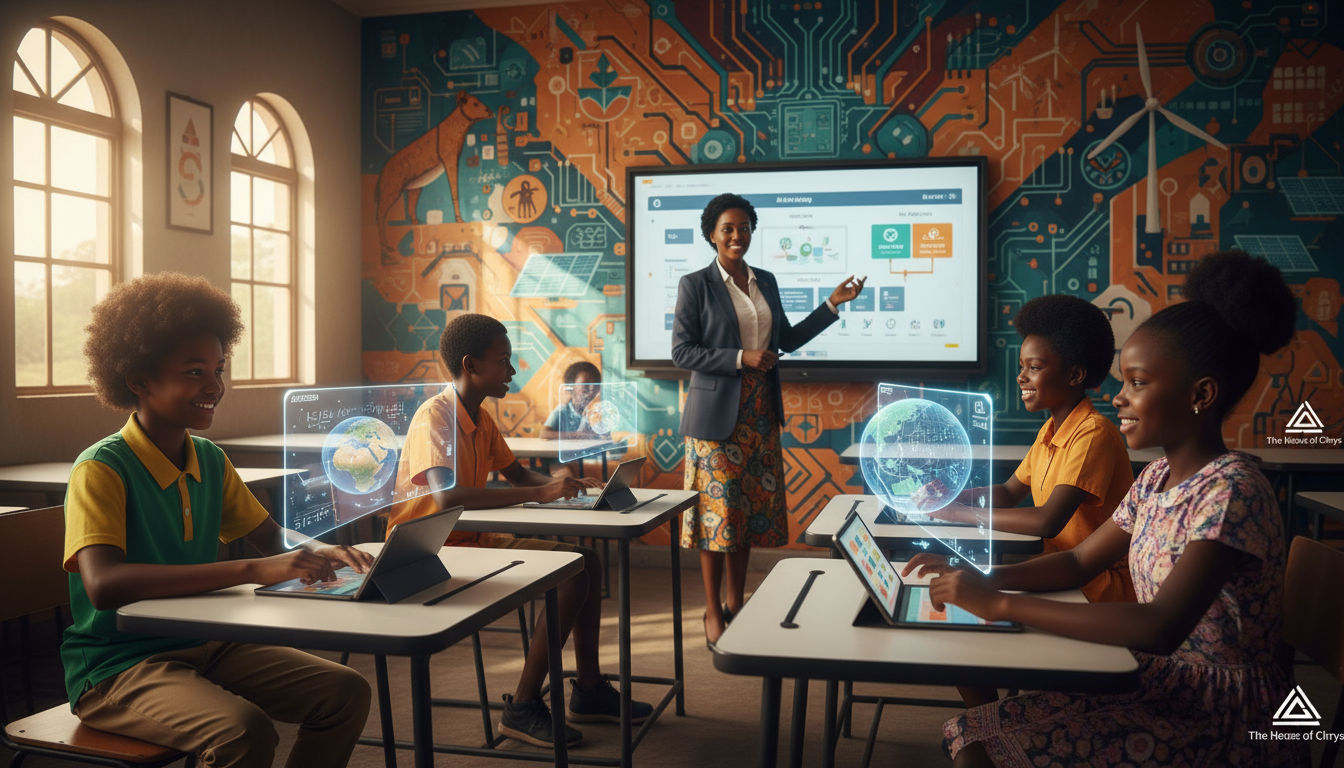
What if the key to unlocking your child’s potential isn’t a new school, but a new way to learn?
That question demands an answer. Your child deserves a future where they are not left behind.
Before the pandemic, 86 percent of children in Sub-Saharan Africa could not read a simple text by age ten. This was a crisis.
New tools are now vital. They address this deep challenge head-on.
Modern environments must evolve. They build essential digital skills for every young person.
Your role is clear. Understand this shift. Preparation is the new priority for a future-ready generation.
By focusing on these methods, we secure a different path. Learners across the continent gain access. They reach for the same opportunities as their global peers.
This transformation turns inspiration into practical action. The foundation for success is being rebuilt.
Key Takeaways
- A deep learning crisis affected millions before recent global shifts.
- Innovative technological tools are essential for bridging critical gaps.
- Modern environments must cultivate digital literacy for all students.
- Parental understanding of this evolution is crucial for a child’s readiness.
- Focusing on new methods ensures equitable access to global opportunities.
- Strong foundational knowledge is the pillar for long-term success.
- Practical guidance is available to navigate these important changes.
Evolution of AI in Education Across the Continent
The continent’s educational landscape is witnessing a profound merge—where ancestral knowledge meets algorithmic intelligence.
This is not about replacing old ways. It is about weaving them into new systems.
Your child’s curriculum must reflect both worlds to be truly relevant.
Historical Context and Indigenous Educational Approaches
Long before formal schools, communities taught through story and practice. This indigenous knowledge holds deep value.
Modern technology must not erase it. Instead, intelligent tools can help preserve and integrate this wisdom.
We create curricula that respect local languages and cultures. This builds a stronger foundation for learning.
Modern Breakthroughs in AI-Enabled Learning
Look at Maseno University in Kenya. They built a tool that translates English to Kenyan sign language.
This supports deaf students in mainstream schools. It is a clear example of technology serving specific needs.
The African Union’s Continental Artificial Intelligence Strategy now prioritizes this sector. Governments are leveraging research to improve skills development.
Teachers use these new tools to overcome language barriers. Quality learning reaches every corner.
These initiatives ensure the impact of new technologies is felt by all people.
ai and education in africa: Emerging Trends and Success Stories
Look at the stories unfolding right now. They prove that real change starts with solutions built from the ground up.
Your child’s world is being reshaped by these practical victories. They show what is possible.
Innovative Projects and Localized Initiatives
Consider RobotsMali in Mali. This group used smart tools to create over 180 children’s books in the Bambara language in under a year.
These books are culturally relevant. They speak directly to young people.
This is the power of local design. It reflects the reality of our children.

Yet a major challenge remains. Only 0.2% of the data for training global models comes from the continent.
This gap limits the development of local solutions. We must fix it.
Collaborative Policies and Cross-Country Partnerships
Collaboration between governments and institutions is non-negotiable. It bridges the digital divide.
This work ensures young people get the support they need for the future.
Time is of the essence. We must ensure these technologies serve the needs of our schools and teachers now.
By working together, we create high-quality curricula. They move beyond content from the global market.
Local research and media are fueling this shift. They build better education systems.
| Initiative | Country | Primary Focus | Key Impact |
|---|---|---|---|
| RobotsMali Book Creation | Mali | Local Language Literacy | 180+ culturally relevant books for early learning |
| Sign Language Translation Tool | Kenya | Inclusive Education | Supports deaf students in mainstream classrooms |
| Continental AI Strategy | Pan-African | Policy & Skills Development | Framework for national adoption and training |
| EdTech Hubs Network | Multiple Countries | Teacher Capacity Building | Equips educators with modern pedagogical tools |
These are not isolated cases. They form a growing network of success.
They empower the next generation with the skills and knowledge to lead.
Navigating Challenges, Ethical Considerations, and Practical Implementation
Your child’s access to tomorrow’s opportunities hinges on how we handle today’s practical hurdles.
Leaders are moving from vision to action. The work is complex but clear.
Bridging the Digital Divide and Enhancing Infrastructure
In November 2025, over 100 leaders met in Nairobi. The AI for Education Summit focused on real outcomes.
A core topic was the digital divide. Many schools still lack basic infrastructure.
New systems must be designed with this gap in mind. They require dedicated support for reliable power and internet.
Governments and institutions are now prioritizing training. The goal is to equip teachers to use modern tools effectively.
Ensuring Cultural Relevance and Addressing Bias
Another critical challenge is bias in artificial intelligence. Global models often lack local context.
The knowledge provided must reflect our languages and curriculum. This is non-negotiable for true relevance.
We must audit the data and design of these technologies. They should empower, not erase, local identity.
Our collective work ensures these tools serve our children first. Their future depends on solutions built here.
The summit identified key focus areas:
- Infrastructure investment for remote schools.
- Specialized training programs for teachers.
- Developing locally sourced learning materials.
- Fostering pan-African collaboration on standards.
This is how we build equitable education systems. Your child’s path becomes clearer with each step.
Conclusion
Your child’s future is not a distant dream—it is a path we build today with every choice we make.
Dr. Ben Piper speaks of “grounded ambition”. This means the tools we select now define the quality of learning our students receive. Your involvement in their development is vital.
We must continue this support. Focus on local language and relevant curricula. This is how we build education systems that truly serve all learners.
Your active participation is the most important factor. It prepares your child with the skills and knowledge required for what comes next.
Let us commit to these new technologies with care. Ensure their use empowers our children. It must never replace the essential human connection in their education.