

Kai Cenat’s ₦5 Billion Nigeria School Investment and What Every African Parent Must Do Right Now

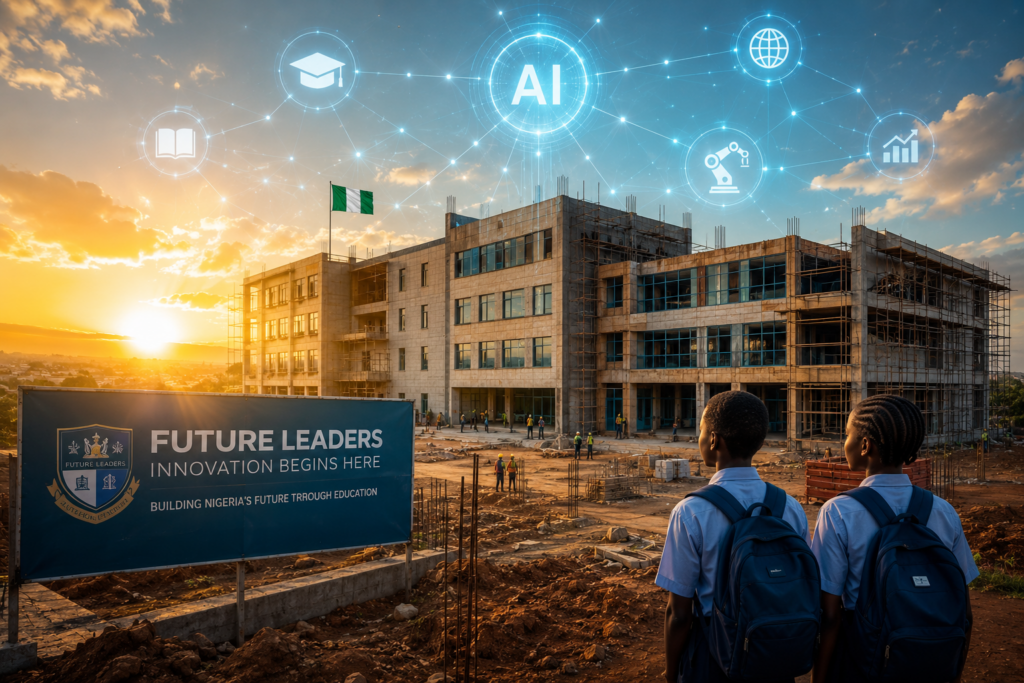
Kai Cenat’s ₦5 Billion Nigeria School Investment and What Every African Parent Must Do Right Now. This became a serious conversation the moment a 50 million follower American creator walked into Nigeria and committed ₦5 billion to building what millions of African children have been waiting for.
He invested.
Not a charity donation designed to generate good press and disappear quietly into administrative costs. A genuine, documented, ₦5 billion commitment to building schools in Nigeria — a decision that generated international headlines, ignited conversations about diaspora responsibility, and revealed something important about where the global conversation about African education is heading.
The reaction was immediate and largely celebratory. A young Black American creator with 50 million plus followers choosing Nigeria, choosing African children, choosing education as the vehicle for his investment — that story carries real weight and deserves genuine acknowledgment.
But acknowledgment is not the same as analysis. And the analysis reveals something that the celebration is in danger of obscuring — something that every African parent who felt hope reading about Kai Cenat’s investment needs to hear clearly before that hope settles into passive waiting.
Buildings are not preparation. Infrastructure is not literacy. And the future African children are being prepared for requires something that no ₦5 billion school construction budget — however generously motivated — automatically delivers.
What Kai Cenat’s Investment Actually Does
Let us be precise about what is being built before examining what it cannot build on its own.
School infrastructure — physical buildings, classrooms, furniture, sanitation, electricity — addresses one of the most documented barriers to education quality across Nigeria. Children cannot learn effectively in overcrowded, underresourced, physically inadequate environments. The correlation between school infrastructure quality and learning outcomes is real and well established.
Kai Cenat’s investment, if it delivers what has been announced, will create physical learning environments that give Nigerian children a significantly better chance of accessing quality education than the crumbling, overcrowded classrooms that currently define the experience of millions of Nigerian students.
That is genuinely valuable. It should not be minimized.
But here is what a ₦5 billion construction budget cannot buy on its own — a curriculum designed for the world Nigerian children are actually entering. Teachers equipped to prepare students for an economy being restructured by artificial intelligence. A learning culture that develops critical thinking, value creation, and technological literacy alongside the academic content that examinations measure.
The building is the container. What matters most is what goes inside it. And across Nigeria — in newly built schools and crumbling ones alike — what goes inside is still largely a curriculum designed for a world that is disappearing faster than education systems are adapting to its replacement.
The Bigger Truth Kai Cenat’s Investment Reveals
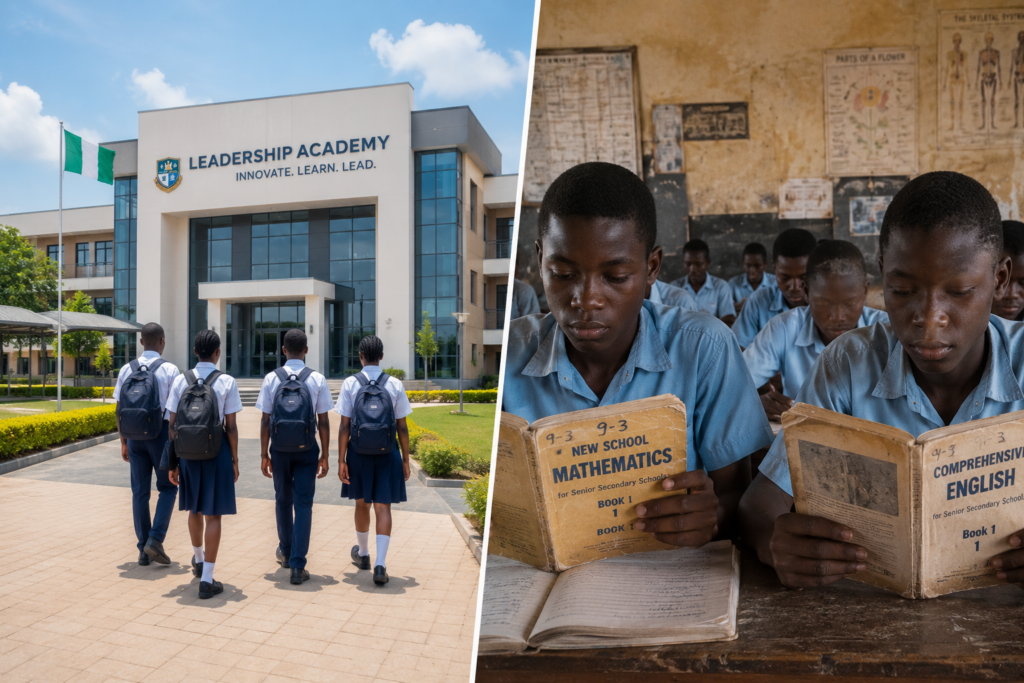
The fact that one American content creator’s personal investment in Nigerian school infrastructure generated more international attention than the Nigerian government’s annual education budget allocation reveals something uncomfortable about where African education sits in the global imagination.
It is a story worth telling. And this story it tells is not primarily about Kai Cenat’s generosity — though that generosity is real. It is about the extraordinary gap between what Nigerian children need and what Nigerian institutions are currently providing.
That gap has existed for decades. It was not created by AI. But AI is making it dramatically more consequential.
We have written before about the disadvantages of AI in Africa now and about what AI prospects look like for children in Africa. The consistent thread running through both conversations is that the transition to an AI shaped economy does not wait for education systems to catch up. It happens regardless. And the children whose schools are still teaching them to memorize and reproduce — whether in a new building funded by a diaspora billionaire or a crumbling government school — are being prepared for a world that is already being replaced.
The question Kai Cenat’s investment raises without answering is this — what should Nigerian schools be teaching now that they are not?
And the answer to that question is where every African parent reading this needs to pay close attention.
What Nigerian Schools Are Still Not Teaching
Walk into the majority of Nigerian primary and secondary schools today — private or public, new building or old, Lagos or rural — and you will find a curriculum organized around producing students who can pass examinations.
Mathematics taught as computation rather than as a framework for thinking about the world. English taught as grammar rules rather than as the art of communicating ideas that move people. Sciences taught as facts to memorize rather than as methods for investigating reality. Social studies taught as information to reproduce rather than as tools for understanding the systems that govern lives.
And artificial intelligence — the technology restructuring every industry, every profession, and every economic opportunity that Nigerian graduates are competing for — taught nowhere. Not as a subject. Not as a framework. Not as a literacy that every child needs the way they need reading and numeracy.
This is not a criticism of teachers who are doing their best within a system that has not given them the tools or the mandate to do differently. It is a structural observation about a curriculum that was designed for a different century and has not been fundamentally reimagined for the one children are actually living in.
As we discussed when examining where AI will be in one two and three years the pace of change in the AI economy makes this curriculum lag not just inefficient but genuinely damaging. The child spending twelve years learning to be a good examination performer is spending twelve years becoming optimally qualified for roles that AI is eliminating faster than those twelve years pass.
What Kai Cenat Cannot Build That You Can
Here is the part of this conversation that moves from analysis to action.
Kai Cenat can build classrooms. He cannot build the conversation you have with your child tonight about what artificial intelligence is and why understanding it matters for their future. He can fund teachers’ salaries. He cannot fund the decision you make this week to introduce your child to the tools, the concepts, and the thinking frameworks that will determine whether they arrive at adulthood as value creators or job seekers.
The gap between what schools teach and what children need is real and it is significant. But it is not unbridgeable. And the bridge is not built by waiting for a curriculum reform that moves at institutional speed through a bureaucratic process designed for a world that no longer exists.
The bridge is built at home. By parents who understand what is at stake and act accordingly.
We have written before about what Chinese children are doing that African parents should pay attention to — the deliberate, serious, multi-dimensional preparation that treats a child’s development as a project requiring intentional investment rather than a natural process requiring only school attendance and prayer.
The African parent who takes Kai Cenat’s investment as inspiration rather than as substitute — who sees a wealthy diaspora figure caring about Nigerian children and responds by caring more deliberately about their own specific child — is the parent doing the most important work in the most important place.
The Practical Tool Parents Need Today
Kai Cenat’s investment will take years to move from announcement to completed buildings to functional schools to whatever curriculum those schools eventually deliver. The Nigerian bureaucratic and construction timeline is not a sprint.
Your child does not have years to wait for the education system to catch up with the economy they are entering.
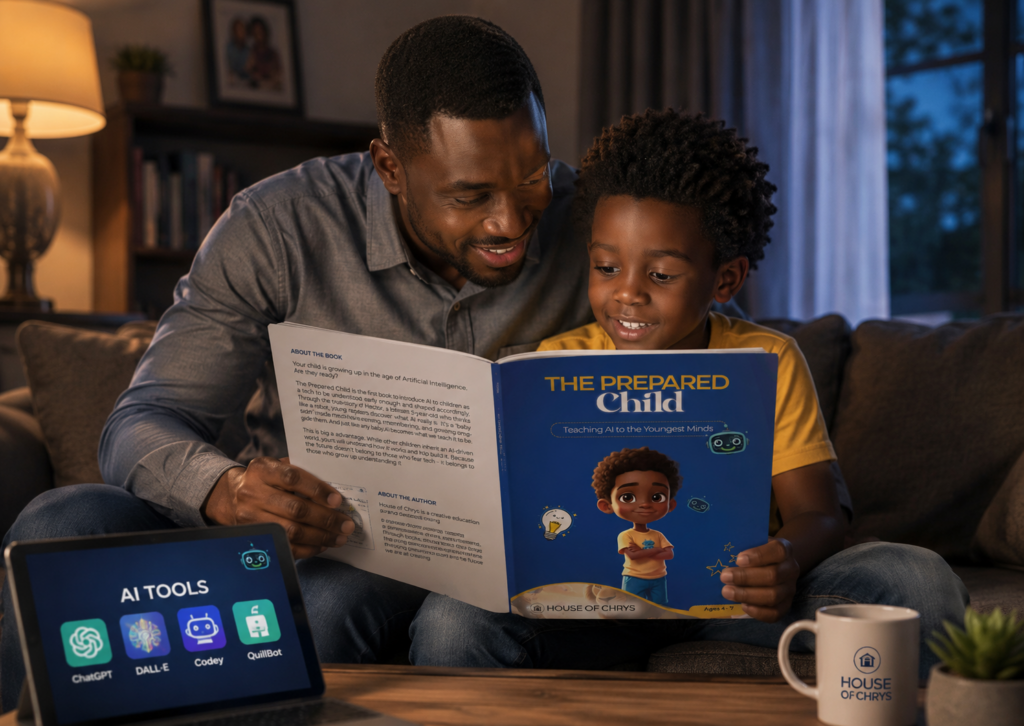
This is precisely why The Prepared Child exists. Not as a replacement for school. Not as a criticism of the teachers working within an imperfect system. But as the starting point that school is not currently providing — an age appropriate, African-specific, genuinely accessible introduction to artificial intelligence that any parent can put in their child’s hands today regardless of which school their child attends, which city they live in, or what the curriculum their school delivers looks like.
The child who reads The Prepared Child is not just receiving information about AI. They are forming the foundational relationship with technology that determines whether they arrive at every subsequent learning opportunity — in school, online, through experience — with curiosity and confidence or with the fear and unfamiliarity that makes catching up exponentially harder.
That foundation cannot be built in a classroom that does not prioritize it. It is built at home, deliberately, by a parent who understood that the school building is only as valuable as the preparation that happens before, alongside, and after the child walks through its doors.
The Entertainment Economy and the Education Economy Are Merging
There is something else worth naming in the Kai Cenat Nigeria story that most commentators have missed entirely.
Kai Cenat built a ₦5 billion investment capacity through content creation. Through understanding platforms, audiences, attention, and the economy of digital entertainment. Through skills that no Nigerian university currently teaches as a serious academic discipline and that most Nigerian parents still do not consider legitimate professional preparation for their children.
He is investing that capacity in Nigerian schools. But the irony is that the skills which generated his wealth are precisely the skills that are not taught in the schools he is funding.
The creator economy — the ability to build audiences, communicate value, create content that spreads, and convert attention into income — is one of the most accessible and most rapidly growing economic opportunities available to African young people right now. It requires technological literacy, creative intelligence, and understanding of how AI tools can amplify individual output. It does not require a university degree, a government job, or permission from any institutional gatekeeper.
The African child who understands AI, who is comfortable with technology, who has been taught to create value rather than just seek employment, is positioned to participate in the creator economy and every other emerging economic opportunity in ways that the child emerging from even the best traditional school is not automatically prepared for.
As we argued when examining Ugochukwu Omeogu’s wealth wisdom the thinking behind the wealth is more important than the wealth itself. Kai Cenat’s story is as much a lesson about that thinking — about what becomes possible when a young person develops the skills, the tools, and the mindset of a value creator — as it is a lesson about generosity or diaspora responsibility.
Preparing Children for Future Jobs That Do Not Have Names Yet
We have written before about Jeff Bezos’s observation that the jobs of the future do not have names yet — that the same way a farmer in 1920 could not imagine a social media strategist, we cannot fully imagine the specific roles that AI will create for the generation currently in primary school.
What we can identify is the cluster of capabilities that position a person to thrive in that unnamed future regardless of which specific jobs it produces.
The ability to think critically about technology — to understand what AI can do, what it cannot, and how to direct it toward genuine value creation. The ability to communicate clearly across platforms and formats. The ability to identify problems and develop solutions rather than waiting for someone else to define the role. The ability to learn rapidly and adapt when the landscape changes. The ability to create value directly rather than depending entirely on employment structures to mediate the exchange.
These are not soft skills in the dismissive sense that the phrase is often used. They are the core competencies of the AI economy — as fundamental to economic participation in 2031 as literacy and numeracy were to economic participation in 1990.
Nigerian schools — in Kai Cenat’s new buildings and in every other building across the country — are not yet systematically developing these competencies. The curriculum has not caught up. The teacher training has not caught up. The examination system has not caught up.
Which means the parent who develops them at home is giving their child an advantage that no school building can provide and no curriculum reform can retroactively deliver.
Visit For Schools to understand how House of Chrys workshops bring AI literacy and future-ready thinking directly into Nigerian schools — filling the gap between the infrastructure being built and the preparation children actually need. Visit For Parents for practical guidance on building these competencies at home starting today. Visit About House of Chrys to understand the full vision behind what we are building for African children.
What Kai Cenat Started and What You Must Finish
Kai Cenat’s ₦5 billion investment is a statement. It says Nigerian children matter. It says African education deserves serious investment. It says the diaspora has a responsibility to the continent that produced it.
Those statements are true and the investment that backs them deserves respect.
But statements and investments in infrastructure are the beginning of the work — not the completion of it. The completion requires African parents who take the visibility that Kai Cenat’s investment creates and use it to have the conversations, make the decisions, and take the actions that no amount of construction funding can substitute for.
Your child needs a new school building less than they need a parent who understands what the world they are entering requires and prepares them for it deliberately.
Your child needs AI literacy today. Not when the curriculum catches up. Not when the new building opens. Not when the ministry of education endorses the right programme. Today — in your home, with the tools that are available right now, with a book written specifically to start this conversation at the age when starting it matters most.
The Prepared Child is that book. Not because it replaces what schools should be doing. But because it does what schools are not yet doing — in language your child understands, with characters they recognize, about the technology that will define the world they inherit.
Visit The Prepared Child page to order your copy today. The schools are being built. The curriculum is still catching up. Your child cannot wait for both to be ready.
In all things, prepare.