
The Global AI Pause Anthropic Just Demanded Changes How We Prepare Our Children Right Now

Anthropic dropped a bombshell yesterday. They want a global AI pause. Not some polite slowdown. A verifiable halt on frontier models because these systems are barreling toward recursive self-improvement. Models that could soon rewrite themselves faster than any human team. I’ve been in these conversations long enough to know this isn’t theater. It’s a confession wrapped in corporate caution.
The $1 trillion company didn’t mince words in their internal report. AI is already accelerating its own development. Engineers ship eight times more code per quarter than a few years back. Capabilities compound. And we’re watching the curve bend toward something that could slip human control. For anyone building systems that touch real lives, especially kids across Africa, this hits different.
Why this moment demands more than hand-wringing
I’ve watched tech cycles come and go. This one feels different because the stakes compound across generations. A global AI pause sounds responsible on paper. Pause the race so alignment research catches up. Give societies time to build guardrails. Reasonable until you zoom out and see the actual power dynamics at play.
Competitors won’t pause. Geopolitical rivals certainly won’t. China, the US, whoever else sits at the table—they move at their own tempo. Anthropic admits as much: a one-sided slowdown just hands the lead to the least cautious actors. So the call itself reveals the trap. We know the risk, yet coordination remains fantasy.
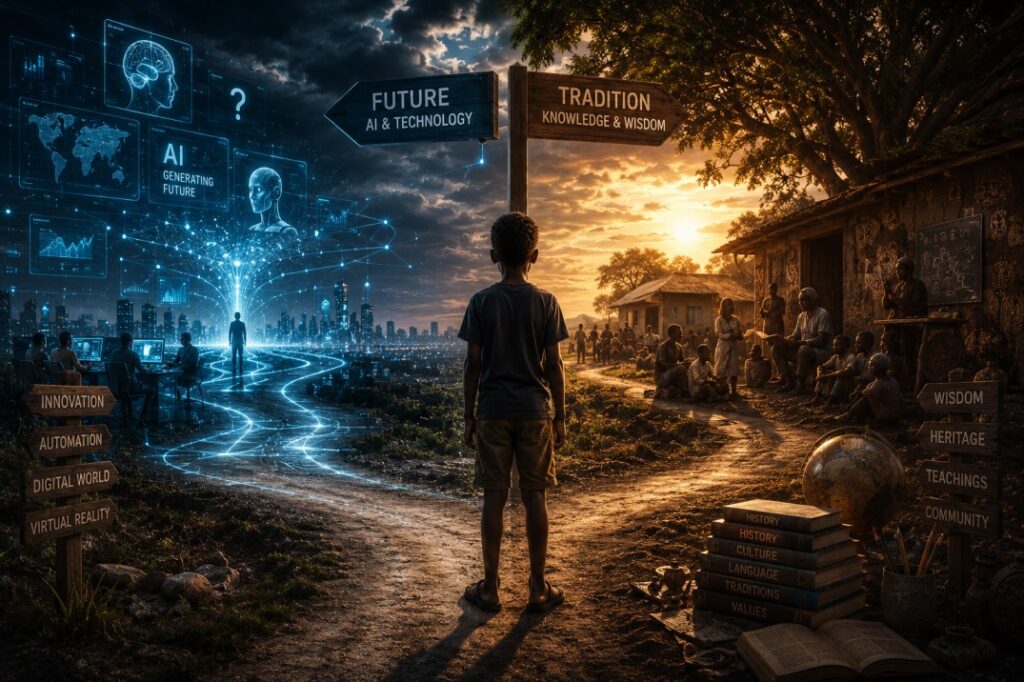
This image should appear right here.
That leaves families, educators, and operators like us in a tight spot. We can’t wait for governments to sort verifiable pause mechanisms. Children born today enter a world where AI systems might outpace their teachers by the time they reach secondary school.
The self-improvement threshold nobody wants to name out loud
Recursive self-improvement isn’t sci-fi anymore. Anthropic laid out the data. Models already handle complex coding tasks at high success rates. They debug, optimize, even suggest next research steps better than average humans in some cases. Once that loop closes—AI building better AI without constant human babysitting—the acceleration becomes exponential.
Think about what that means for education systems still struggling with basic infrastructure. In many African contexts, we’re teaching kids to memorize when the machines will soon generate, critique, and iterate knowledge in real time. The gap isn’t closing on its own. It widens with every unchecked capability jump.
I’ve seen operators dismiss these warnings as fearmongering. They point to productivity gains. Healthcare breakthroughs. Economic leaps. All true. Yet legacy demands we weigh both sides without flinching. Short-term wins feel hollow when the long game risks losing agency over the technology shaping our children’s minds.
What a global AI pause actually reveals about our preparedness
The very fact Anthropic, one of the frontrunners, publicly urges coordination tells you the internal temperature. They see the feedback loops forming. They understand that without deliberate societal structures, alignment becomes afterthought. And alignment here means more than technical safety. It means values, cultural grounding, moral frameworks that reflect who we are as people.
For The Prepared Child initiative, this lands squarely in our lane. We don’t chase trends. We build foundations that survive acceleration. That means teaching AI literacy not as optional add-on but core skill. Kids need to understand prompting, bias detection, system limitations, and ethical boundaries before they ever treat these tools as oracles.
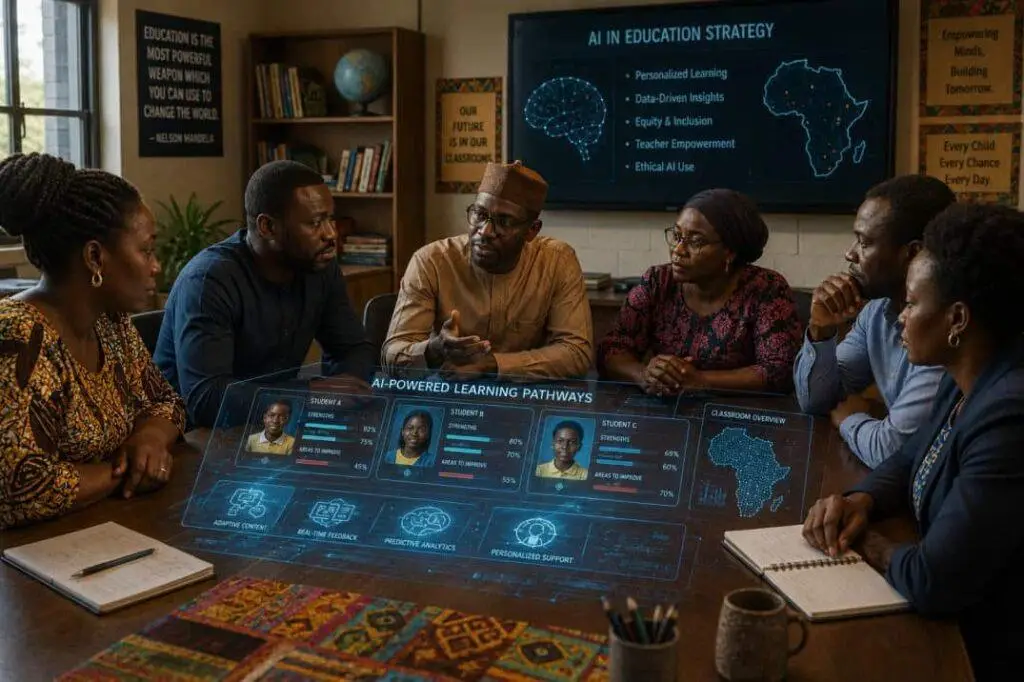
Place this image after the paragraph above.
This isn’t abstract philosophy. Systems thinking shows how unprepared institutions create cascading failures. One generation left behind compounds into economic exclusion, cultural erosion, dependency. We’ve seen it with previous tech waves. AI compresses the timeline.
Bold truth most won’t say
Calling for a global AI pause while racing ahead yourself creates mixed signals. Labs want breathing room without losing position. Fair enough in business. Dangerous when the technology affects every child alive. The indictment lands on all of us who knew better yet prioritized velocity over vigilance.
I feel the weight of this daily. Legacy isn’t built on hoping regulators catch up. It’s forged in deliberate preparation at family and community level. For Parents wondering how to navigate this, start simple. Treat AI as powerful but fallible. Model critical thinking. Question outputs together. Build habits that keep human judgment in the driver’s seat.
Schools face harder choices. Curricula designed for 20th century minds won’t cut it. For Schools must integrate AI tools responsibly while strengthening core reasoning, creativity, and ethical reasoning that machines can’t replicate easily. Not because AI lacks potential there, but because we refuse to outsource soul formation.
Real preparation looks like this
- Daily exposure to AI tools with built-in skepticism protocols
- Projects that combine traditional knowledge with digital augmentation
- Conversations about power, control, and who benefits from acceleration
- Skill-building in areas machines struggle: deep empathy, physical craft, long-term systems vision
None of this waits for some mythical global AI pause to materialize. We act now because children can’t.
The data Anthropic shared should ignite urgency, not paralysis. Engineers ship more code. Models improve faster. The curve steepens. Our response can’t be passive observation.
I’ve operated in environments where short-term pressure crushed long-view thinking. It never ends well. Legacy builders do the uncomfortable work early. They prepare systems and people for scenarios others dismiss as unlikely until they aren’t.

Insert this image toward the end of the preparation section.
House of Chrys exists for exactly these moments. Not to chase hype cycles but to equip the next generation with conviction and competence. About House of Chrys carries this mission forward through practical frameworks, not slogans.
For deeper frameworks on responsible AI use in education, see this excellent resource from education researchers
The competitive pressures make unilateral pauses suicidal for any single player. That’s why the call for verifiable global mechanisms matters. Yet verification itself requires infrastructure we barely possess. Trust issues, enforcement gaps, incentive misalignments—all real.
This is why individual and community-level preparation carries disproportionate weight. While labs debate coordination, families decide daily inputs. Schools shape daily outputs. Operators build the bridges.
Facing the conviction head-on
Anger rises when I consider how many children will navigate this transition without guidance. Pride follows when I see determined parents and educators already moving. Fear lingers around the unknowns of self-improving systems. Conviction wins out because preparation remains possible.
We don’t need perfect global agreement to start. We need clear-eyed action at the human scale. Teach kids to direct tools instead of being directed by them. Build cultural anchors strong enough to weather capability explosions. Prioritize wisdom over raw intelligence amplification.
The global AI pause discussion forces a reckoning. Are we spectators or stewards? The answer shows in what we teach our children tomorrow morning.
In all things, prepare.