
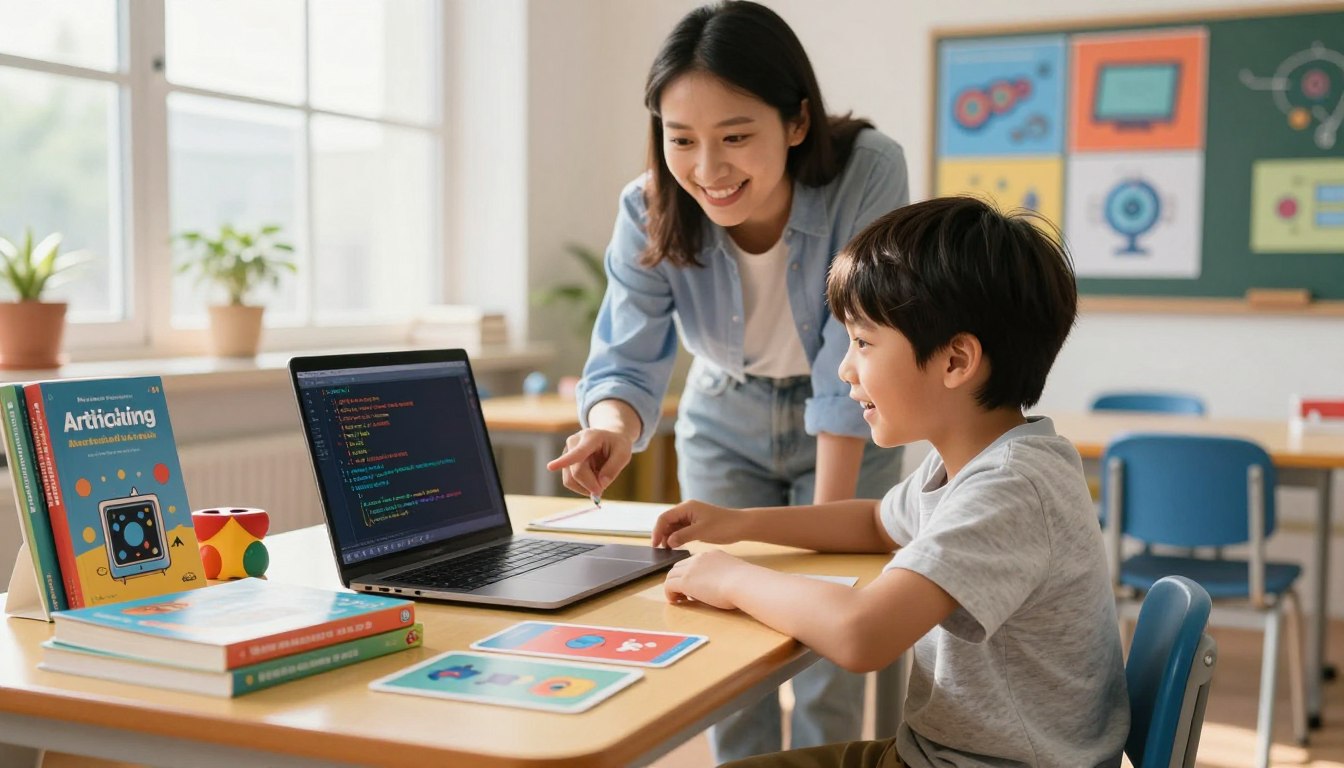
What if the most important subject for your child’s tomorrow isn’t taught in any classroom today?
Your son or daughter lives in a world run by smart machines. This technology suggests their next show and answers their casual questions. It’s the fabric of their reality.
That future is here. It’s not coming—it has arrived. And standard education is scrambling to catch up.
We must act now. The goal is clear: move from simple understanding to active creation. Turn a passive user into a confident builder of digital solutions.
Starting this path today builds the critical thinking they’ll need. It prepares them for the new economy. Giving your family this practical knowledge is the strongest step you can take.
This is about securing their place in a world they will shape.
Key Takeaways
- Smart machine technology is already woven into everyday life, from entertainment to home assistants.
- The digital future is unfolding now, often faster than traditional schools can adapt.
- Early engagement transforms young minds from technology consumers into confident creators.
- Developing critical thinking is non-negotiable for success in the new digital economy.
- Practical, hands-on knowledge today builds a child’s competitive advantage for tomorrow.
- Parental guidance is the essential bridge between a child’s curiosity and their preparation.
- Fun, project-based growth builds a lasting foundation for essential future-ready skills.
Understanding the Importance of AI Literacy for Kids
The true power of artificial intelligence isn’t in using it—it’s in understanding how it thinks.
This literacy moves your child from being a passenger to becoming a navigator. They learn to see the logic behind the “superpowers” of modern tools.
Create & Learn has guided students in grades 4-12 for over six years. We focus on this deep understanding.
Building Future-Ready Skills
The world changes fast. Industries now run on data and machine decisions.
Your child needs more than basic computer skills. They need to grasp how these systems work from the inside out.
This isn’t just about math. It’s about pattern recognition, speech analysis, and logical reasoning.
| Traditional Digital Learning | AI Literacy Learning | Key Outcome |
|---|---|---|
| Focus on software use | Focus on system logic | User vs. Builder Mindset |
| Memorization of steps | Understanding of concepts | Adaptable Problem-Solving |
| Isolated skill building | Integrated critical thinking | Future-Ready Preparedness |
Developing Critical Thinking
When kids learn how machines make choices, they sharpen their own decision-making. They start to ask better questions.
“The goal of education is not to fill a bucket, but to light a fire.” – William Butler Yeats
Our approach lights that fire. We show how data shapes outcomes. This builds the critical thinking required for complex future careers.
Your child won’t just keep up with the world. They will be prepared to lead in it.
Why Parents and Teachers Choose the ai kids course
Why do families and schools consistently choose one program over countless others? The answer lies in empowerment.
Parents and teachers trust content shaped by world-class experts. Dr. Jules White of Vanderbilt University brings his vast experience—guiding over 1.1 million learners.
Our selection process is rigorous. We choose less than 5% of teacher candidates to ensure exceptional instruction for every student.
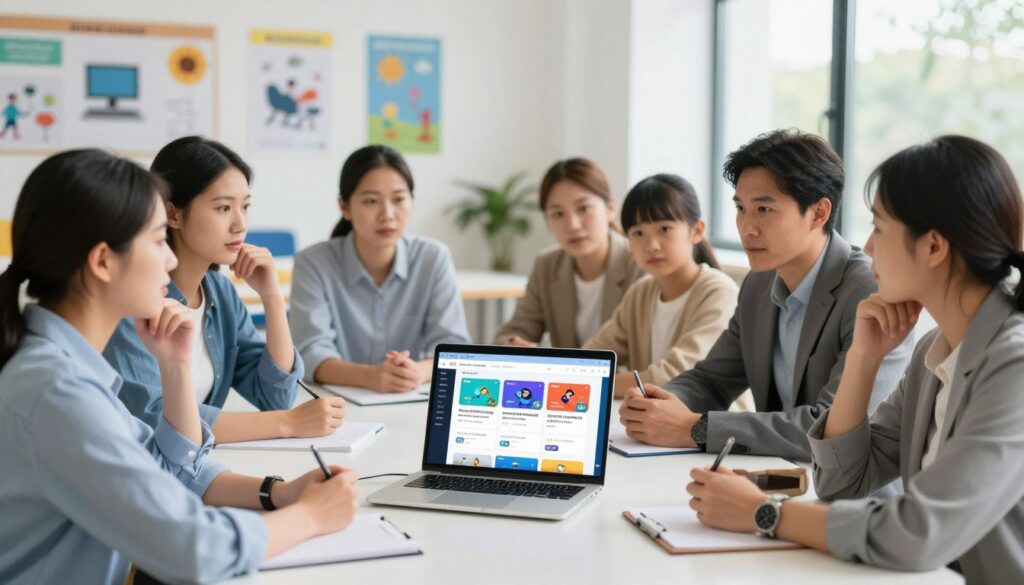
Empowering Young Minds with AI
This learning journey moves children from simple users to confident creators. They engage with artificial intelligence as a tool for thought.
Young minds learn to ask better questions. They develop the skills to navigate a complex, technology-rich world.
Fostering Creativity and Innovation
Structured activities turn curiosity into tangible projects. Students don’t just follow instructions—they experiment and innovate.
This approach amplifies their innate creativity. It builds a foundation for original thinking and future-ready problem-solving.
You are not just selecting a course. You are joining a global community of parents and teachers dedicated to preparing children for tomorrow.
Course Overview and Engaging Modules
How does a six-hour journey turn a curious mind into a capable creator? The answer is in the design.
Nearly 8,000 young minds have already walked this proven path. They’ve left over 113 reviews praising its clarity.
This isn’t a random collection of lessons. It’s a precise blueprint for foundational understanding.
Module Breakdown and Flexible Scheduling
Our flagship program is built on four core modules. The entire journey takes about six hours.
Your child controls the pace. The schedule bends to your family’s rhythm—not the other way around.
Each step builds upon the last, creating a solid framework for real comprehension.
| Module Focus | Core Activity | Skill Outcome |
|---|---|---|
| Foundational Concepts | Interactive Exploration | Understanding System Logic |
| Pattern Recognition | Hands-on Data Analysis | Critical Observation |
| Creative Application | Project Building | Innovative Problem-Solving |
| Real-World Connection | Ethical Discussion | Responsible Creation |
Interactive Videos and Readings
Passive watching doesn’t build skills. Our dynamic videos demand participation.
Students pause, practice, and apply concepts immediately. Comprehensive readings reinforce every lesson.
This multi-format experience cements knowledge. It turns abstract ideas about this technology into tangible, usable ability.
We offer a variety of courses for different levels. Every student finds their right path for growth in a changing world.
Hands-on Learning with Real-World AI Projects
Imagine your child not just learning about smart machines, but actually teaching one. True understanding ignites when theory meets practice.
We believe in the power of creation. Real-world projects transform passive knowledge into active, usable skill.
Interactive Activities for Exploration
Tools like Google’s Teachable Machine make the exciting world of image recognition accessible. Young students don’t just watch—they train a simple model to see.
This is how kids explore. They gather pictures, label data, and witness a machine learning pattern. Abstract ideas become concrete.
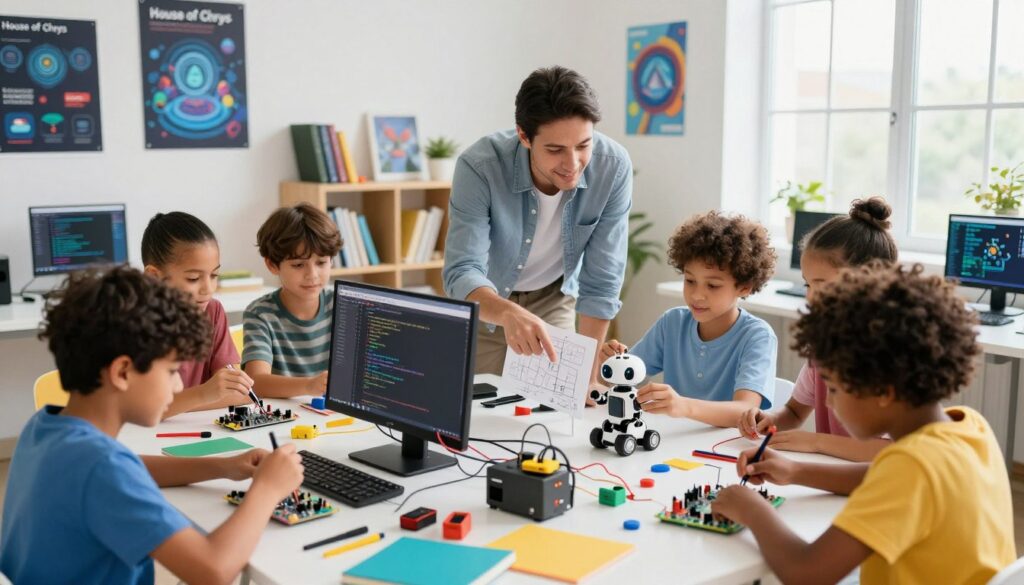
Practical AI Projects with Guided Exercises
Every project follows a clear path: gather, train, test. Your child builds a simple application from start to finish.
They see how a machine learning model makes predictions. Guided exercises connect this experience to everyday life—like how a phone recognizes a face.
This hands-on projects approach builds tangible confidence. Students move from following steps to guiding the technology itself.
They gain a foundational understanding of artificial intelligence. More importantly, they gain the courage to build what’s next.
Integrating Machine Learning and Computer Vision in Education
The next frontier in education isn’t about using apps—it’s about creating systems that see, understand, and decide.
This integration forms the core of modern artificial intelligence. Your child learns to build both the brain and the eyes of a smart machine.
Exploring Machine Learning Concepts
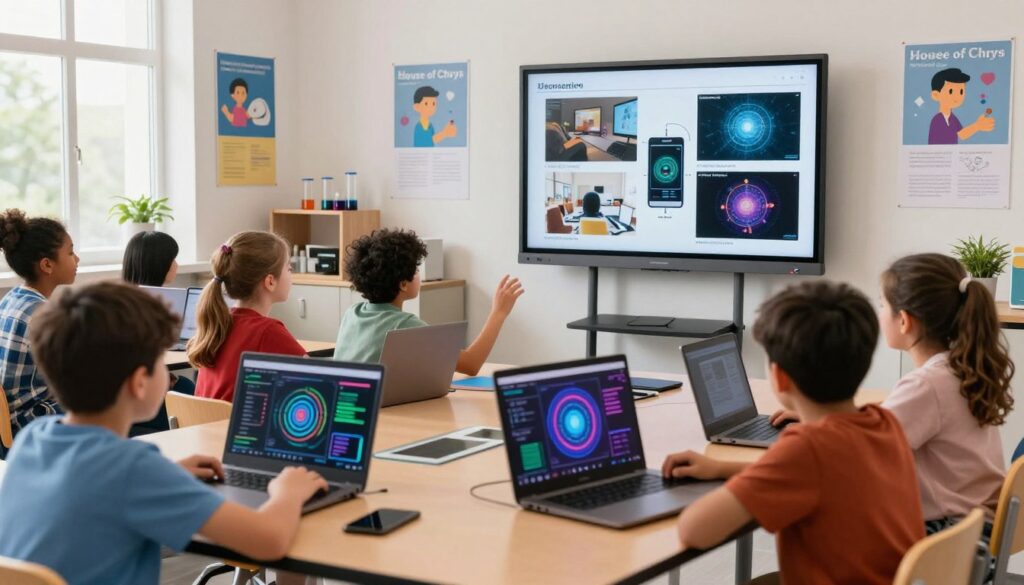
We start with machine learning concepts through playful creation. Young learners use Scratch coding to build interactive games.
They train a simple model to recognize hand gestures like rock, paper, and scissors. This turns abstract ideas into tangible, fun projects.
| Learning Stage | Tool Used | Project Example | Skill Gained |
|---|---|---|---|
| Introduction | Scratch Blocks | Gesture Recognition Game | Understanding System Logic |
| Exploration | Visual Coding | Basic Pattern Trainer | Data Labeling & Analysis |
| Application | Beginner Python | Simple Image Classifier | Algorithmic Thinking |
| Advancement | Industry Python | Complex Vision Application | Real-World Problem Solving |
Understanding Computer Vision Applications
Computer vision teaches how machines “see” through cameras and sensors. Kids learn to interpret the visual world digitally.
As students progress, they transition to Python. This text-based language is the industry standard for advanced machine learning systems.
Your child doesn’t just play games—they build tools that solve real-world problems. We demystify how models are trained, turning complex tech into manageable tasks.
Balancing Fun and Educational Value in AI Lessons
The line between a classroom and a playground vanishes when learning becomes an immersive game.
We design lessons where serious concepts feel like joyful discovery. This balance is everything.
Engaging Games and Simulations
Take Minecraft Education Generation AI. This free game lets young minds travel through time.
They build helpful inventions powered by this technology. History and innovation merge into play.
This is the exciting world where kids explore the logic behind artificial intelligence. Abstract ideas stick because they are earned through fun.
| Learning Method | Primary Tool | Student Role | Key Outcome |
|---|---|---|---|
| Traditional Lecture | Textbook | Passive Receiver | Memorization |
| Game-Based Simulation | Minecraft Education | Active Creator | Applied Understanding |
| Small Group Project | Coding Platform | Collaborative Problem-Solver | Teamwork & Innovation |
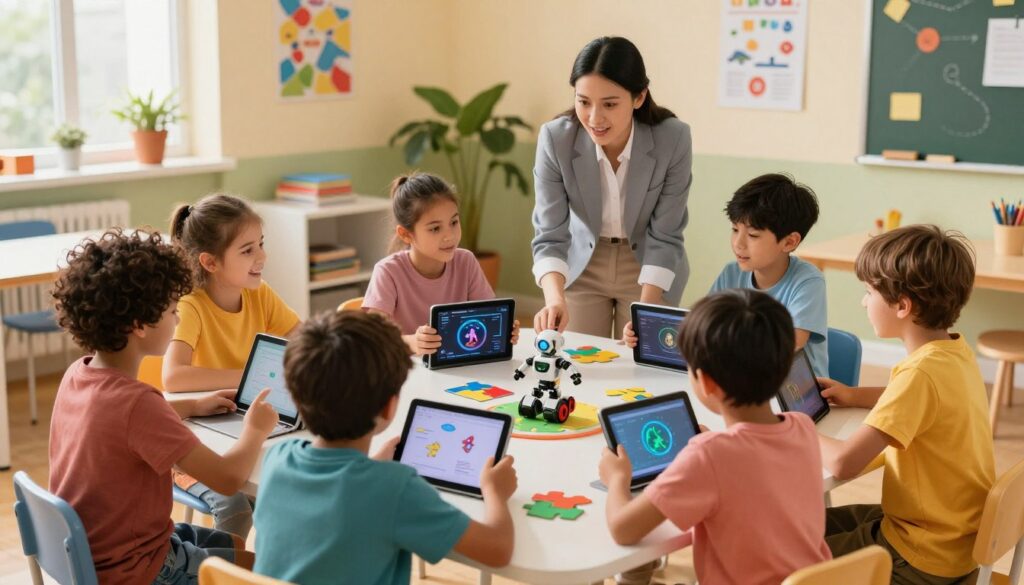
Interactive Classroom Experiences
Our groups are small—only 3 to 5 students. This ensures every child receives personalized guidance.
An expert instructor watches, supports, and challenges in real time. Your child is never lost in a crowd.
They apply their coding skills immediately through hands-on projects. The experience is engaging because they see their own progress.
“Play is the highest form of research.”
Our approach proves smart technology can be a creative adventure. We give young builders the right tools and expert support.
Safeguarding and Ethical Practices in AI for Kids
True empowerment in technology comes not just from capability, but from conscience.
We build guardrails alongside skills. This ensures young minds grow with both power and protection.
Popular tools like ChatGPT and Google Gemini have age limits—often restricting access to those under 13. This isn’t a barrier. It’s a signal for guided, responsible introduction.
Promoting Responsible and Safe AI Use
We teach that every tool requires mindful handling. Young people must question accuracy and prioritize safety above all.
Parents are the essential guides here. Your involvement helps cultivate habits that avoid shortcuts and verify information.
This builds a foundation of trust between your child and the technology they will master.
Cultivating Ethical AI Habits
Our curriculum emphasizes the real-world impact of bias in machine systems. Students learn why fairness matters in creation.
Lessons for every grade level focus on psychological and physical safety. We discuss digital content interaction with clear boundaries.
Through responsible coding and usage, students develop a healthy relationship with artificial intelligence. They grasp core concepts of ethical design.
This isn’t just about rules. It’s about building character for the digital age—where every line of coding carries weight.
Future Opportunities Through AI-Powered Learning
Your child’s first portfolio piece could be the key that unlocks doors to careers still being invented. This is the power of AI-powered learning—it builds a direct bridge to the digital economy today.
Preparing Young Learners for the Digital Economy
Mastery now creates a competitive edge later. The new economy rewards builders, not just users.
Your child gains early access to a vast library of knowledge—like over 10,000 world-class courses and job-ready certificate programs.
This isn’t about keeping up. It’s about leaping ahead with future-ready confidence.
Unlocking Career-Relevant Skills Early
We focus on tangible abilities. Python programming and smart application development become second nature.
Students construct a portfolio through hands-on projects that solve real problems. This portfolio showcases innovation to future employers.
It proves they can navigate the exciting world of technology creation. Kids explore the future of work where artificial intelligence is central.
They learn coding fundamentals and machine learning concepts.
Starting this journey now lays the best foundation. Your child gains the skills to lead in an AI-driven world.
Conclusion
The most powerful lesson a child can learn is that they are not just passengers in a digital world—they are its architects.
Preparing for this future demands proactive learning. Your child must understand the systems that will define their adult lives.
Our program delivers the essential basics—from machine learning concepts to computer vision. We make complex ideas accessible through engaging projects and games.
Expert teachers guide your child to develop critical thinking and ethical habits. They gain confidence to navigate this new world responsibly.
Join thousands of parents and educators on this transformative journey. Don’t wait for the future to arrive.
Take the first step today. Equip your child with the skills to build what comes next.