

What if the key to your child’s future isn’t just a good school, but the right kind of intelligence?
The world is changing fast. Artificial intelligence is no longer a distant concept—it’s the engine of today’s economy.
Your child’s stability and success depend on the educational choices you make right now. This is an uncomfortable truth, spoken with care.
South Africa is ready. With 24 universities contributing to global research and over a million academic citations, the foundation is strong.
Understanding this landscape is your first step. It’s about protective, parental foresight.
This guide cuts through the noise. It gives you the clarity to navigate with confidence and secure a future-ready path for your family.
Key Takeaways
- The future of your child is directly tied to the educational decisions you make today.
- Artificial intelligence (AI) is a fundamental pillar of modern economic growth and professional success.
- South Africa has a robust academic foundation for AI, with 24 universities generating significant global research.
- Navigating the educational terrain requires clear, confident guidance from a parental perspective.
- Preparing your child for an AI-driven world is an act of protective care and necessary foresight.
- Actionable knowledge, not just inspiration, is what transforms a family’s future prospects.
Introduction to AI Studies in South Africa
Parents now face a pivotal moment: selecting an educational track that builds true future resilience.
The landscape here hosts diverse programs—from short-term bootcamps to rigorous master’s degrees. Specialized training in machine learning and advanced computational systems is now a core part of the ecosystem.
This is a critical phase. The choice you make now defines your child’s long-term professional trajectory.
A solid foundation in artificial intelligence principles is the new literacy for tech leadership.
Many institutions across the nation offer dedicated pathways. These bridges connect traditional computer science with modern algorithmic development.
Do not just skim brochures. Look deeper to evaluate which programs provide the most robust support for your child’s academic journey.
The right program doesn’t just teach code—it builds a mindset for innovation.
This overview clarifies the current state of higher education. It reveals the real opportunities available for aspiring tech leaders.
Understanding this field is no longer optional—it’s essential for future-ready preparation.
The Importance of AI Education for Future Careers
Your guidance today determines whether your child leads the technological change or follows it.
The professional landscape is shifting beneath our feet. A future-ready career is no longer about a single degree.
It demands a mindset of continuous learning. Industries now prize those who can adapt as systems automate.
Developing technical skills early creates a durable advantage. This isn’t just about using tools—it’s about building them.
You hold the power to steer your child from consumer to creator. This is the protective truth you must face.
Investing in deep, quality education now is an act of foresight. It prepares them for an integrated professional world.
| Area of Competency | Past Emphasis | Future Necessity |
|---|---|---|
| Problem-Solving | Manual Processes | Algorithmic Design |
| Data Interpretation | Basic Analysis | Machine Learning Models |
| Technical Proficiency | Software Usage | Code & System Creation |
Do not wait for the market to demand these abilities. Equip your child with them today.
The right learning path transforms uncertainty into confidence. It builds the foundation for a leading career.
Ranking of South African Universities in Artificial Intelligence Research
Your child’s potential needs a launchpad built on proven research excellence.
The landscape here is defined by influence, not just enrollment numbers. High-impact research creates the environment where future innovators thrive.
Key Ranking Metrics and Citation Analysis
True academic power is measured in citations. Across 24 universities in South Africa, 63.2 thousand papers have garnered 1.06 million citations.
Each citation represents a ripple of influence in the global scientific community. It signals where the cutting-edge work is happening.
| Primary Research Hub | Estimated Papers (000s) | Estimated Citations (000s) | Focus Area |
|---|---|---|---|
| Pretoria | 18.5 | 310 | Applied Systems & Robotics |
| Cape Town | 16.8 | 295 | Machine Learning Theory |
| Stellenbosch | 12.1 | 205 | Data Science & Analytics |
| Durban | 9.5 | 160 | Computational Intelligence |
This table illustrates where concentrated intelligence work occurs. Prioritize institutions in these hubs.
Top Cities for AI Excellence in South Africa
Four cities lead the nation: Pretoria, Cape Town, Stellenbosch, and Durban.
These are ecosystems, not just campuses. They connect students directly to a current of innovation and high-impact research.
Your choice connects your child to this network. It’s a decisive step toward a future-ready career.
Comparative Overview of AI Programs in Major Universities
Consider this: a single academic program can set the trajectory for your child’s entire career in technology.
Comparison is not about ranking—it’s about matching your child’s potential with a pathway that delivers tangible results. You need to look at graduate outcomes, curriculum depth, and institutional support.
Leading institutions offer distinct approaches. Your task is to find the one that builds not just knowledge, but future-ready capability.
University Cape Town’s Bachelor Pathway
The University Cape Town (UCT) provides a clear and powerful entry point. Its three-year Bachelor of Science in computer science is a prestigious gateway.
This degree is designed for success. An exceptional 90% of graduates secure employment within six months of completion.
Students first master core algorithms and data structures. The third year then focuses on machine learning and advanced computational theory.
You can trust this balance. It combines rigorous academic theory with the hands-on experience industry demands.
The pathway is built to support development at every stage. It transforms a heavy responsibility into a confident choice for your child’s future.
Exploring Where Can I Study Artificial Intelligence in South Africa
The search for the right academic program is more than a question—it’s a strategic decision for your family’s future.
You are not just looking for a campus. You are seeking a foundation that protects your child’s professional destiny.
Effective programs blend rigorous theory with direct, hands-on practice. They use real-world datasets to build true competency, not just textbook knowledge.
A structured learning environment provides the necessary discipline. It turns raw potential into sustained, academic success.
Look closely at the specific modules each institution offers. This is how you ensure the curriculum aligns with your child’s unique interests and strengths.
The journey to mastery is long. Starting with clear, confident information makes the path forward obvious for both you and your child.
This exploration is your first, decisive step. It transforms uncertainty into a mapped, future-ready trajectory.
In-Depth Look at Postgraduate AI Programs
Master’s programs are the forge where academic potential is hammered into career-ready expertise. This is the level where true specialization begins.

Stellenbosch, Wits, and UJ Program Comparisons
Stellenbosch University offers a rigorous one-year MSc. Its 80% industry placement rate speaks to immediate professional impact.
The University Witwatersrand provides a two-year MSc that demands a 65% average. This filter ensures only the most dedicated students advance to their thesis work.
At the University Johannesburg, the master’s program is built around eight core modules. Learning happens at the Auckland Park Kingsway Campus for a practical, hands-on focus.
Course Duration, Fees, and Research Opportunities
You must compare financial commitments carefully. Fees range from approximately R40,000 to R50,000 at Stellenbosch, to a set R44,000 at Wits.
Each program provides unique research pathways. Students contribute directly to the growing body of knowledge in this field.
This choice is about matching your child’s timeline and academic drive with the right environment for deep research. It’s an investment in their capacity to innovate.
Fees, Funding, and Scholarships for AI Studies
Planning for tuition costs in South Africa is not just about budgets—it’s about securing your child’s access to future-ready knowledge.
Managing these expenses requires foresight. You must approach this with the same care as choosing the academic program itself.
Tuition Fees Overview Across Institutions
Annual fees vary by institution and program depth. Understand the landscape before committing.
| Institution | Program Focus | Annual Fee Range (ZAR) | Key Note |
|---|---|---|---|
| Stellenbosch University | Master’s in AI | R40,000 – R50,000 | Reflects program intensity |
| University of the Witwatersrand | MSc in AI | ~R44,000 | Fixed annual rate |
| University of Cape Town | BSc Computer Science | R60,000 – R70,000 | Includes AI modules |
| University of Johannesburg | Master’s in AI | R45,000 – R55,000 | Industry-aligned curriculum |
Scholarship and Funding Opportunities
Do not let cost be a barrier. Active pursuit of funding is your responsibility.
Many universities in South Africa offer internal bursaries. External organizations also support talented students.
Seek out scholarships actively. This ensures your child focuses entirely on their development.
Early planning provides peace of mind. It transforms financial concern into confident support.
Admissions Requirements and Preparatory Steps
Your child’s journey into advanced technology begins long before the first university lecture.
Admission is a deliberate process—it tests readiness and personal initiative. You must prepare with the same care you give to choosing the program itself.
Necessary Academic and Technical Skills
Competitive programs set a clear bar. A strong background in mathematics is essential.
Most require a minimum average of 65% in the final year. This isn’t just a number—it’s a signal of consistent academic discipline.
Technical skills are non-negotiable. Proficiency in Python programming is the expected foundation.
Encourage your child to build a portfolio. Real-world projects demonstrate the ability to apply theory.
The application needs certified transcripts and a compelling motivation letter. This letter should highlight specific research goals.
Taking these steps seriously transforms hope into a high-probability outcome. It significantly increases acceptance chances for students.
Your guidance here builds more than an application—it builds future-ready capability.
Application Process and Important Deadlines
A single missed date can close a door that years of preparation worked to open.
The administrative step is where your child’s readiness meets real opportunity. It demands the same focus as their academic work.
Navigating the online application portal for universities in South Africa requires strict attention. Every field must be correct—every document pristine.
Deadlines are non-negotiable. For the University of the Witwatersrand, the cutoff is typically 31 December.
At Stellenbosch, applications must be submitted between August and October each year. Mark these dates now.
Missing a deadline is a devastating setback for students. Your role here is protective guidance—ensuring no path is blocked by an oversight.
Keep a dedicated calendar for all submissions. Verify that transcripts and CVs are uploaded correctly to the portal.
Supporting your child through this process is a vital act of care. It turns administrative duty into a confident launch toward their future.
Industry Collaborations, Mentorship, and Real-World Experience
Mentorship from global leaders transforms potential into undeniable professional power.
The best programs connect your child directly to the frontier of innovation. This is where academic theory meets the engine of real-world progress.

Partnerships with Tech Leaders and Mentorship Programs
Consider the AMMI program—a ten-month, fully funded experience. It partners with giants like Google DeepMind and Facebook.
This is not just a name on a brochure. It is direct access to the minds shaping the future of artificial intelligence.
Your child gains a guide, not just a teacher. This mentorship builds the mindset for leadership.
Career Placement and Industry Relevance
True preparation happens through applied research. Students tackle complex scientific challenges using real datasets.
These projects bridge the gap between the classroom and the boardroom. They ensure your child is ready for the demands of the modern workplace.
Look for programs built on this industry relevance. It is the protective truth—theoretical knowledge must translate into practical skill.
This collaborative research creates a portfolio of proven capability. It opens doors long before graduation.
Integrating AI with Computer Science and Engineering
The most powerful technical minds don’t just specialize—they integrate.
Guiding your child toward this fusion is a strategic move. It builds a versatile, future-ready skill set.
Look at the University of Pretoria’s Honours pathway. Modules like COS 710 and COS 711 dive deep into intelligent systems.
This isn’t just extra coursework. It’s the bridge between core theory and applied innovation.
A strong foundation in engineering principles is non-negotiable. It teaches how to build robust, scalable solutions for real-world needs.
Your role is to steer them toward programs that emphasize this intersection. A well-rounded education here separates followers from leaders.
| Core Discipline | AI Integration Focus | Career-Ready Skill |
|---|---|---|
| Computer Science | Algorithm Design & Machine Learning | Creating Adaptive Software |
| Engineering | System Robustness & Hardware Synergy | Building Scalable Solutions |
| Systems Design | Intelligent Automation Architecture | Orchestrating Complex Workflows |
The future belongs to integrators. Those who see the whole technical landscape, not just one piece.
Choose a path that weaves these threads together. It transforms your child from a graduate into a defining innovator.
Flexible Learning Options: Traditional vs. Online Courses
Flexibility in education is no longer a luxury—it’s a strategic necessity for modern families.
The old model of a fixed campus schedule doesn’t fit every life. Your child might need to balance their learning with other responsibilities.
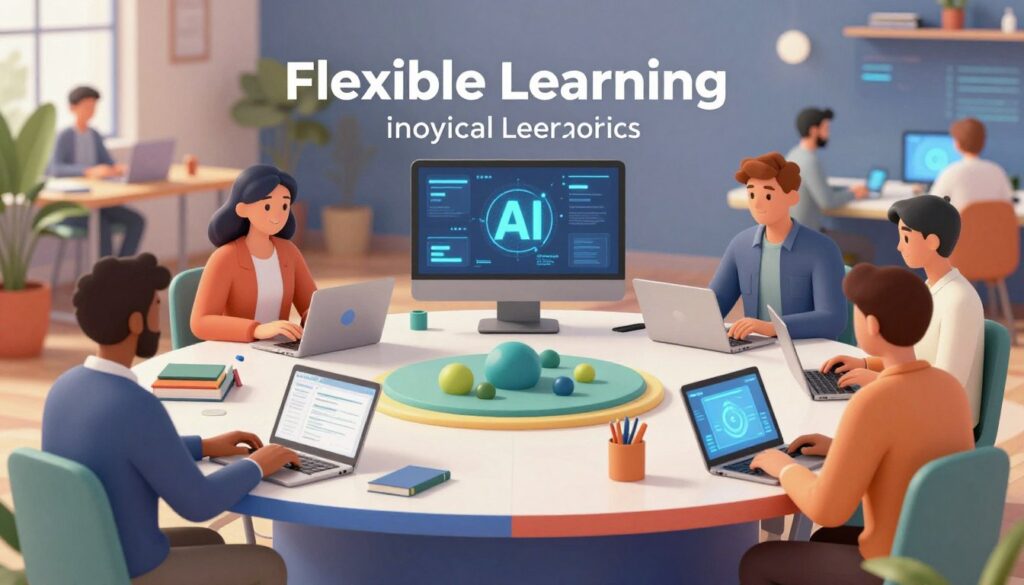
Online paths offer adaptability. Traditional degrees provide unmatched depth and structure.
This is the protective truth you must face. Choosing the right format is as crucial as choosing the subject.
| Learning Format | Core Strength | Ideal For |
|---|---|---|
| Traditional University | Deep, structured curriculum & peer networking | Full-time students seeking comprehensive degrees |
| Online & Digital Courses | Pacing flexibility & immediate skill application | Balancing work or exploring a field first |
| Hybrid Programs | Blends theoretical depth with practical scheduling | Those wanting both academic rigor and adaptability |
Free Online AI Courses and Digital Certificates
You can guide your child to test their passion without a major financial commitment.
Platforms like AltSchool Africa offer a free, 8-module course. It introduces the basics of intelligence systems without the pressure of complex math.
These digital certificates provide foundational knowledge. They are a perfect starting point for a journey into computer science and data.
This exploration is vital. It helps determine if a deeper university program is the right next step.
These resources represent the democratization of education. Accessible learning builds essential literacy for everyone.
Student Experiences and Success Stories
You need to see the destination before you can trust the map—these stories are that destination.
Many students across South Africa now lead in top tech firms. They leveraged rigorous academic training to secure high-paying roles.
Hearing these accounts provides vital motivation. It helps your child persist through complex coursework and demanding research.
These experiences reveal education’s transformative power. A rewarding career in the evolving tech sector is a tangible outcome for dedicated students.
Encourage your child to connect with alumni from institutions in South Africa. The insights and practical advice from those who walked this path are invaluable.
Every success story is a reminder. With the right preparation and support, your child can achieve greatness in this field.
Leveraging Research and Innovation in AI
The most valuable skill you can nurture isn’t coding—it’s the courage to investigate the unknown.
True innovation in artificial intelligence is built on this foundation. It’s the practical engine of discovery.

This process builds critical thinking. It’s the skill needed to navigate our vast digital landscape.
Your child learns to process complex data and identify patterns others miss. They move from user to architect.
Your role is to actively encourage this path. Push them toward research projects that solve tangible, real-world problems.
Supporting this curiosity is a profound parental investment. It prepares them to lead the next wave of change, not just adapt to it.
Future Trends in AI Education and Career Opportunities
Your child’s future career will be shaped by how they learn, not just what they learn. The shift toward personalized learning experiences is already here.
Educational tools now adapt to individual student needs. This creates a more engaging and effective path to mastery.
Opportunities in this field are expanding rapidly. There is growing demand for professionals who manage and interpret large data sets.
You must prepare your child for a world where continuous learning is normal. Adaptability becomes their most valuable professional asset.
| Trend Area | Current Model | Future Shift | Key Skill for Career |
|---|---|---|---|
| Personalized Learning | Standardized Curriculum | Adaptive, AI-Driven Pathways | Self-Directed Study |
| Data Utilization | Basic Analysis | Strategic Data Interpretation | Pattern Recognition |
| Skill Lifespan | Static Degree | Lifelong Learning Cycles | Rapid Adaptation |
Staying informed lets you guide your child toward the most promising paths. The future is bright for those who are prepared.
Your proactive support today ensures your child is ready for tomorrow. This is the ultimate act of protective foresight.
Conclusion
You stand at the threshold, equipped not with hope, but with a plan.
Your journey through this information ends here. You now possess the clarity to navigate a university portal or website with confidence.
The goal is clear: to secure a future-proof degree for your child right here in South Africa.
We have mapped the essential landscape—the cutting-edge research, the vital data, and the core technical skills. This is the toolkit modern graduates need.
Their future career in advanced intelligence systems depends on this foundation. Your choice today enables their lifelong learning.
This is the protective truth. The success of your child rests on the path you help build now.
Move forward with conviction. You have done the work to prepare them, not just wish for their future.