
10 Top AI Coding Platforms for Kids and Teens Every African Parent Must Try Today

The best AI coding platforms for kids and teens are no longer exclusive to children in Silicon Valley or London. They are accessible right now on a basic smartphone or laptop — and African parents who discover them today are giving their children a head start that compounds for decades.
Here is the truth most African parents have not been told. Coding is no longer just a technical skill. It is a literacy. A child who understands how to instruct a machine — how to think logically, break problems into steps, and communicate with technology — thinks differently from one who does not. That difference shows up in school, in work, and in life.
The AI coding platforms for kids and teens on this list were selected specifically with African children in mind — platforms that work on basic devices, require no prior experience, and introduce children to the kind of thinking that the future economy will reward.
Why AI Coding Platforms for Kids and Teens Matter More in Africa Than Anywhere Else
Africa has the youngest population on earth. By 2050 the continent will have over 800 million people under 18. That generation is inheriting a world built on artificial intelligence and automation.
The African child who learns to code and work with AI tools today is not just learning a skill. They are positioning themselves at the front of a generational shift that will define who leads and who follows on this continent for the next fifty years.
Yet most African schools still do not offer a single coding lesson per week. Most African parents still believe coding is for exceptionally gifted children. Both assumptions are wrong — and expensive.
AI coding platforms for kids and teens exist precisely to close this gap. They make coding accessible, fun, and genuinely educational for any child regardless of background, school quality, or parental technical knowledge.
Visit our For Parents page to understand how to support your child’s technology education at home even if you have no coding background yourself.
1. Scratch — The Best Starting Point for Young Children
Age range: 6 to 16 Cost: Completely free Device: Works on any browser
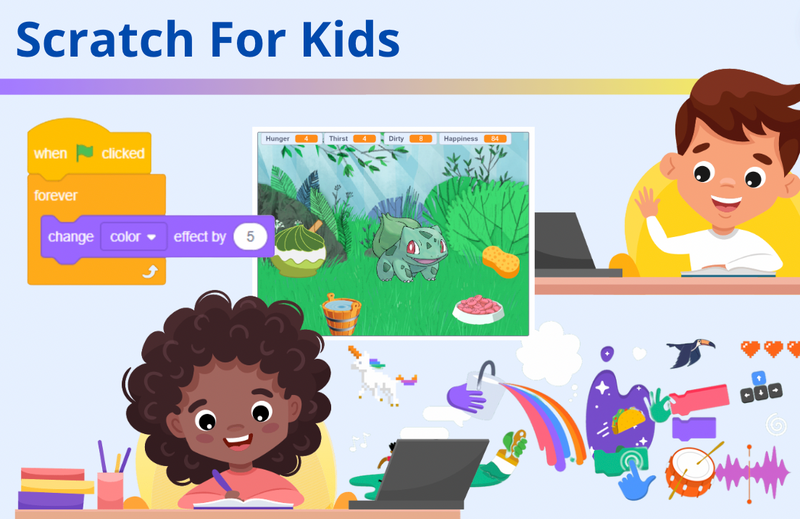
Scratch is developed by MIT and is the most widely used coding platform for children globally. It uses a visual block based coding system where children drag and drop instruction blocks to create animations, games, and stories.
There is no typing of code required which makes it perfect for younger children who are just beginning. The logic of coding — sequences, loops, conditions — is built into every project a child creates on Scratch without them even realizing they are learning programming fundamentals.
For African children starting their coding journey Scratch is the single best first platform. It is free, works on basic computers, and has a massive global community of young creators sharing projects.
Scratch teaches children that computers do exactly what you tell them to do — no more, no less. That fundamental understanding of machine logic is the foundation of AI literacy and connects directly to everything The Prepared Child introduces to younger readers.
2. Code.org — Structured Curriculum With African Accessibility
Age range: 4 to 18 Cost: Completely free Device: Works on browser and tablet
Code.org is one of the most comprehensive free coding education platforms available. It offers structured courses from complete beginner level all the way to advanced computer science — all completely free.
The Hour of Code feature on Code.org has introduced over 100 million children globally to coding through fun one hour activities featuring characters from Minecraft, Star Wars, and Frozen that children already love.
For African schools and parents looking for a structured curriculum rather than open ended creation Code.org provides lesson plans, teacher guides, and student progress tracking that rival paid platforms.
Visit our For Schools page to learn how House of Chrys is working to integrate platforms like Code.org into African school AI literacy workshops.
3. Tynker — AI and Coding Combined for Serious Young Learners
Age range: 5 to 18 Cost: Free basic tier, paid plans from $8/month Device: Browser and app
Tynker goes beyond basic coding to introduce children specifically to AI concepts including machine learning, image recognition, and natural language processing through age appropriate projects.
A child on Tynker can build their own AI model that recognizes objects in images — not by understanding the mathematics behind it but by experiencing the logic of how AI learns from examples. That experiential understanding is exactly what AI literacy means in practice.
For the African parent who wants their child to go beyond basic coding into genuine AI understanding Tynker is the most direct path available at an accessible price point.
4. Khan Academy — Free World Class Computer Science Education
Age range: 8 and above Cost: Completely free forever Device: Browser and app
Khan Academy needs no introduction as an education platform but many African parents do not know it includes a comprehensive computer science curriculum covering JavaScript, HTML, CSS, SQL, and computer programming fundamentals — all completely free.
For older children and teenagers who are ready to move beyond block coding into real programming languages Khan Academy provides world class instruction at zero cost. The same quality of computer science education available at elite international schools is available on Khan Academy to any child in Lagos, Accra, or Nairobi with an internet connection.
5. Minecraft Education Edition — Learning Through Play
Age range: 7 to 14 Cost: Free for educators, affordable for families Device: PC, tablet, and console
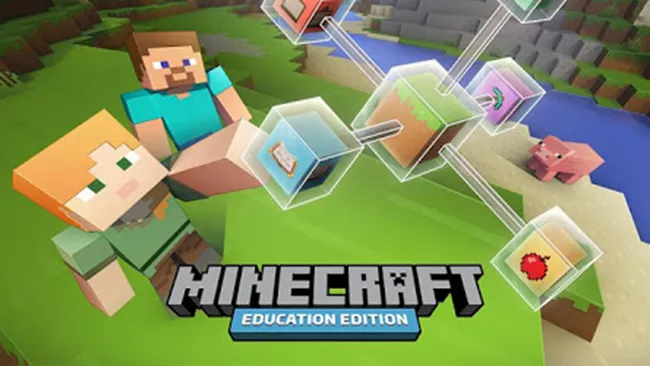
Minecraft Education Edition uses the world’s most popular children’s game as a vehicle for teaching coding, computational thinking, and increasingly AI concepts.
Children build coding projects inside the Minecraft world they already love — programming characters, automating tasks, and solving problems using real coding logic. The engagement levels are extraordinary because children do not experience it as learning. They experience it as playing.
For African parents struggling to get their children interested in coding Minecraft Education Edition removes the resistance entirely. The child is already motivated. The platform simply channels that motivation toward genuine learning.
6. Robotify — AI and Robotics for the Next Generation

Age range: 8 to 16 Cost: Free basic tier available Device: Browser based
Robotify introduces children to AI through virtual robotics — programming robots to complete missions and solve problems in a simulated environment. No physical robot required.
This platform is particularly valuable for African children because it delivers the robotics and AI programming experience that wealthy international schools provide through expensive physical robots — entirely through a browser at minimal cost.
The missions are structured progressively meaning children build genuine programming and AI thinking skills through gameplay without needing a teacher to guide every step.
7. Replit — Real Coding for Serious Teenagers
Age range: 13 and above Cost: Free tier available Device: Browser based, works on any device
Replit is where teenage coders go when they are ready to write real code and build real projects. It supports over 50 programming languages and allows teenagers to build, run, and share actual applications directly in the browser.
For the African teenager who has moved through beginner platforms and wants to build something real — a website, an app, an AI project — Replit provides the environment without requiring expensive software installation or a powerful computer.
Several African teenage developers have built projects on Replit that attracted international attention and opportunities. The platform democratizes access to professional grade development tools for any motivated young person with an internet connection.
8. Codecademy — The Bridge to Professional Coding
Age range: 13 and above Cost: Free basic tier, Pro at $17/month Device: Browser based
Codecademy is the platform that has taught more people to code than any other in history. Its free tier covers Python, JavaScript, HTML, CSS, and SQL with interactive lessons that give immediate feedback as the learner types real code.
For African teenagers serious about pursuing technology careers Codecademy provides the foundational language skills that every professional developer needs. Python alone — the primary language of AI and machine learning development — opens doors to some of the highest paying technology careers globally.
A teenager who completes Codecademy’s Python course has a skill that is directly monetizable — building simple automation tools, data analysis scripts, and AI adjacent applications for businesses willing to pay for that capability.
9. Google’s Teachable Machine — Hands On AI for Any Age
Age range: 10 and above Cost: Completely free Device: Browser based
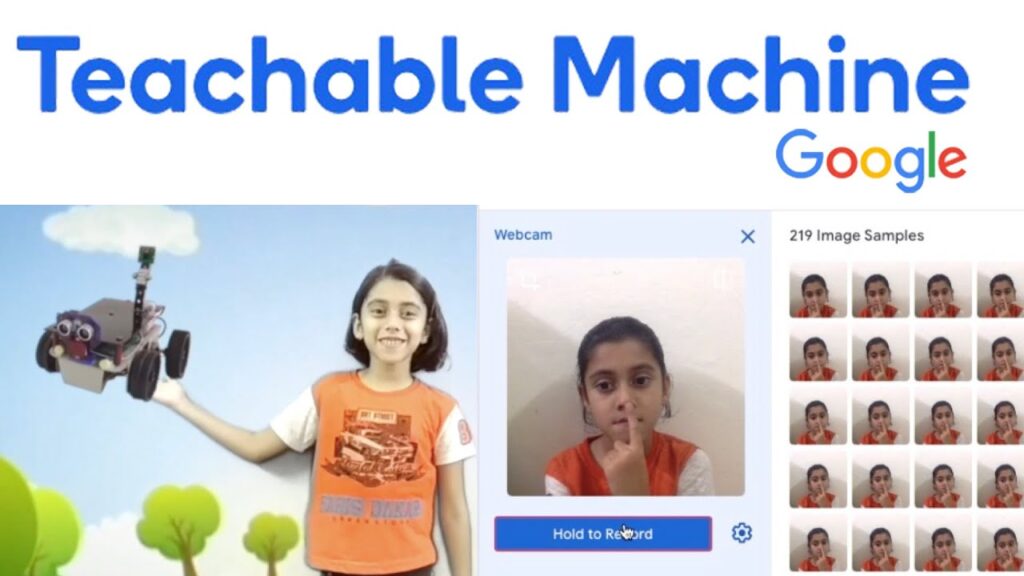
Teachable Machine by Google is one of the most remarkable free tools available for introducing children to how AI actually learns. A child can train their own AI model in minutes — teaching it to recognize their face, identify objects, or respond to sounds — with zero coding required.
The experience of training an AI model and watching it learn from examples gives children an intuitive understanding of machine learning that no textbook explanation can match. They do not just hear that AI learns from data. They experience it firsthand.
For African parents wanting to show their child what AI really is — not magic, not science fiction, but a system that learns from examples — Teachable Machine is the single most powerful free demonstration available.
Visit The Prepared Child page to see how we introduce these foundational AI concepts to younger African children through storytelling before they are ready for platforms like Teachable Machine.
10. Swift Playgrounds — Apple’s Investment in Young Coders
Age range: 10 and above Cost: Completely free Device: iPad and Mac only
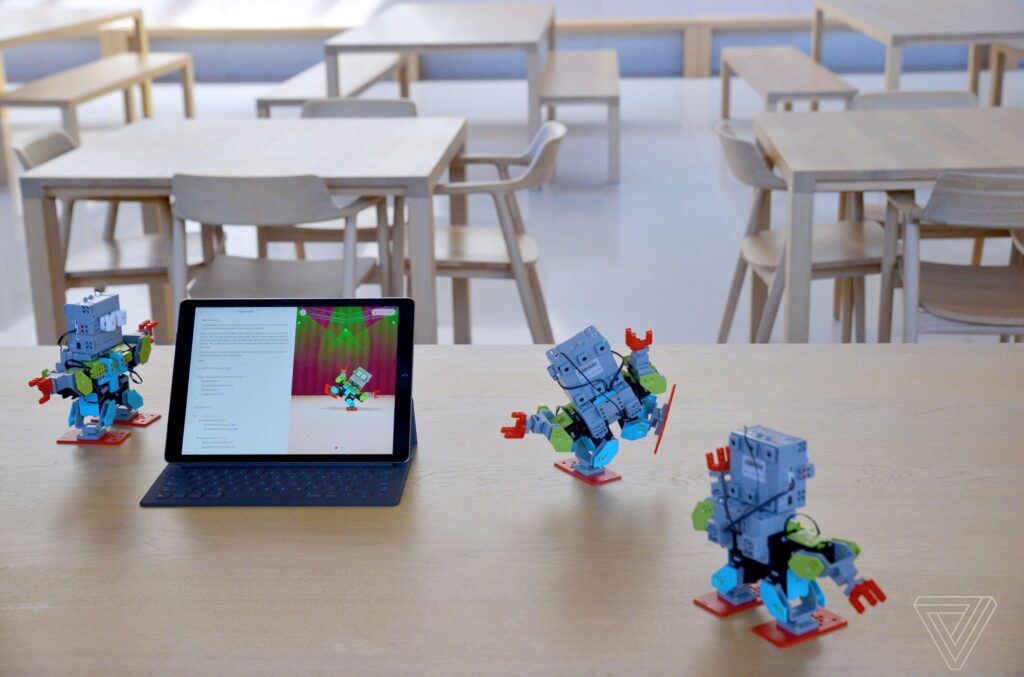
Swift Playgrounds is Apple’s free coding education app that teaches children to code in Swift — the same programming language used to build iPhone and iPad applications. The app uses puzzles, characters, and interactive challenges to make learning to code genuinely enjoyable.
For African families with access to an iPad Swift Playgrounds provides professional grade coding education in the most engaging format available. Children who complete Swift Playgrounds have skills directly applicable to building real iOS applications — one of the most lucrative development skill sets in the global technology market.
How to Choose the Right Platform for Your Child’s Age
With ten platforms on this list the natural question is where to start. Here is a simple guide:
Ages 5 to 8 — Start with Scratch or Code.org. Block based, visual, no reading required beyond basic literacy.
Ages 9 to 12 — Move to Tynker or Minecraft Education Edition. More structured, introduces AI concepts, still highly engaging.
Ages 13 to 15 — Khan Academy, Codecademy free tier, or Replit. Real languages, real projects, real skills.
Ages 16 and above — Codecademy Pro, Replit, or direct AI project work with Google’s Teachable Machine.
Your Child Cannot Afford to Start Later Than Today
Every year that passes without AI literacy is a year another child somewhere in the world is pulling ahead. Not because they are smarter. Not because their school is better. But because their parent made a decision.
The AI coding platforms for kids and teens on this list are not future resources. They are available right now, today, on the device already in your home. The child who starts this weekend has a year’s head start on the child whose parent decided to wait until school introduces it.
Africa’s future technology leaders are not going to emerge from government initiatives or curriculum reform committees. They are going to emerge from homes where a parent saw what was coming and decided their child would be ready for it.
That decision starts with a single platform. A single account. A single first lesson.
And if you want your child to understand not just how to use these tools but why AI exists, how it thinks, and what it means for their world — start with The Prepared Child. Then give them a platform. Then watch what happens when a prepared mind meets the right tools.
Visit For Parents for practical guides on supporting your child’s technology journey at home. Visit For Schools to bring AI coding literacy into your child’s classroom through House of Chrys workshops today.