



The AI prospects for children in Africa are unlike anything this continent has seen before. A technological shift is underway globally and African children sit at the center of its greatest opportunity — and its most serious risk.
This is not a conversation about the distant future. It is about what is happening right now, what your child’s school is not telling you, and what you as a parent must do about it.
1. The AI Opportunity in Africa Is Real and It Is Already Open
AI prospects for children in Africa are not theoretical. They are structural and growing fast.
African tech hubs in Lagos, Nairobi, Accra, and Cairo are expanding rapidly. Companies building AI solutions for African problems — in agriculture, healthcare, logistics, and education — need young talent that understands both the technology and the local context.
According to the World Economic Forum, AI and automation will create 97 million new roles globally by 2025. A significant portion of those roles will require people who understand how to work alongside AI systems — not just use them passively.
The African child who grows up AI literate is positioned to enter this market at a generational advantage. The one who does not will be competing for whatever is left after automation has taken the rest.
2. African Schools Are Not Preparing Children for This Reality
This is the uncomfortable truth at the center of the AI prospects for children in Africa conversation.
Nigerian schools teach children to memorize and reproduce. Kenyan schools celebrate the student who passes the exam. The certificate is treated as the destination when it should be the starting point.
But the jobs that African education systems are currently preparing children for — clerical work, basic accounting, data entry, routine administration — are precisely the jobs AI is eliminating fastest globally.
A child spending twelve years in school to become a competent clerk is being prepared for a role that may not exist in a meaningful form by the time they graduate. This is not pessimism. It is the documented trajectory of automation across every economy that has gone through technological transition.
The parent who does not engage with this reality is not protecting their child from a difficult conversation. They are leaving their child unprepared for a difficult world.
3. AI Literacy Does Not Mean Teaching Your Child to Code
One of the biggest misconceptions blocking African parents from engaging with AI prospects for children in Africa is the assumption that AI literacy is only for technically gifted children.
It is not.
AI literacy means building the foundational mindset and familiarity that allows a child to grow into the technology naturally over time.
For younger children ages 5 to 11 it means:
- Understanding that AI is a tool made by people to solve problems
- Developing curiosity about how technology works
- Building critical thinking and creative problem solving habits
- Learning to ask good questions — the core skill of working with any AI system
For older children ages 12 to 17 it means:
- Experimenting with AI tools practically
- Understanding the ethics and limitations of AI
- Exploring how AI applies to problems they actually care about
None of this requires expensive equipment or elite schools. It requires intentional parenting and the right introduction at the right age.

4. The Window for Early Advantage Is Closing
The AI prospects for children in Africa favor early movers. The parents acting now — introducing their children to AI concepts at ages 5, 6, 7 — are building a head start that compounds over time.
Think of it this way. A child introduced to reading at age 4 does not just read earlier. They read more, comprehend faster, and build vocabulary at a rate that separates them from peers for the rest of their academic life.
AI literacy works the same way. Early introduction builds familiarity, reduces fear, and creates a natural relationship with technology that shapes how a child approaches problems for life.
The window for that early advantage is not permanently open. As AI becomes more mainstream even in African schools the early mover advantage shrinks. The parents acting today are securing something their children will benefit from for decades.
5. What You Can Do Starting Today
Waiting for African schools to lead this change is not a strategy. The curriculum reform cycles in most African countries move too slowly for the pace of AI development.
The parents raising the next generation of African AI leaders are acting now — at home, deliberately, with the right tools.
Here is where to start:
Have honest conversations with your child about technology. Ask them what they think computers can and cannot do. Introduce them to age appropriate AI tools. Read with them. Think with them.
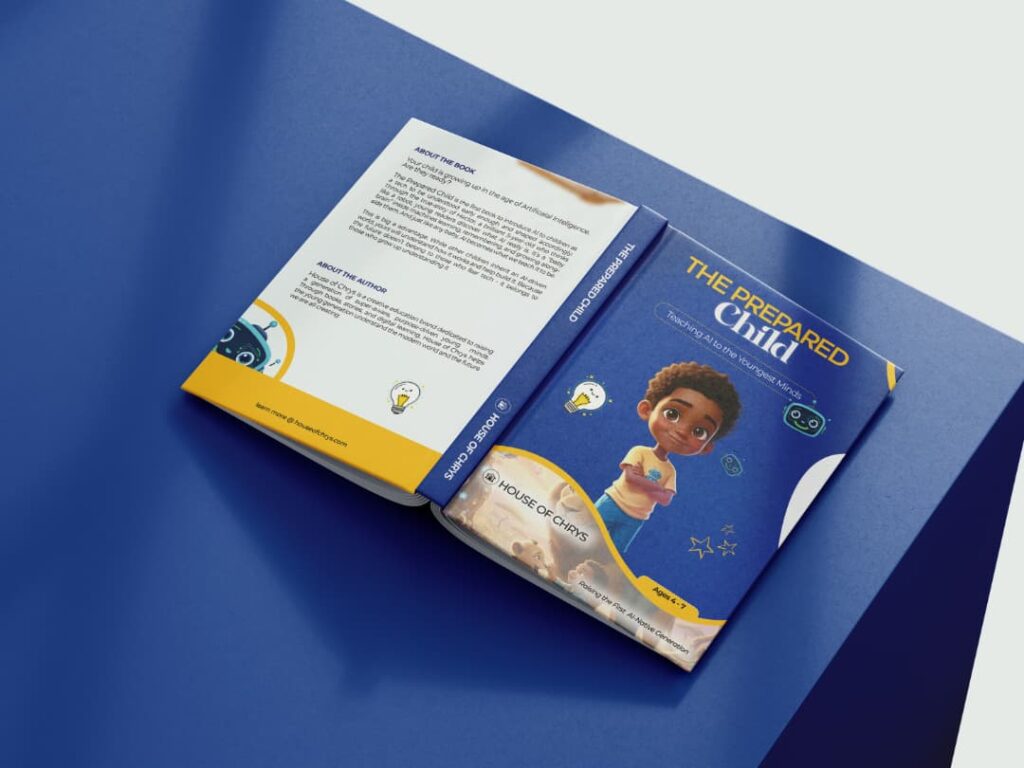
Start with a foundation built specifically for African children. The Prepared Child is a picture book designed to introduce African children to artificial intelligence in language they can understand and a context they recognize. It exists because this conversation needs to start earlier than most parents think — and because the AI prospects for children in Africa are too important to leave to chance.
The Bottom Line
The AI prospects for children in Africa are simultaneously the greatest opportunity and the most urgent risk the continent’s next generation faces.
The opportunity belongs to the prepared. The risk falls hardest on the ignored.
Your child does not need to wait for the school system to catch up. They need a parent who understands what is at stake and acts today.
Ready to prepare your child? Get The Prepared Child — the picture book introducing African children to artificial intelligence.