
Disadvantages of AI in Africa Now — 10 Reasons Africa Is Not Ready and Why Children Are Our Only Real Answer

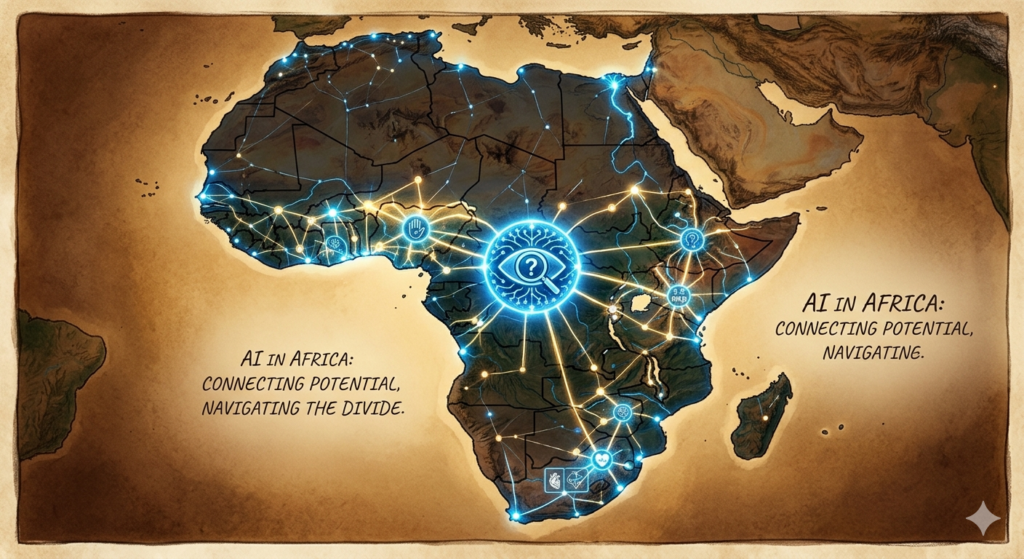
The disadvantages of AI in Africa now are not theoretical. They are happening in real time — in boardrooms, on platforms, inside algorithms, and across economic systems that were never designed with Africa in mind.
This is not a post about the distant future. It is about what is happening right now, today, while most African governments are still writing committee reports about technology strategy and most African schools are still teaching children to memorize and reproduce.
Africa is not ready for AI. And the disadvantages of AI in Africa now will compound into generational damage if the continent does not wake up — fast.
But here is the important context before we go further. These disadvantages are not permanent. They are not destiny. They are the result of systems, structures, and mindsets that can be changed. The question is who changes them and when.
The answer, as you will see by the end of this post, is not the politicians. It is not the tech companies. It is not even the universities.
It is the children. And it starts with the parents who refuse to leave them unprepared.
1. Africa’s Data Is Being Harvested Without Her Consent or Compensation
The most urgent of all the disadvantages of AI in Africa now is one that most Africans do not even know is happening.
AI systems run on data. The more data a system has the more powerful and accurate it becomes. And right now African data — the voices, faces, behaviors, languages, buying patterns, and health information of over 1.4 billion people — is being harvested by foreign technology companies and used to train AI systems that Africa will eventually have to pay to access.
Africa is being mined again. Not for gold. Not for oil. Not for diamonds. For data.
The colonial playbook has not changed. Only the resource has.
A continent that allowed her natural resources to be extracted for centuries with minimal benefit to her own people is now allowing her most valuable 21st century resource — big data — to be extracted with even less awareness and even less resistance.
This is not conspiracy. This is the documented business model of every major AI company operating on the continent. Africa generates the data. The West builds the intelligence. Africa buys the product.
Until African governments, institutions, and citizens develop data sovereignty frameworks this exploitation will continue and deepen. The disadvantages of AI in Africa now include being a raw material supplier in a knowledge economy — the worst possible position to occupy.
2. Africa Has No Meaningful AI Policy Infrastructure
While the United States, European Union, China, and even smaller nations like Singapore are developing comprehensive AI governance frameworks Africa is almost entirely absent from the conversation.
As of now fewer than five African countries have any form of national AI strategy. The African Union has published documents. Committees have met. Reports have been written. But implementation — the actual building of regulatory infrastructure, ethical frameworks, and enforcement mechanisms — is nearly nonexistent.
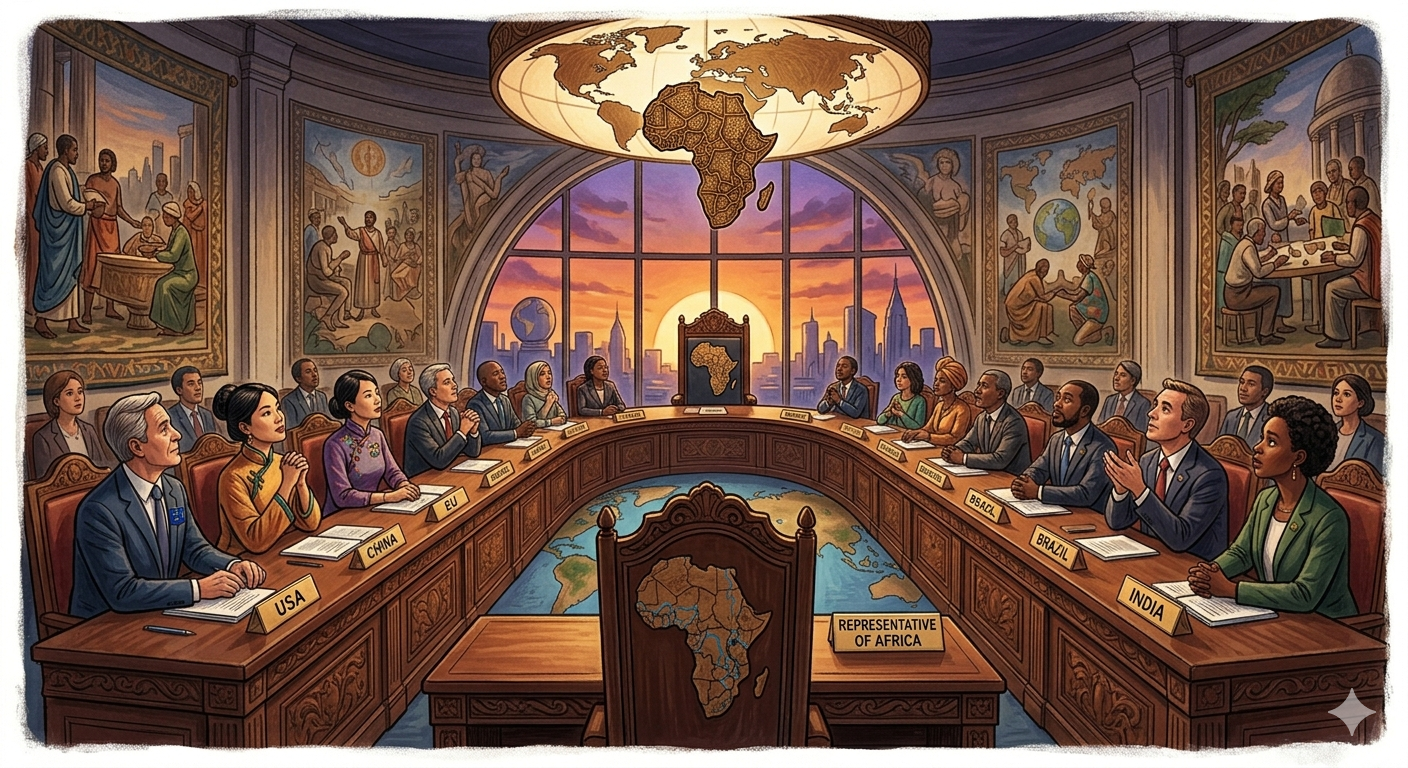
This policy vacuum is one of the most dangerous disadvantages of AI in Africa now because it means African citizens have no protection from AI systems that discriminate, manipulate, or exploit. It means foreign AI companies can operate on the continent with minimal accountability. And it means Africa has no seat at the table where the rules of AI are being written globally.
The rules of the modern world are being rewritten right now. Africa is not in the room.
3. The African Education System Is Producing the Wrong Kind of Intelligence
I was in primary one when I had my first computer science teacher.
I did not fully understand what she was teaching me at the time. The concepts were basic. The computers were old. But something happened in that classroom that I only understood decades later — I was introduced to a way of thinking. A logic. A relationship with technology that planted a seed I have been growing ever since.
That early awareness of computer science at primary school level is a direct reason I am computer savvy as an adult today. Not because the content was sophisticated. Because the introduction was early.
Now ask yourself — how many African children are getting that introduction today? How many primary schools across Nigeria, Ghana, Kenya, Senegal, and Tanzania have a single computer science lesson per week? How many have a computer at all?
One of the most painful disadvantages of AI in Africa now is that the continent’s education system is not only failing to prepare children for AI — it is actively preparing them for a world that no longer exists. A world of clerical jobs, routine administration, and certificate based employment that automation is eliminating faster than African schools can produce graduates.
The education system is not broken by accident. It is producing exactly what it was designed to produce — compliant workers for an industrial economy. The problem is that economy is gone.
4. Africa’s Infrastructure Cannot Support AI at Scale
AI requires infrastructure. Reliable electricity. High speed internet. Cloud computing access. Data centers. Device penetration.
Africa has none of these at the scale required.
Over 600 million Africans still lack access to reliable electricity. Internet penetration across sub-Saharan Africa remains among the lowest in the world. The cost of data in many African countries is prohibitively expensive relative to average income.
You cannot build an AI literate generation on infrastructure that cannot sustain a stable video call.
This is not an excuse for inaction. It is a structural reality that makes the disadvantages of AI in Africa now significantly more acute than in any other region. The gap between where Africa is infrastructurally and where AI requires a society to be is not a gap that closes itself.
5. African Languages Are Almost Entirely Absent From AI Systems
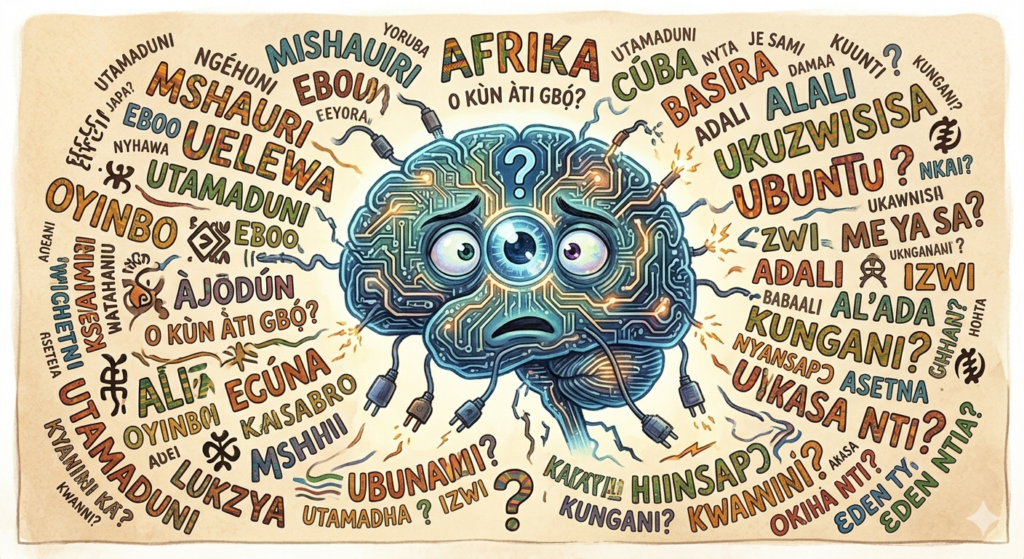
AI systems learn from data. The data they have learned from is overwhelmingly English, Mandarin, Spanish, and French. The result is AI systems that perform brilliantly for speakers of those languages and poorly — sometimes dangerously — for everyone else.
Africa has over 2,000 languages. The vast majority are entirely unrepresented in the training data of any major AI system.
This means AI tools built for healthcare, agriculture, legal services, and education — tools that could transform life for ordinary Africans — either do not work in African languages or produce unreliable results that can cause real harm.
A medical AI diagnostic tool that misunderstands a patient’s description because it was not trained on Yoruba, Hausa, Swahili, or Zulu is not a helpful tool. It is a dangerous one.
The linguistic exclusion of Africa from AI development is one of the most overlooked disadvantages of AI in Africa now and one with the most serious long term consequences.
6. Africa’s Workforce Is Uniquely Vulnerable to AI Displacement
The jobs AI is eliminating fastest globally are entry level, routine, and process driven. These are precisely the jobs that form the backbone of African urban economies.
Call centers. Data entry. Basic accounting. Administrative support. Customer service. Document processing.
These are the jobs that millions of young Africans with secondary school certificates and university degrees are currently competing for. They are also the jobs that AI automates most easily, most cheaply, and most completely.
The disadvantages of AI in Africa now include a displacement risk that is more acute here than anywhere else because African economies have fewer alternative employment sectors to absorb displaced workers and weaker social safety nets to support them during transition.
This is not a warning about 2040. Displacement is already happening. Quietly. Incrementally. Without headlines.
7. Africa Is a Consumer of AI Not a Builder of It
Every major AI system in use across Africa today was built outside Africa. The platforms, the algorithms, the models, the infrastructure — all of it designed elsewhere, for other contexts, with other users in mind.
Africa is a consumer market in a builder’s economy.
This is one of the deepest disadvantages of AI in Africa now because it means Africa has no control over the systems shaping her citizens’ lives. The biases baked into foreign AI systems — racial bias, cultural bias, economic bias — are imported along with the technology with no mechanism for African correction or accountability.
Building Africa’s own AI capacity requires talent, investment, infrastructure, and time. None of these are appearing fast enough relative to the pace at which foreign AI is penetrating African markets.
8. African Children Are Being Exposed to AI Without Protection
The same AI driven platforms that are creating content addiction, attention erosion, and exposure to inappropriate material in Western children are doing the same to African children — with even less parental awareness and even weaker regulatory protection.
Nigerian parents are not having conversations about AI recommendation algorithms with their children. Ghanaian schools are not teaching media literacy. Kenyan parents are handing children smartphones without understanding what the AI inside those phones is optimizing for.
The disadvantages of AI in Africa now include a generation of children being shaped by systems their parents do not understand and their governments have not regulated.
9. Africa’s Research and Innovation Ecosystem Is Too Small to Compete
AI leadership globally is determined by research output, patent filing, talent development, and institutional investment. By every one of these measures Africa is at the bottom of the global table.
The continent produces a fraction of global AI research. African universities are not producing AI researchers at anywhere near the scale needed. African governments are not investing in AI research infrastructure. African venture capital is not funding AI startups at competitive levels.
Without a serious research and innovation ecosystem Africa cannot build the AI capacity needed to close the gap — and the gap widens every year that passes without action.
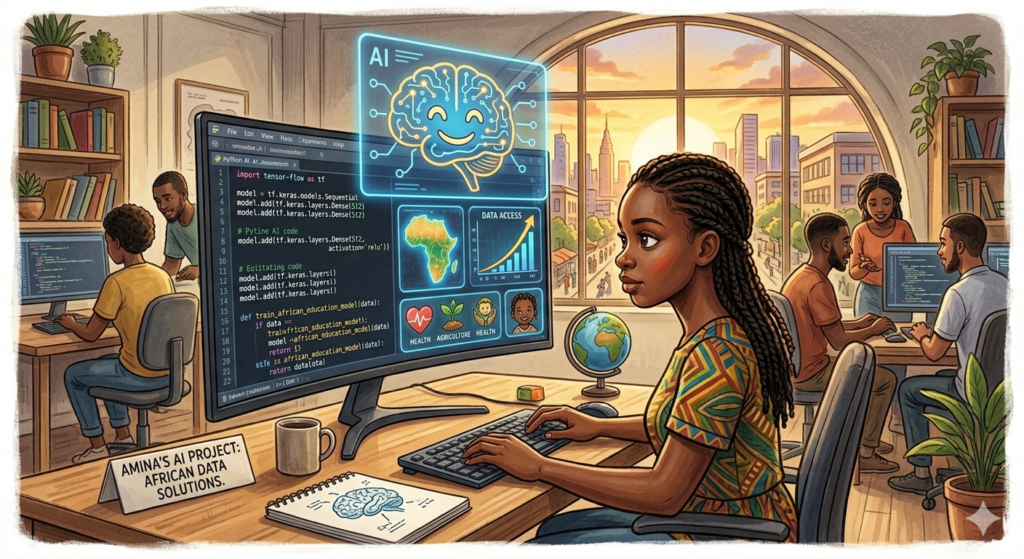
10. The Adults Are Already Behind — And That Is Why the Children Cannot Wait
This is perhaps the most honest of all the disadvantages of AI in Africa now.
The adults — the policymakers, the educators, the business leaders, the parents — are largely already behind the curve. Not because they are unintelligent. But because their minds were formed in a different technological era, their careers are built on pre-AI foundations, and the pace of AI development has outrun the capacity of most institutions to respond.
Retraining adults at scale is slow, expensive, and largely ineffective for deep technological shifts. History shows this consistently. The generation that grew up before a major technological shift rarely leads the transformation. They manage it at best.
But children are different.
Children whose minds are still forming. Children whose relationship with technology is still being shaped. Children who have not yet decided what is possible and what is not. These children are not behind. They are early.
A child introduced to AI literacy at age 5 or 6 does not experience it as a disruption. They experience it as normal. As natural. As simply the way the world works. And from that foundation they build — faster, deeper, and more fluently than any adult retraining programme could ever produce.
This is exactly why House of Chrys exists. This is exactly why The Prepared Child was written.
Not because we gave up on African adults. But because we are honest about where the real leverage is.
Adults are busy. Their habits are formed. Their worldview is largely set. They can learn — and they should — but the window for foundational AI literacy has already closed for most of them.
For children that window is wide open right now. But it will not stay open forever.
The disadvantages of AI in Africa now are real and they are serious. But they are not the end of the story. They are the beginning of a responsibility — a responsibility that falls on every African parent who understands what is at stake and refuses to leave their child on the wrong side of history.
The Prepared Child Is Our Answer to Every Disadvantage on This List
Every disadvantage of AI in Africa listed in this post has one upstream solution — African children who grow up understanding AI, thinking critically about it, building with it, and leading it rather than simply consuming it.
The Prepared Child is a picture book written specifically for African children — in language they understand, with characters they recognize, introducing them to artificial intelligence at the age when it matters most.
We did not write it for adults because adults already have their minds largely made up. We wrote it for children because children are still open. Still curious. Still forming the beliefs and habits that will define their entire relationship with technology for the rest of their lives.
The disadvantages of AI in Africa now are not permanent. They are the result of unpreparedness — and unpreparedness is the one disadvantage that a single generation of intentional parenting can completely reverse.
Visit The Prepared Child page to get your copy. Visit For Parents to understand how to start this conversation at home. Visit For Schools to bring AI literacy into your child’s classroom today.
The disadvantages of AI in Africa now are real. But so is your ability to make sure your child is not defined by them.