
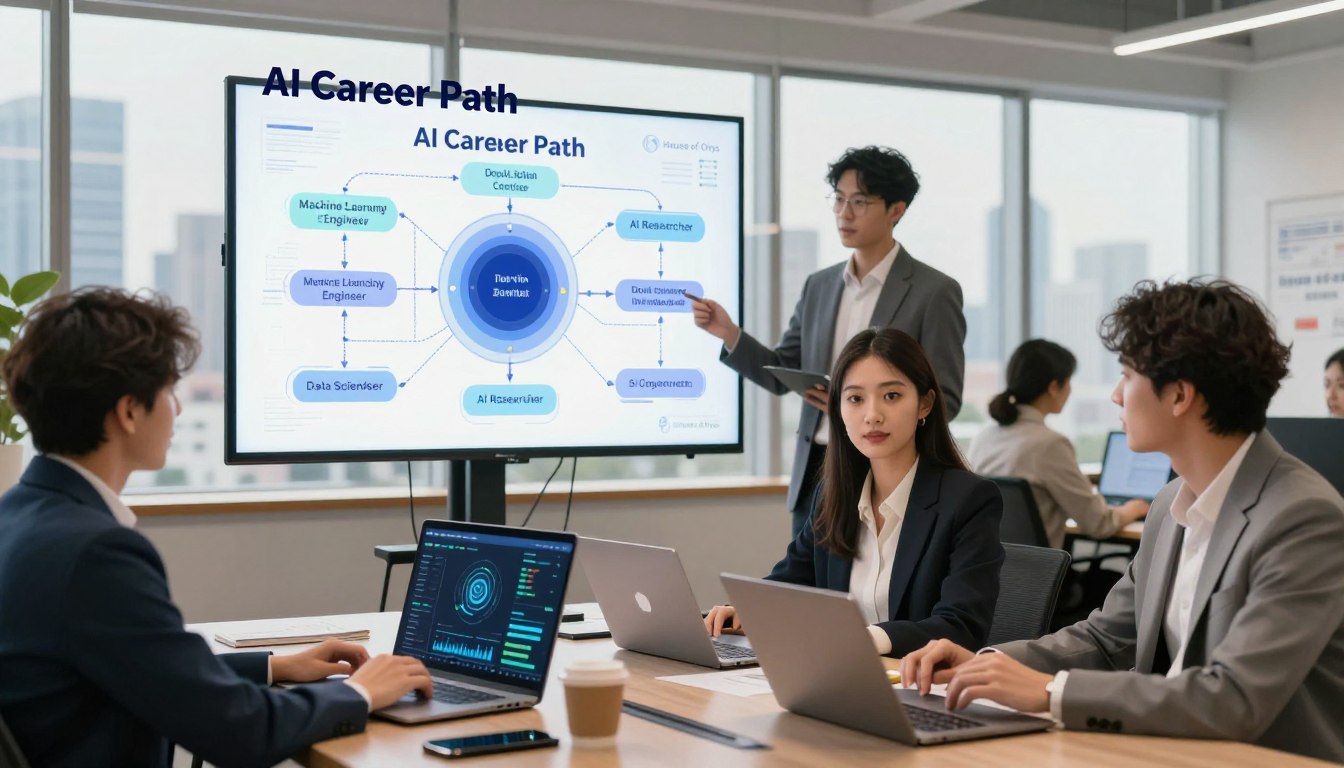
What if the most important subject your child needs to master isn’t taught in their school today?
This isn’t a theory—it’s the reality for families right now. The world your child will build a career in is being defined by artificial intelligence. This branch of computer science creates systems that learn and solve problems. It’s reshaping every job on the planet.
Your child’s future depends on their ability to navigate this new landscape. We are here to guide you—not with panic, but with deliberate, protective action.
This is about moving from being a consumer of technology to becoming an active creator. By building AI literacy today, you secure their professional prospects for decades. Let’s begin.
Key Takeaways
- Artificial intelligence is reshaping the global job market at an unprecedented pace.
- Future-ready skills are now a necessity, not just an advantage.
- Parental guidance is crucial for navigating this new technological landscape.
- Early exposure to computational thinking builds a strong foundation.
- Moving from technology consumption to creation ensures long-term relevance.
- Proactive learning today secures professional stability tomorrow.
Understanding the Impact of AI on US Industries
The transformation is not a distant forecast—it’s happening inside 72% of organizations right now. They use this technology to improve core functions, reshaping entire sectors. This shift creates both disruption and immense opportunity for your child’s future.
While reports warn of job displacement, this change opens a massive door for those prepared with future-ready skills. The key is understanding where the intelligence is being applied.
AI Transformations in Healthcare and Finance
In hospitals, diagnostic tools analyze medical images with stunning accuracy. This data processing predicts patient outcomes, freeing doctors for complex care.
Banks deploy similar systems for fraud detection. Automating this analysis allows financial experts to focus on innovating new strategies for clients.
Revolutionizing Logistics and Customer Service
Logistics companies now optimize entire supply chains using machine learning models. Warehouse automation handles repetitive tasks.
This empowers human workers to develop sustainable practices and enhance service—moving from manual management to strategic applications. The right skills turn disruption into career creation.
Exploring ai careers in the US
Your child’s path to a stable future now runs through the heart of machine intelligence and data. You must understand the specific roles that are defining this new landscape.

Rise of AI-Driven Job Opportunities
The demand for technical professionals is exploding. Machine learning engineers, for example, earn an average salary of $161,522 annually.
This reflects the immense value placed on their ability to build intelligent systems. According to federal projections, roughly 356,700 job openings appear each year in computer fields.
Companies pour resources into these solutions to stay ahead. This investment creates a surge for people with specialized knowledge.
Pursuing this work offers incredible versatility. Your skills can apply in robotics, healthcare, finance, and beyond.
| Role | Key Focus | Median Salary (U.S.) |
|---|---|---|
| Machine Learning Engineer | Building and deploying predictive models | $161,500 |
| Data Scientist | Statistical analysis and data visualization | $108,000 |
| AI Research Scientist | Advanced algorithm development | $136,000 |
This is the moment to secure their place. Mastering these tools builds a foundation for decades of professional growth.
Essential Technical Skills for AI Advancement
Behind every intelligent system is a set of core skills that bring it to life. This technical knowledge turns raw potential into real power. Your child must move from theory to practical development.
Mastering Machine Learning and Deep Learning
Start with the bedrock: foundational algorithms. Supervised learning trains models on labeled data. Unsupervised learning finds hidden patterns.
Reinforcement learning teaches systems through trial and error. This is how machine intelligence solves problems.
Deep learning uses advanced neural networks. Convolutional networks excel at image processing and vision tasks. This technology drives innovations like autonomous navigation.
Programming Languages and Analytical Tools
Proficiency in a programming language is non-negotiable. Python is the leading choice for building models. R is vital for statistical analysis.
SQL is critical for data management. These are the tools that engineers and professionals use daily.
Software like TensorFlow and PyTorch is indispensable. They build, train, and deploy machine learning systems.
Finally, data analysis and visualization tools matter. Tableau and Power BI turn complex information into clear insights. This drives better business decisions.
Soft Skills and Ethical Considerations in AI Career Success
The true test of a machine learning system isn’t its accuracy, but its fairness. Your child’s technical knowledge must be guided by a strong moral compass. This human dimension is what separates great professionals from mere technicians.

Navigating Ethical Challenges and Bias
Developing fair and transparent models is a core duty. Every algorithm can inherit bias from its training data. This requires constant ethical analysis.
You must teach your child to protect sensitive information. Privacy is critical when handling personal data for these systems. Adhering to these standards builds trust and safeguards people.
Specialists in this field are now in high demand. They ensure intelligent systems align with societal expectations. This work is as vital as the development itself.
Collaboration and Communication in Tech Teams
Technical skills alone are not enough. Your child must learn to bridge gaps between engineers and business stakeholders. Clear language turns complex ideas into action.
Product managers play this crucial role. They use software and project management tools to guide teams. Success depends on this collaborative intelligence.
Maintaining a flexible mindset is essential. This technology evolves rapidly. Professionals must adapt to new trends and applications.
Educational Pathways to Launch an AI Career
The classroom is just the starting line—real mastery is built through applied projects and deliberate practice. Your child’s journey must combine formal education with relentless hands-on learning. This dual-path approach secures their foundation in this new technological era.
Degree Programs, Certifications, and Online Courses
A strong academic base is non-negotiable. Degrees in computer science or data science provide deep theoretical knowledge.
Institutions like California Miramar University lead with specialized programs. Their Bachelor of Science in Business Administration has an intelligence focus. Their Master of Science in Artificial Intelligence delves into core algorithms and machine learning.

Industry certifications and online courses are vital supplements. They offer the latest software development and data analysis tools. This keeps skills sharp and current.
Practical Projects and Hands-On Learning
Theory must meet application. Internships provide exposure to real-world systems under experienced professionals.
Building a portfolio is critical. Your child should share personal projects on platforms like GitHub. This demonstrates their capability with a programming language and analytical skills. It turns learning into tangible proof for the competitive market.
| Pathway Type | Primary Focus | Key Outcome |
|---|---|---|
| University Degree | Deep theoretical foundation in computer science, data science, or AI. | Comprehensive understanding and formal credential. |
| Industry Certification | Validated proficiency in specific software or machine learning frameworks. | Industry-recognized skill verification. |
| Online Specialization | Flexible, updated learning on niche topics like deep learning or robotics. | Agile adaptation to new trends and tools. |
Real-World Experience: Internships and Personal Projects
A resume lists qualifications, but a portfolio demonstrates undeniable capability. This practical proof is what hiring managers seek. It turns your child’s theoretical knowledge into a tangible asset.

Encourage your child to seek internships. These roles teach them how to handle real data, conduct research, and build effective models. Assisting experienced professionals provides invaluable mentorship.
Building a Strong Portfolio with Practical Projects
Personal projects are a powerful showcase. Creating a chatbot or a predictive tool solves a real problem. It displays creative problem-solving skills to potential employers.
Engaging in hackathons or contributing to open-source systems offers critical feedback. It also helps develop professional relationships. These connections benefit long-term growth.
Working as a junior data analyst is a surefire start. It applies analysis and software development skills in a business context. This hands-on learning is irreplaceable.
Always share completed work on platforms like GitHub. This public repository is your child’s professional proof. It turns programming and data learning into a visible track record.
| Experience Type | Primary Focus | Key Outcome |
|---|---|---|
| Industry Internship | Applying machine learning tools to real business information. | Professional mentorship and resume credibility. |
| Personal Project | Independent problem-solving using a programming language like Python. | Tangible proof of creativity and technical skills. |
| Open-Source Contribution | Collaborative development on public codebases and tools. | Peer review, networking, and a public contribution history. |
This practical path secures their place in competitive fields. It moves them from passive study to active creation.
Industry Applications of AI Technologies
The factory floor, the trading desk, the doctor’s clinic—each is being rewritten by machine learning applications.
This is where theoretical skills meet tangible impact. Your child’s future work will deploy intelligence where it matters most.
Leveraging AI in Healthcare, Finance, and Manufacturing
In hospitals, algorithms now power personalized care plans. They analyze patient data for early diagnostics and continuous monitoring.
This requires professionals skilled in medicine and deep analysis. It’s a direct application of computer science to save lives.
Financial systems use similar technology for fraud detection. Natural language processing tools parse complex documents for risk management.
Expertise in programming and statistical models is critical here. These tools protect business assets and customer information.
Manufacturing is revolutionized by robotics and computer vision. Sensors and digital twins optimize entire production lines.
Engineers combine knowledge of mechanical principles with advanced software development. This learning drives unprecedented efficiency.
| Industry | Core AI Application | Critical Skills Required |
|---|---|---|
| Healthcare | Diagnostics & Patient Monitoring | Medical knowledge, Data analysis, Algorithm development |
| Finance | Fraud Detection & Sentiment classification | Statistical modeling, NLP, Risk management |
| Manufacturing | Process Automation & Quality vision | Robotics, Computer vision, Software networks |
Mastering these applications defines the most rewarding careers. It turns raw data into better outcomes for everyone.
The Role of Cloud Computing and Big Data in AI
The engine of modern intelligence doesn’t run on a single computer—it lives in the cloud. Your child’s future-ready skills must include managing this vast digital landscape. It is where raw data becomes powerful insight.
Utilizing Scalable Cloud Platforms
Training advanced machine learning models requires immense computational power. Platforms like AWS, Azure, and Google Cloud provide this scalable foundation. They allow your child to experiment with complex algorithms without physical limits.
This is not optional knowledge. Cloud software is the bedrock for deploying intelligent systems worldwide. Mastering these tools is a non-negotiable skill for any serious professional in computer science.
Managing and Analyzing Massive Datasets
Data is the fuel, but it means nothing without proper refineries. Tools like Hadoop and Apache Spark process enormous volumes of information for deep analysis. They handle distributed processing across countless servers.
NoSQL databases manage unstructured data for modern applications. Your child must understand this storage layer. Data engineers build and maintain these critical infrastructures—their role is vital.
Ensuring your child can manage massive datasets is mandatory. This hands-on analysis turns chaotic information into clear, actionable learning. It is the practical skill that defines success in technology.
Future Trends and Opportunities in AI Innovation
Projections show the industry for intelligent systems is set to explode, creating a seismic shift in global opportunity. It is poised for 1,300% growth by 2030. This means companies will desperately seek skilled professionals to lead this revolution.
Future development will focus on more advanced neural networks. Deeper integration into everyday devices will create new roles for creative thinkers.
You must prepare your child for a world where innovation is the norm. Ensuring they remain adaptable as the technology evolves is non-negotiable.
Staying updated through newsletters and professional communities maintains a competitive edge. This continuous learning is a core skill for the global market.
Focus on lifelong learning and advanced skills. This positions your child at the forefront of major computer science changes ahead.
| Emerging Frontier | Potential Application | Critical Skills to Develop |
|---|---|---|
| Advanced Neural Networks | Complex pattern recognition in medical data | Deep learning, Algorithm development |
| AI-Integrated Everyday Devices | Smart home systems and personal robotics | Embedded software, Sensor processing |
| Autonomous Systems | Next-generation logistics and computer vision | Machine learning models, Real-time analysis |
Conclusion
The journey ahead is not about predicting the future—it’s about building it with your child’s own hands.
Preparing them for work in artificial intelligence is a profound investment. It secures their place in a world driven by data and machine learning.
Focus on essential technical skills like programming and analysis. Pair this with ethical development and hands-on experience. This combination provides the tools to thrive.
This field evolves constantly. Foster a mindset of continuous learning. This ensures long-term professional growth as technology advances.
Take the first step today. Explore educational programs in computer science. Encourage your child to start a practical project.
With your guidance, they will navigate complex systems and algorithms. They can master models and information management. Your support helps engineers and professionals of tomorrow secure rewarding careers.
Your action now builds their knowledge and shapes their future success.