
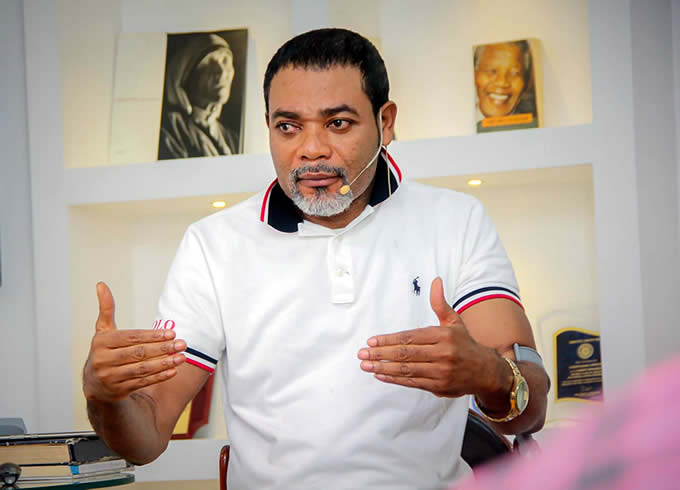
Ugochukwu Omeogu’s Wealth Warning Every African Parent Must Hear — The Thinking Behind the Money Matters More Than the Money


Ugochukwu Omeogu said something recently that stopped me completely.
Not because it was complicated. Because it was so precise it removed every excuse for not acting on it immediately.
He said wealth transferred without wisdom does not last. And then he said the question worth asking is not whether your children will inherit your wealth. The question is whether they will inherit the thinking that created the wealth.
Read that again. Slowly. Because the distance between those two questions is the distance between a generation that builds and a generation that spends — and most African parents are answering the wrong question with everything they do for their children without realizing it.
The Hidden Curriculum Africa Is Not Teaching
Here is Ugochukwu Omeogu’s wealth warning every African parent must hear, something that will make you uncomfortable if you think about it honestly. — The Thinking Behind the Money Matters More Than the Money
African children receive an education designed to make them excellent employees. They are taught to absorb information, reproduce it on demand, and present themselves as reliable candidates for roles that other people have defined and other people control. The entire machinery of African schooling — the examinations, the certificates, the university admissions processes — is calibrated to produce people who can enter systems rather than people who can build them.
Wealth education is not part of this curriculum. Understanding how value is created — how a product emerges from an idea, how a service solves a problem someone will pay to have solved, how trade works, how markets function, how money moves and why — is treated as something children will figure out on their own eventually. Or something that wealthy families teach privately. Or something that belongs to a different category of knowledge entirely from what schools are for.
This is not accidental.
The systems that govern what children learn were not designed by people who wanted to produce a generation of independent wealth creators. They were designed to produce a reliable, educated workforce — people skilled enough to be useful but not equipped enough to build alternatives to the systems employing them.
Ugochukwu Omeogu is naming the gap that this design creates. The child who understands trade becomes the adult who builds. The child who does not spends their life looking for what to take. That is not a moral judgment. It is a description of what happens to a human being who reaches adulthood with survival instincts but no framework for value creation — they hustle because hustling is the only model available to them.
The knowledge that would have made them builders was withheld. Not always deliberately. But withheld nonetheless.
What Artificial Scarcity Has Done to the African Mind
There is a concept worth naming directly because it sits underneath almost every financial limitation African families experience and almost nobody is talking about it honestly.
Artificial scarcity.
The world as it actually is contains extraordinary abundance. The resources, knowledge, markets, and opportunities available to a connected human being in 2026 are without historical precedent. A person with a laptop, an internet connection, and the right knowledge can build a business serving customers on every continent from a room in Lagos or Lusaka or Libreville. The barriers that previously made this impossible — access to capital, proximity to markets, information asymmetry — have been dramatically reduced by technology in general and AI specifically.
But the world as most African children experience it is a world of scarcity. Limited opportunities. Fixed resources. Zero sum competition where one person’s gain is another person’s loss. A world where the responsible thing is to secure what is available rather than create what is not yet there.
That scarcity is partly real — infrastructure gaps, economic inequality, and institutional failures create genuine constraints that cannot be dismissed with positive thinking. But it is also partly constructed — maintained by the stories adults tell children about what is possible, who opportunity is for, and what the realistic ceiling of ambition looks like for someone from their background.
The adult who has internalized scarcity teaches scarcity. The child who absorbs scarcity grows into an adult who competes for existing resources rather than creating new ones. And the cycle perpetuates itself across generations with each iteration feeling like realism rather than limitation.
Breaking that cycle requires adults who are willing to first examine their own relationship with abundance — to ask honestly whether they believe the world has enough for their child to thrive by creating value rather than just capturing it — and then to teach from that belief rather than from the fear that has been mistaken for wisdom.

What AI Has Done to the Abundance Equation
We have written before about how Africans are using AI to make money and about how to make money with AI with no experience in Africa. But those posts focused on income opportunities for adults who are already navigating the economy.
This conversation is about something earlier and more fundamental — about what happens when a child grows up understanding that AI is a tool for creating value rather than just a technology that exists in the world.
The child who understands how to use AI to identify problems, develop solutions, and bring products and services to market is not operating in the same economic reality as the child who does not. They are operating in a genuinely different relationship with abundance — one where the question is not which scarce opportunity can I secure but what problem can I solve and for whom.
AI lowers the barrier to value creation dramatically. A child who can identify a genuine need — in their community, their school, their family’s business, their country — and use AI tools to help develop a product or service that addresses it is not waiting for someone to create a job for them. They are creating value directly. And value created directly can be exchanged for money without the intermediary of employment.
This is what Ugochukwu Omeogu means when he talks about the thinking that created the wealth being more important than the wealth itself. The thinking he is describing is specifically the thinking of a value creator — someone who looks at the world and asks what is needed here and how can I provide it rather than asking who will hire me and for how much.
Teaching that thinking to African children is not naive optimism. It is the most practical educational investment any African parent can make. Because the child who thinks like a value creator will find ways to create value in any economic environment — with AI amplifying their capacity dramatically — while the child who thinks like a job seeker will struggle in direct proportion to how competitive the job market becomes.
And with AI automating the entry level roles that previously absorbed educated African graduates the job market is becoming significantly more competitive in exactly the categories where African education currently produces the most graduates.
Teach Your Child to Sell
Here is something most African parents find deeply uncomfortable and therefore never teach.
Selling.
Not deception, manipulation or the aggressive hustle that the word selling triggers in most African minds raised in cultures that treat commerce as somewhat beneath dignity compared to professional employment.
Genuine selling — the ability to identify what someone needs, articulate clearly how you can provide it, and make the exchange happen — is the most fundamental economic skill a human being can possess. Every business transaction in history has involved selling. Every employment relationship involves selling — you sell your skills and time to an employer who buys them. Every negotiation, every partnership, every collaboration involves some version of the exchange that selling makes possible.
The African child who is explicitly taught to sell — who practices articulating value, understanding buyer psychology, handling objection, and closing exchanges — is being given a skill that compounds across every dimension of their economic life. The African child who is never taught this arrives at adulthood with a vague discomfort around money conversations and a significant disadvantage in every economic interaction they will ever have.
Teach your child to sell something this year. Something small. Something real. Let them experience the complete cycle of identifying a need, creating or sourcing something to meet it, presenting it to a potential buyer, negotiating the price, and completing the exchange. The confidence that experience builds is not available in any classroom and not reproducible by any amount of theoretical financial education.
AI can help them identify what to sell, research their market, create their pitch, and even manage their customer communications. The technology is available. The missing ingredient is a parent who believes that teaching their child to sell is one of the most loving things they can do for them.
The Structures You Build, the Decisions You Make Visible
Ugochukwu Omeogu identifies something specific about how wealth thinking is transmitted — through the structures you build, the decisions you make visible, and the processes you document.
This is worth unpacking because it points to something most African parents do entirely privately that should be done openly in front of their children.
When you make a business decision make it in front of your child and explain your reasoning. When you negotiate a price let them watch and explain afterward what you were thinking. When you encounter a financial problem — a cashflow gap, a pricing decision, a customer complaint — bring them into the problem solving process at whatever level their age allows. When you identify an opportunity explain to them how you recognized it and what you are doing about it.
Children learn the thinking that creates wealth by watching the thinking that creates wealth happen in real time. Not from lectures about money. Not from financial literacy workbooks. From proximity to a parent who treats economic decision making as something worth making visible rather than something to handle privately and present only in its outcomes.
The parent who does this consistently is giving their child something that no school provides and no amount of inherited money substitutes for — a living, observable model of how value creation actually works in practice.
The Adults’ Role First
Everything in this post places demands on children. But Ugochukwu Omeogu’s original insight places the primary demand on adults — specifically on parents who must first inherit or develop the thinking themselves before they can transmit it.
The adult who believes the world is scarce and that their child’s survival depends on securing a safe position within existing structures will transmit that belief regardless of what they explicitly teach. Children are extraordinarily sensitive to the gap between what adults say and what adults actually believe. They absorb the belief underneath the words rather than the words themselves.
The adult who genuinely believes in abundance — who has examined the artificial scarcity narrative and rejected it, who sees the world as full of problems waiting for creative solutions rather than limited opportunities to be competed for — transmits that belief in the same way. Through the questions they ask, the risks they take, the opportunities they pursue, and the stories they tell about what is possible for someone who understands how value is created.
This is the hardest part of the wealth education conversation because it requires adults to do the internal work first. To examine honestly what they believe about money, about opportunity, about their own capacity and their child’s potential — and to bring those beliefs into alignment with what they want to transmit rather than what they have absorbed from their own upbringing.
Click here if you want to go deeper on this conversation — on wealth mindset for African parents, on teaching children the thinking behind value creation.
We share practical, honest, conviction-driven content for African parents who are serious about preparing the next generation for a world of genuine possibility.

What The Prepared Child Has to Do With All of This
The connection between Ugochukwu Omeogu’s wealth wisdom and what House of Chrys is building is not coincidental.
The Prepared Child introduces African children to artificial intelligence. But the preparation we are talking about goes beyond tool literacy. It is about forming the relationship with possibility that makes tool literacy meaningful — the belief that problems are opportunities, that value can be created where it does not currently exist, and that an African child with the right thinking and the right tools is not limited by the constraints that previous generations accepted as permanent.
AI is the most powerful value creation tool in human history. In the hands of a child who understands abundance, who has been taught to sell, who has watched adults make wealth-creating decisions visibly and learned the thinking underneath those decisions — AI becomes a genuinely extraordinary instrument for building things that serve not just Africa but the world.
The African child who combines the wealth thinking Ugochukwu Omeogu is describing with the AI literacy The Prepared Child begins building is not waiting for the economy to create an opportunity for them. They are the opportunity. They are the value creator. They are the adult who builds rather than the adult who looks for what to take.
That child is possible. Their existence depends on adults who decide today that the thinking behind the wealth is what gets transmitted — deliberately, visibly, and with the conviction that the world has enough room for every African child who arrives prepared to create something genuinely valuable in it.
Visit The Prepared Child page to begin the preparation that makes this possible. Visit For Parents for practical guidance on building wealth thinking and AI literacy together at home. Visit About House of Chrys to understand why we believe the most important education any African child can receive right now sits at the intersection of value creation, AI literacy, and the genuine belief that abundance is real and available to those who are prepared to create from it.
Ugochukwu Omeogu asked whether your children will inherit the thinking that created the wealth.
Honestly, the answer starts with what you do next.
In all things, prepare.