
OpenAI Robotics Is Now Hiring and Every African Child Must Prepare for That Urgently

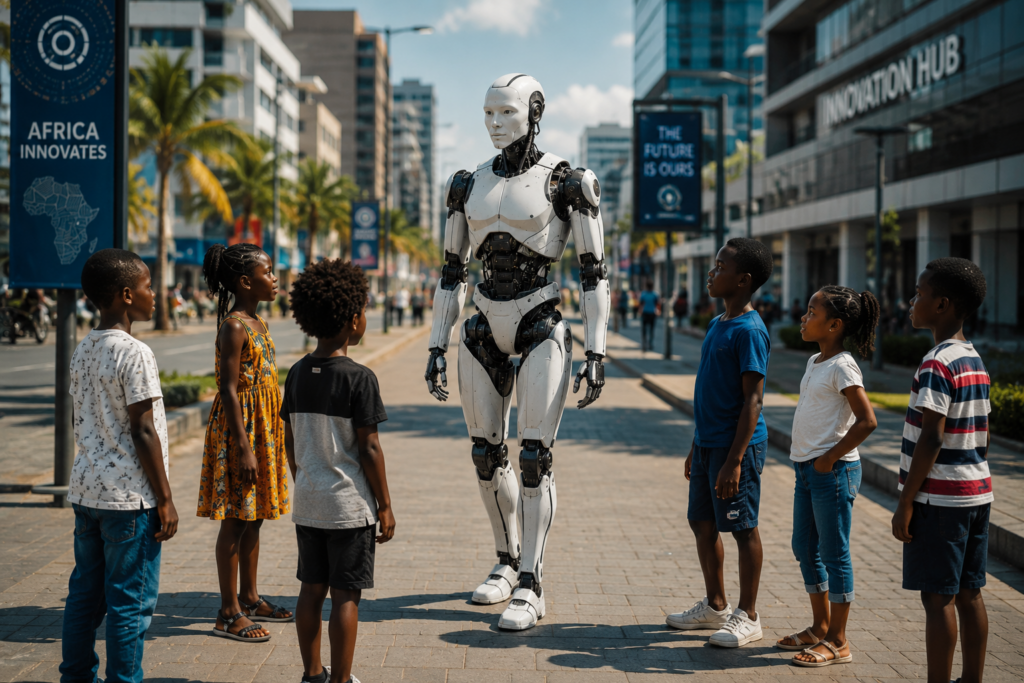
OpenAI Robotics is now hiring and every African child must prepare for that urgently. These future jobs preparation is not a future conversation anymore. Yes, Sam Altman just made it a present one.
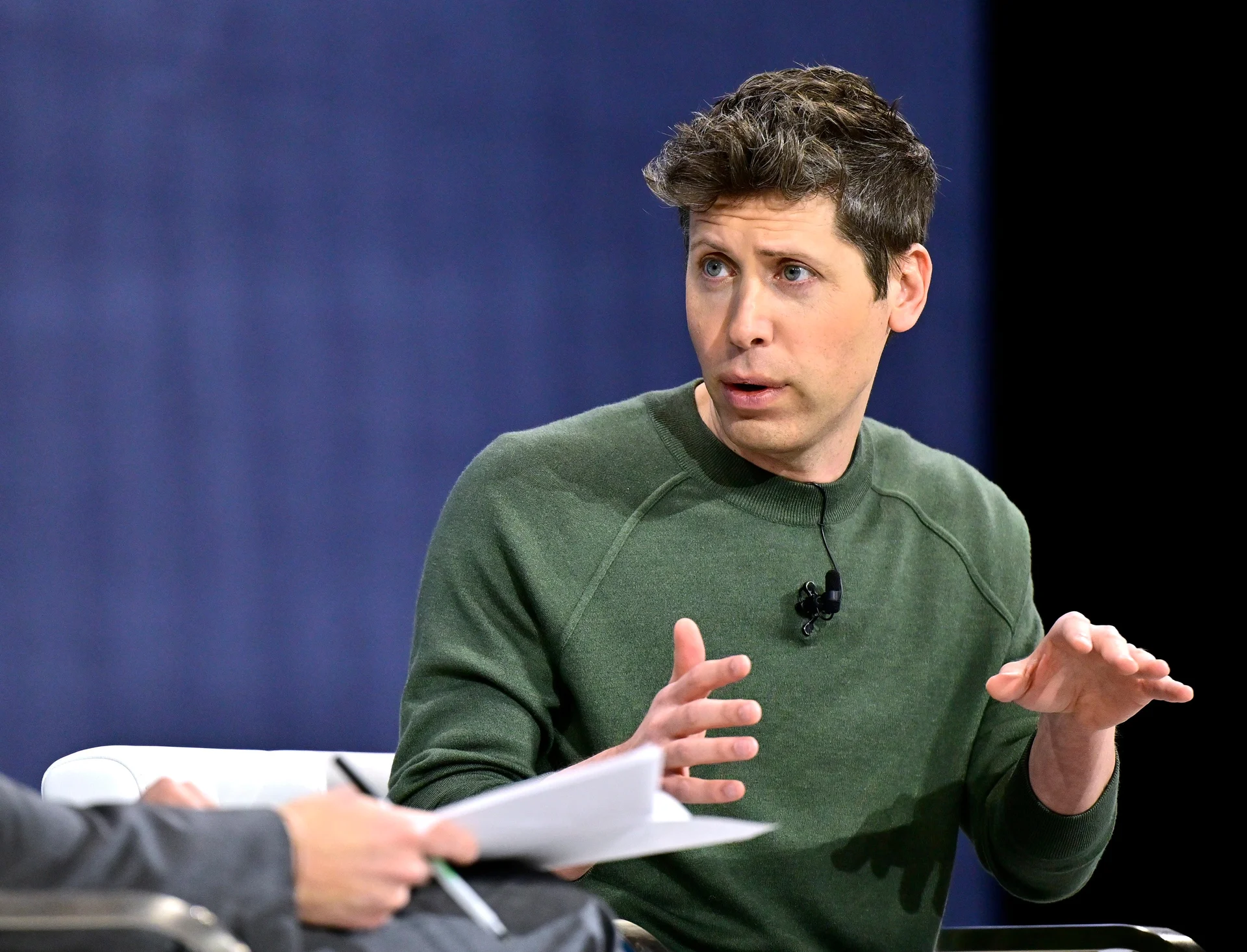
On the 31st of May, 2026, the CEO of the most powerful AI company on earth posted something that most people read as a hiring announcement and moved on from. Engineers wanted. Robotics division. Apply here. Lol.
What it actually was is a timestamp. A marker on the timeline of human history that says this is the moment when AI stopped being something that lives in screens and servers and started becoming something that walks through the world alongside human beings — building infrastructure, supporting workers, and eventually existing in every home as a personal robot doing whatever its owner needs done.
That is not science fiction. That is Sam Altman’s stated near-term vision for OpenAI Robotics, supported by a division that has been quietly building for over a year and is now ready to hire aggressively.
The question every African parent needs to sit with after reading that announcement is simple and urgent. When the robots arrive — and the timeline is shorter than most people are prepared for — will my child be the person who understands how to direct them, work alongside them, and create value with them? Or will they be the person the robot replaced?
What OpenAI Robotics Actually Is
Before the implications it is worth being precise about what has been announced because precision matters when the stakes are this high.
OpenAI Robotics is not a side project. It is a division that emerged from what was originally a world simulation research programme led by Aditya Ramesh — the same researcher behind DALL-E — and has evolved over the past year into a serious robotics engineering operation with a foundation built on the co-design of robotics hardware and machine learning research.
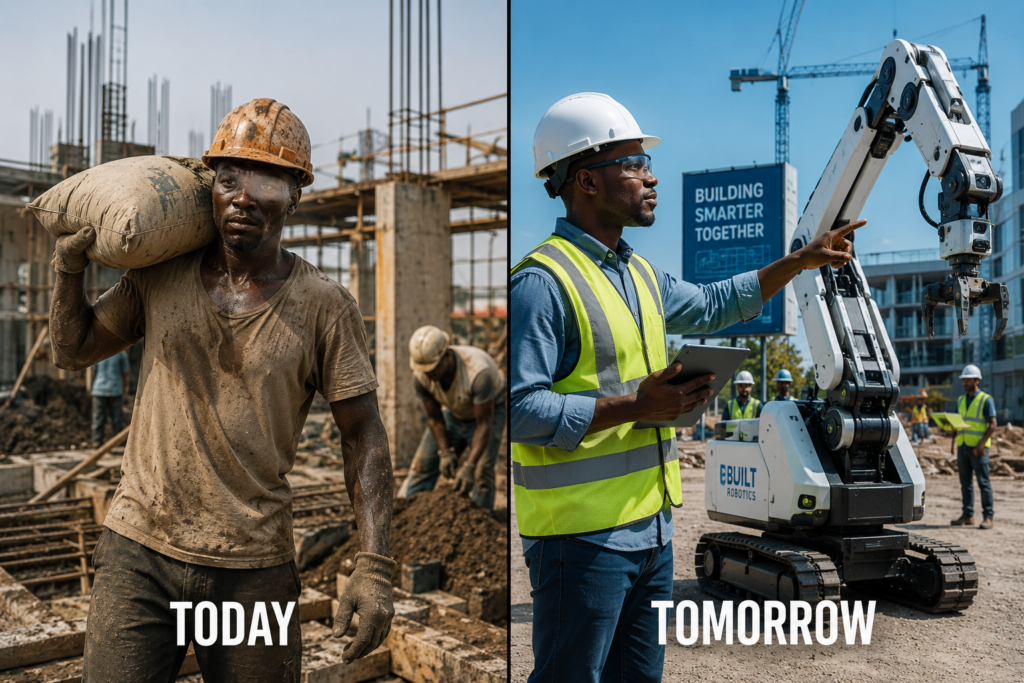
The short term focus as Altman described it is robots that support skilled workers building future infrastructure. Construction. Manufacturing. Logistics. The physical industries that form the backbone of every economy including Africa’s.
The long term vision is more intimate and more consequential — everyone having a personal robot capable of doing anything they need.
Read that phrase carefully. Everyone. A personal robot. Doing anything they need.
That is not a vision of robots replacing workers in factories. That is a vision of robots as household utilities — as fundamental to daily life as smartphones are today. Available to anyone. Transforming what a single person can accomplish in a day the way the smartphone transformed what a single person could access in a moment.
For Africa that vision has specific implications that are worth examining honestly rather than receiving with either uncritical excitement or defensive dismissal. OpenAI Robotics is now hiring and every African child must prepare for that urgently.
The Jobs That Are Coming and the Jobs That Are Going
We have written before about where AI will be in one two and three years and about the jobs that do not have names yet. The OpenAI Robotics announcement accelerates both conversations significantly.
The jobs being created by the robotics wave require a specific cluster of skills that Nigerian schools are not currently producing in meaningful numbers. Full stack hardware engineering. Machine learning research. Robotics systems integration. Operations management for robot-human collaborative environments.
These are not jobs that require only intelligence — African children have that in abundance. They require a specific kind of technical preparation that begins with early exposure to how AI systems work, how machines learn, and how technology can be directed toward solving real problems.
The child who grows up understanding AI as a tool — who has been introduced to it early, who is comfortable with the concepts behind it, who has developed the curiosity and confidence to engage with technology rather than be intimidated by it — is positioned to develop the specific technical skills these roles require as they grow older.
The child who arrives at adulthood without that foundation faces a significantly steeper climb toward the roles the robotics economy creates.
But the job creation side is only half the story. The other half is the displacement side and intellectual honesty requires engaging with it directly.
Sam Altman recently admitted he was “pretty wrong” about AI’s impact on white-collar employment, saying he thought there would have been more impact on entry level white-collar jobs being eliminated by now than has actually happened. That admission is worth examining carefully because it cuts in two directions simultaneously.
On one hand it suggests the apocalyptic job displacement narrative has been overstated in the short term. The evidence so far does not show the dramatic unemployment surge that early AI predictions anticipated.
On the other hand physical robots operating in the real world represent a different category of displacement than software AI. A language model replaces knowledge work. A robot replaces physical work. When OpenAI’s vision of personal robots doing anything their owner needs becomes reality the scope of what can be automated expands dramatically beyond what software alone could touch.
The African economies most vulnerable to this expansion are the ones whose workforces are concentrated in exactly the physical, routine, and process-driven roles that capable robots handle most efficiently — construction labor, domestic work, security, basic logistics, and the entry level manufacturing jobs that have historically provided the first rung of the economic ladder for young Africans entering the workforce.
This is not a reason for despair. It is a reason for urgency.
What Africa Has That the Robot Economy Cannot Replicate
Here is the part of this conversation that gets lost in the anxiety about displacement — the genuine, specific, irreplaceable advantages that African people bring to any economy including one populated by increasingly capable robots.
Cultural intelligence. The ability to navigate the extraordinarily complex social, linguistic, and relational landscapes of African communities in ways that no robot trained primarily on Western data can match. The person who can direct a robot while maintaining the human relationships that determine whether a project succeeds in a specific Nigerian community, Ghanaian market, or Kenyan infrastructure context is not being replaced by the robot. They are being amplified by it.
Problem solving under genuine resource constraints. The creativity that emerges from building solutions with limited resources — what is sometimes called African ingenuity or the Jua Kali spirit in East Africa — is a cognitive muscle that develops through necessity in ways that well resourced environments do not produce. The person who can make something work with whatever is available is not threatened by the arrival of more sophisticated tools. They become dramatically more capable with access to them.
Proximity to the problems worth solving. Africa has more unsolved problems per square kilometer than any other region on earth — not as a criticism but as a description of the opportunity landscape. Clean water, energy access, agricultural productivity, healthcare delivery, educational quality, infrastructure development — these are real problems affecting real people with real willingness to pay for genuine solutions. The African engineer, entrepreneur, or problem solver who combines proximity to these problems with competence in AI and robotics tools is positioned to build solutions that neither American nor Chinese robotics companies have the cultural proximity to develop effectively.
These advantages are real. But they only become economically valuable in the hands of someone who has also developed the technical literacy to work with the tools the robotics economy provides.
That is why the conversation about African children and AI preparation is not about making African children more like Western children. It is about equipping African children to bring what is specifically and irreducibly African to a technological landscape that needs African intelligence applied to African problems.
The Personal Robot Vision and What It Means for African Families
Sam Altman’s long term vision — everyone having a personal robot — deserves to be taken seriously as a near term planning horizon rather than dismissed as distant speculation.
The smartphone seemed implausible as a universal household technology in 2000. By 2015 it was already reshaping African economies in ways that Western observers had not predicted — mobile money, digital commerce, information access, and communication infrastructure built on devices that leapfrogged the landline infrastructure that never arrived.
Africa has a documented capacity for technological leapfrogging — adopting technologies at the stage that serves its current needs rather than following the sequential adoption path of more developed economies. The conditions that made mobile money adoption faster in Kenya than in the United States could produce similar dynamics in robotics adoption for specific African applications.
The African family that has a personal robot managing domestic tasks is the African family where the parent has more time to build a business, invest in their children’s education, and engage in the community activities that create social capital. The productivity multiplier of personal robotics technology is not neutral in its distribution — it flows most powerfully to the people already positioned to use it effectively.
The prepared child in that household is not the one who watches the robot with incomprehension. It is the one who understands enough about how it works to direct it intelligently, maintain it when it fails, and eventually build improved versions of it.
That preparation begins earlier than most parents think. It begins with a foundational relationship with AI and technology that makes everything that follows — the technical education, the engineering skills, the entrepreneurial application — possible rather than overwhelming.

The Skills Gap That OpenAI’s Hiring Post Reveals
OpenAI Robotics is looking for exceptional full-stack hardware engineers, operations specialists, systems engineers, and machine learning researchers. Every one of those roles requires a foundation that begins in childhood — not with robotics specifically but with the mathematical thinking, the logical reasoning, the comfort with technology, and the curiosity about how systems work that makes technical education possible when the time comes.
We have written before about the best AI coding platforms for kids and teens and about how African children can access world class technical education through free and low cost platforms available today. The connection between those resources and the roles OpenAI is hiring for is not abstract. It is a pipeline — and it begins at the age when children are forming their fundamental relationship with technology.
The African child who spends their primary school years developing comfort with technology, logical thinking, and creative problem solving is the secondary school student who engages seriously with coding and mathematics. The secondary school student who engages seriously with coding and mathematics is the university student equipped to pursue engineering, machine learning, or robotics. The university student with that preparation is the professional who can compete for exactly the roles that OpenAI Robotics and every other serious technology organization will be filling over the next decade.
That pipeline has a starting point. And the starting point is earlier than any secondary school robotics club or university engineering programme. It is in the years when children are forming their beliefs about what technology is, who it is for, and whether someone like them can understand and build it.
What Every African Parent Must Do Before the Robots Arrive
The OpenAI Robotics announcement is a useful moment of clarity precisely because it is concrete. Not AI in the abstract. Not machine learning as a theoretical concern. Robots. Physical. In the world. Building infrastructure. Eventually in every home.
That concreteness should produce a specific kind of parental response — not panic about displacement but deliberate action toward preparation.
Talk to your child about this announcement. Not with the technical details but with the essential truth — people are building robots that will change how work gets done, and the children who understand technology well enough to work with those robots will have more opportunities than the ones who do not.
Introduce your child to the AI tools and coding platforms available today. As we documented when writing about the top AI coding platforms for kids and teens platforms like Scratch, Code.org, and Google’s Teachable Machine are free, accessible, and genuinely effective at building the foundational technical thinking that makes everything else possible.
Read The Prepared Child with them. The foundation is not technical knowledge — it is the right relationship with technology. Curiosity over fear. Agency over passivity. The belief that AI and robotics are tools made by people to solve problems and that your child can grow up to be one of the people who makes and directs those tools rather than simply one of the people those tools are deployed upon.
Visit For Schools to bring AI literacy workshops into your child’s school before the robotics economy arrives in ways that make the gap between prepared and unprepared students impossible to ignore. Visit For Parents for practical guidance on building technical curiosity and AI familiarity at home. Visit About House of Chrys to understand why we have been making this argument since before Sam Altman’s hiring post made it undeniable.
The Timestamp Has Been Set
Sam Altman’s OpenAI Robotics announcement is a timestamp. It marks the moment when the physical robot economy moved from theoretical roadmap to active construction — with a hiring push, a research foundation, and a CEO willing to put his name on a public declaration of intent.
The timeline between that announcement and the moment when robots are a visible feature of African economic life is shorter than the education system has time to respond to through conventional curriculum reform. The gap between what schools are currently preparing children for and what the robotics economy will require of them is not going to close at institutional speed.
It closes at parental speed. One family at a time. One child at a time. One decision to prepare deliberately rather than wait passively for systems designed for a different century to catch up with the century actually arriving.
The robot is coming. The question is whether your child greets it as someone who understands it or someone it has replaced.
That answer starts today.
In all things, prepare.