

Bernie Sanders Says AI Belongs to the African People? He didn’t exactly say that but Bernie Sanders just accidentally made the strongest argument for African ownership of AI that any Western politician has ever made.
He did not mention Africa once. He did not need to.
In a New York Times opinion piece published June 1 2026 the Vermont Senator argued that AI is built on humanity’s collective knowledge — books, songs, artwork, journalism, code, research, videos, conversations, images, and ideas from generations of human beings — and that the wealth it generates must therefore benefit humanity rather than a handful of billionaires who built empires on a public resource they took without permission, without acknowledgment, and without compensation.
He was talking about American workers. About Sam Altman and Elon Musk and the concentration of AI wealth in a small number of extraordinarily powerful hands. About a proposed American AI Sovereign Wealth Fund that would impose a fifty percent tax on major AI companies paid in company stock — giving the public direct ownership stakes, voting power, and a share of the trillions in AI generated wealth currently flowing to private investors.
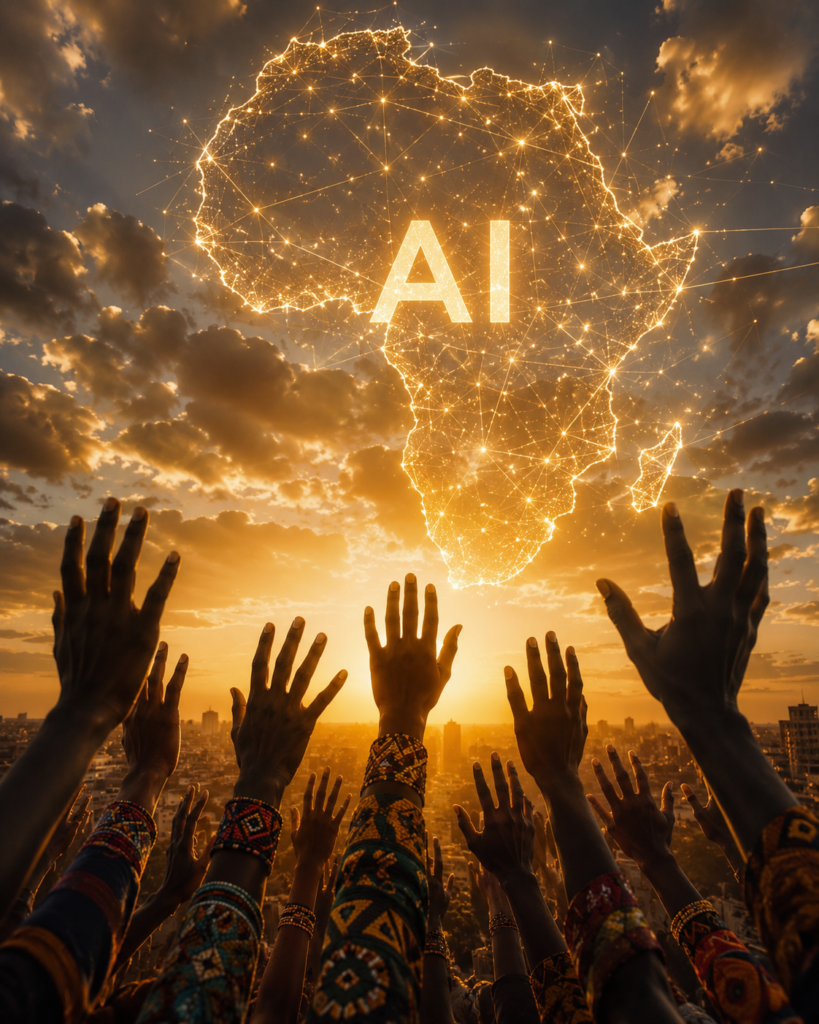
It is a powerful argument. And Africa — the continent whose collective knowledge, creative output, linguistic diversity, and literal physical minerals are embedded in every AI system currently generating those trillions — has a stronger claim to that argument than any constituency Bernie Sanders was thinking about when he wrote it.
So, Is It True Bernie Sanders Says AI Belongs to the African People?
No, he didn’t exactly say that. The core of Sanders’ argument is deceptively simple and worth stating precisely before expanding it.
What Sanders got right that Africa needs to hear is AI is not created out of thin air. It is trained on the accumulated knowledge of humanity — on everything human beings have ever written, sung, painted, filmed, coded, researched, and expressed across the entirety of recorded human civilization. The intelligence in AI systems is not the invention of Sam Altman or Elon Musk or any single company. It is the distilled output of billions of human minds across thousands of years of civilization.
The companies building AI took that collective resource — without asking, without compensating, without even acknowledging the debt — and used it to build private empires of extraordinary value.
Sanders cites Sam Altman himself describing AI models as trained on humanity’s collective experience, knowledge, and learnings. The CEO of OpenAI acknowledged the public nature of AI’s foundations. His company built a private trillion dollar enterprise on those foundations anyway.
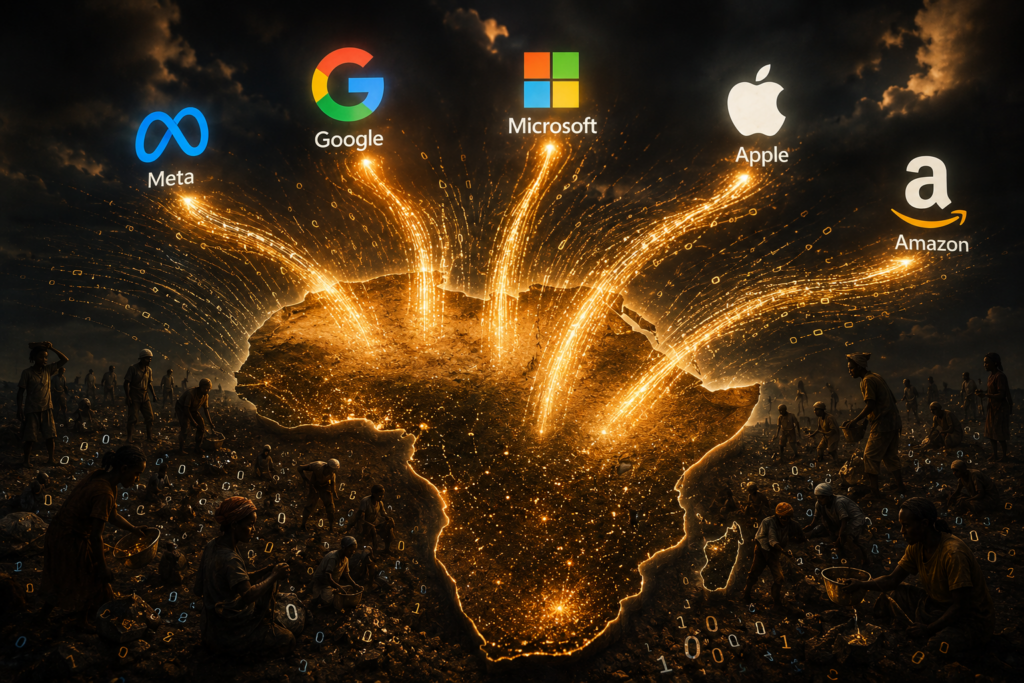
For Africa the injustice Sanders is describing is not abstract. It is the most recent chapter of a very long and very specific story about what happens when the resources Africa generates — natural, intellectual, cultural, and now digital — are extracted by entities with more power and converted into wealth that flows somewhere other than back to the people who generated it.
The cobalt in the battery that powers the server that trains the AI model. The Yoruba conversation that taught the language model how West African people communicate. The Swahili literature that trained the translation system. The African faces in the dataset that taught the image recognition model what human beings look like. The African music that trained the audio generation model what rhythm and soul sound like.
All of it taken. All of it converted. None of it compensated.
Sanders is describing theft from American workers and creatives. Africa is describing the same theft at civilizational scale across centuries with AI as simply the most recent and most sophisticated instrument of the same extraction.
The Argument Africa Has Never Made Loudly Enough
We have written before about the AI race nobody asked Africa about and about how the disadvantages of AI in Africa now include data sovereignty as one of the most urgent unaddressed concerns. Sanders’ piece gives that argument a specific and powerful frame that Africa has not yet deployed with the force it deserves.
If AI belongs to the people because it was built on the people’s collective knowledge then Africa’s claim to AI ownership is not a request. It is not a negotiation. It is not a developing world petition to the generosity of wealthy nations.
It is a debt collection notice.
Africa’s languages trained the multilingual models. Africa’s creative traditions trained the generative systems. Africa’s faces trained the visual recognition tools. Africa’s music trained the audio models. Africa’s conversations trained the dialogue systems. Africa’s data — extracted through platforms, harvested through apps, scraped from African internet users who never consented to their digital output becoming training material — is embedded in the foundation of every major AI system currently generating wealth for companies valued in the hundreds of billions.
The Sanders framework says the people whose collective knowledge built AI should own a share of the AI it built. By that logic Africa’s claim is not marginal. It is central. The continent is not a peripheral beneficiary of AI charity. It is a foundational contributor to AI whose contribution has been systematically unacknowledged and entirely uncompensated.
That argument has never been made at the level of international politics with the force and specificity it deserves. African governments have not made it. African institutions have not made it. The African Union has published documents about AI strategy without making it. The people with the most legitimate claim to the Sanders argument have been the quietest voices in the conversation it belongs to.
What the American AI Sovereign Wealth Fund Means for Africa
Sanders’ proposed legislation — the American AI Sovereign Wealth Fund Act — would impose a fifty percent tax on major AI companies paid in company stock, creating public ownership stakes, voting rights, and shared wealth for American citizens.
It is a bold proposal. Its political viability in the current American legislative environment is a separate and complicated question. But the principle it establishes is worth examining carefully regardless of whether the specific bill passes — because the principle has implications that extend far beyond American borders.
If it is legitimate for American citizens to claim ownership stakes in AI companies because those companies built their products on American creative output and American intellectual tradition then it is equally legitimate for African nations to claim ownership stakes — or at minimum compensation and governance rights — because those companies built their products on African creative output, African linguistic tradition, and African intellectual heritage.
The sovereign wealth fund model Sanders is proposing is not new. Norway’s sovereign wealth fund — built on oil revenues that belong to the Norwegian people rather than to the companies that extract the oil — is one of the most successful public wealth management systems in history. The Alaska Permanent Fund distributes oil revenue dividends directly to Alaska residents annually.
Africa has more experience with resource extraction than any continent on earth. The argument that natural resource wealth should flow to the people whose land it comes from is an argument Africa has been making for decades with mixed success regarding oil, minerals, and agricultural commodities.
AI is a resource. It was built on Africa’s intellectual and cultural commons. The Sanders framework — applied honestly and globally rather than only to American constituencies — demands that African nations begin making the same argument about AI that they have long made about oil. The resource was ours. The wealth it generates belongs to us. We want our share.
What This Means for African Children Specifically
Every argument in this post lives at a level of geopolitics and international economics that can feel distant from the daily reality of an African parent trying to prepare their child for the world they are entering.
Here is the connection that matters most.
The child who grows up understanding that AI was built on humanity’s collective knowledge — including Africa’s collective knowledge — does not relate to AI as a foreign technology that arrived from somewhere else and belongs to someone else. They relate to it as something built substantially on the creative and intellectual output of people who look like them, speak languages like theirs, and come from communities like theirs.
That is not a small psychological shift. It is a foundational reorientation of the relationship between an African child and the most powerful technology in human history.
The child who believes AI belongs to someone else will use it tentatively, as a borrower. The child who understands that African knowledge is embedded in its foundations will use it confidently, as a partial owner. The child who grasps that their generation has both the right and the responsibility to shape AI’s future will engage with it as a builder rather than only as a consumer.
This is what we mean at House of Chrys when we talk about preparation that goes beyond tool literacy. The technically prepared child who lacks this historical and political understanding is equipped to use AI. The fully prepared child who has both the technical literacy and the ownership consciousness is equipped to claim AI — to direct it, shape it, and build with it in ways that serve African communities rather than simply accepting whatever the current builders decide to deliver.
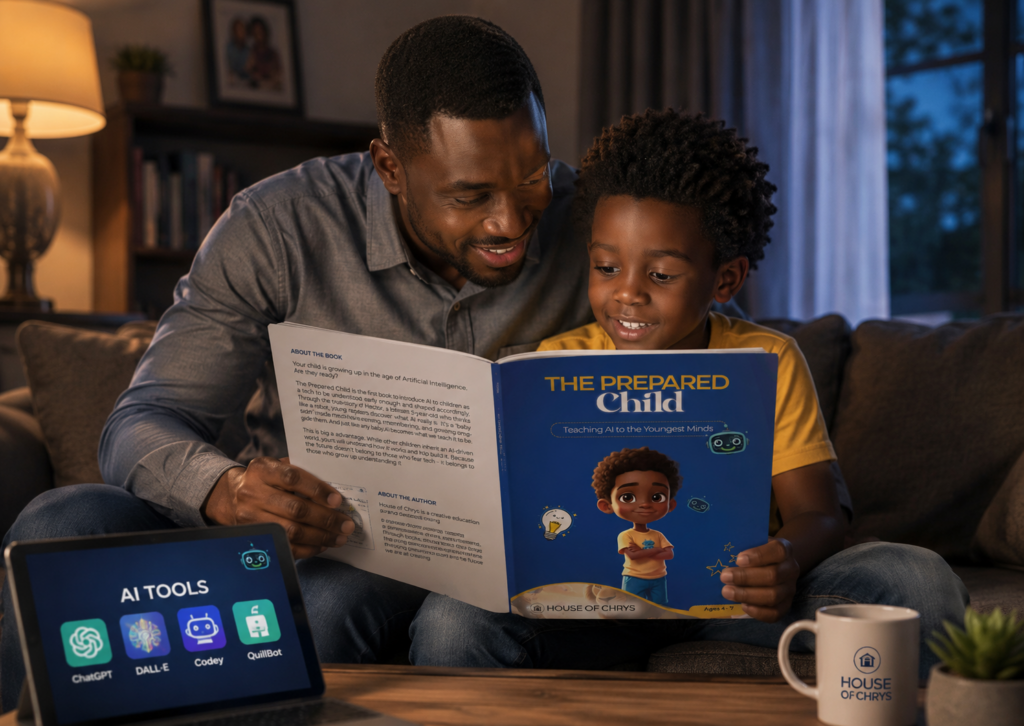
The Prepared Child begins building that ownership consciousness at the age when foundations are most durably laid — before the limiting belief that technology belongs to other kinds of people in other kinds of places has a chance to calcify into the assumed reality that shapes every subsequent decision.
Visit For Parents to understand how to build this ownership mindset alongside AI literacy at home. Visit For Schools to bring this conversation into your child’s classroom through House of Chrys workshops that connect AI literacy to African history, African contribution, and African rights in the AI economy.
The Reclamation That Starts at Home
Sanders ended his piece with three words that carry more weight for Africa than for any other audience he was writing for.
It is time to reclaim it.
For Africa that reclamation does not begin with legislation. It does not begin with international negotiations or African Union policy frameworks or diplomatic pressure on the companies harvesting African data.
It begins with the decision African parents make about how their children are introduced to AI. Whether that introduction frames the technology as something powerful that belongs to wealthy foreigners or as something powerful that was built substantially on African knowledge and therefore carries African ownership rights that the next generation has both the right and the responsibility to exercise.
The reclamation Bernie Sanders is proposing for American citizens through a sovereign wealth fund is a political and economic project. The reclamation Africa needs is simultaneously political, economic, and educational — and the educational dimension is where the work starts and where it is most urgent.
As we argued when examining what problem Africa most hopes AI will solve the answer is not a technical one. It is an agency one. The capacity of African people to participate in AI as architects rather than only as users. As builders rather than only as subjects. As owners rather than only as markets.
That capacity is built in childhood. It is built through the foundational relationship with technology that determines everything that follows. It is built by parents who understood what Sanders understood — that AI belongs to the people who created the knowledge it was built on — and decided that their children would grow up knowing they are among those people.
Africa’s knowledge is in the model. Africa’s creativity is in the training data. Africa’s languages are in the multilingual systems. Africa’s faces are in the visual databases. Africa’s music is in the generative audio.
The people who built AI on Africa’s collective knowledge did not ask permission. They did not offer compensation. They did not acknowledge the debt.
But the debt exists. And the generation of African children currently being prepared — or not prepared — for an AI world is the generation that will either claim what is owed or continue allowing it to be extracted without consequence.
That choice starts with what you do today.
Visit The Prepared Child page to begin the preparation that makes reclamation possible. Visit About House of Chrys to understand why we believe Africa’s most urgent work right now is not geopolitical negotiation but educational preparation — raising a generation that arrives at the table understanding they built it.
In all things, prepare.