
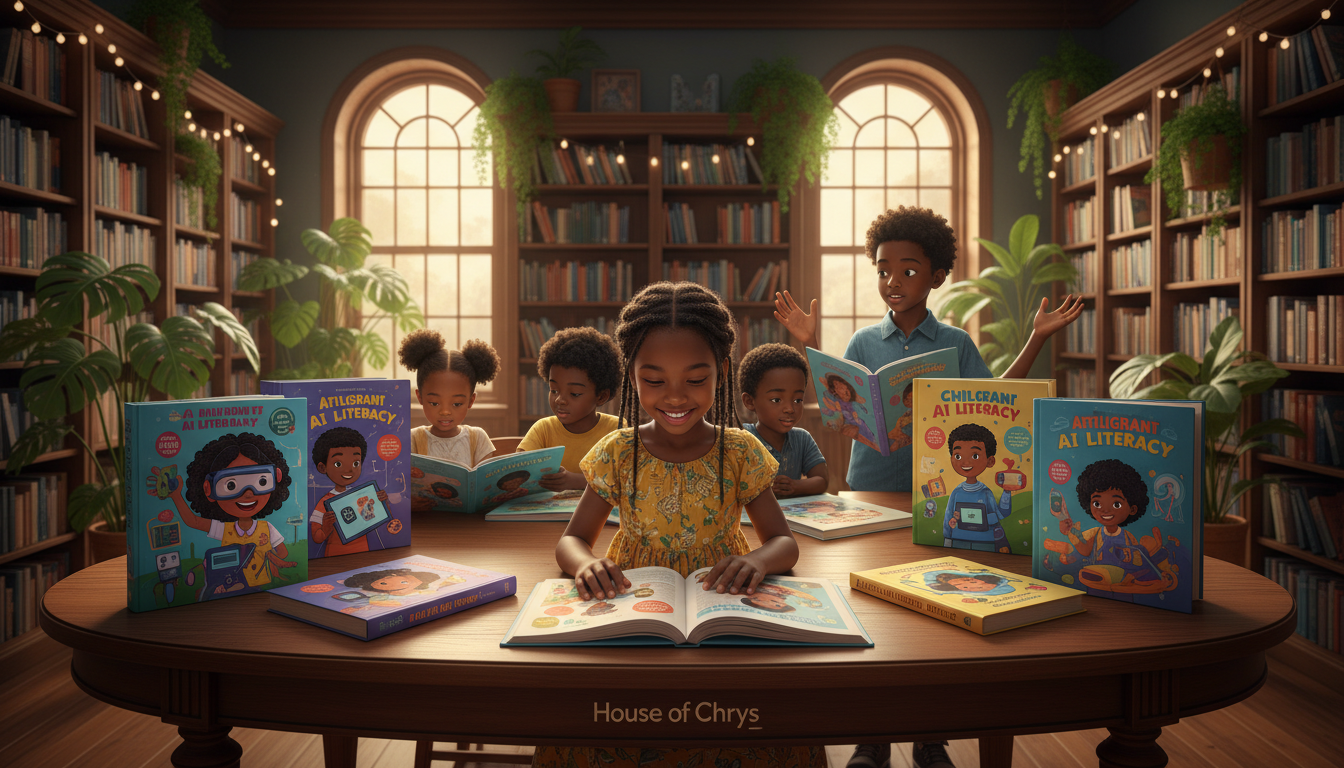
Imagine your son or daughter, tablet in hand, not just watching cartoons. They are asking how the device knows their name. That moment of wonder is a spark—one that can light a fire for a lifetime.
The future is not a distant concept. It is unfolding in your living room. Your child’s place in it depends on the tools you give them today.
Consider the Penquin Kids AI Book Collaboration. Launched on World Literacy Day, it uses generative AI to tackle South Africa’s literacy gap directly. Or the Amazon #1 New Release “AI… Meets… AI” by Amber Ivey. It features a young Black girl named Addy, proving that representation in tech starts with the stories we tell.
These are not just stories. They are essential primers for a world where artificial intelligence is as fundamental as reading. This is about active preparation, not passive consumption.
Your child’s curiosity is a powerful engine. Fueling it with the right narrative can ignite a lifelong passion for learning and innovation. The gap in education is real. But so is the opportunity to bridge it with resources that speak to their identity and potential.
You have the power to choose. Let’s explore how these resources are created, why they matter, and how you can integrate them starting now.
Key Takeaways
- The future is present, and preparation begins with the resources we provide today.
- Specialized narratives act as crucial primers for building essential technology literacy from a young age.
- Real-world initiatives, like the Penquin Kids collaboration, are actively working to close the literacy gap.
- Representation in stories, such as featuring young Black protagonists, is vital for fostering inclusion in tech fields.
- A child’s natural curiosity is the best starting point for igniting a passion for innovation.
- This movement shifts focus from simple entertainment to active, future-ready skill development.
- Parents hold the key to selecting tools that reflect their child’s world and prepare them for the next one.
Why AI Literacy is Essential for African Children Today
There’s a disconnect widening between traditional lessons and the skills the future economy will reward. This gap is a present danger—a chasm between what is taught and what will be demanded.
Technology is not an optional extra. It is the bedrock of tomorrow’s world. Artificial intelligence is its most transformative layer.
AI literacy means your child doesn’t just use a device. They understand its logic, potential, and ethics. This understanding is a new form of intelligence.
Addressing Educational Gaps with Technology
Waiting for school curricula to catch up is a risk you cannot afford. Your proactive choice in supplemental learning is critical.
Specially designed narratives address this gap head-on. They turn abstract concepts into relatable adventures. For a young learner, a story about a helpful robot makes more sense than a textbook definition.
Think of it as building a foundation. Each story is a block for your child’s cognitive development. These resources foster a natural comfort with technology from an early age.
They serve as a vital bridge. This bridge makes complex ideas accessible. It turns apprehension into curiosity.
Preparing for a Future Shaped by Artificial Intelligence
The world your child will navigate uses AI in medicine, agriculture, and creative industries. This isn’t science fiction. It’s the career landscape taking shape now.
Early literacy in this area is about empowerment. It equips your son or daughter with the confidence to ask how things work. It gives them the tools to seek answers.
| Traditional Learning Focus | Future-Ready Skill Development |
|---|---|
| Memorization of facts | Understanding systems and logic |
| Passive consumption of information | Active interaction with concepts |
| Abstract, disconnected theory | Concrete, relatable problem-solving |
| Delayed introduction to digital tools | Early, guided familiarity with technology |
| Generic, one-size-fits-all narratives | Stories that reflect the reader’s world and future |
The right children books do this work. They are primers for a world where artificial intelligence is fundamental.
The preparation starts with the stories you choose tonight. They shape the innovators you raise for tomorrow.
Spotlight on AI Books for African Children: Examples and Innovations
Concrete examples now prove the power of culturally relevant storytelling in tech education. The best narratives are born from specific places and people.
They show your child a world that mirrors their own. Let’s look at two pioneering projects that set the standard.
“Captain Chaos”: A South African Story from Penquin Kids
Meet Bontle Nkosi, a bold Grade 4 learner from a vibrant South African community. Her story, “Captain Chaos,” won the groundbreaking Penquin Kids project.
This initiative saw ten teams create ten original children books using intelligent tools. The result is a funny, engaging tale about accountability and leadership.
Teams used ChatGPT to shape the narrative. DALL·E generated the vivid illustrations. Human editors then refined every line and image for cultural truth.
This “human-in-the-loop” process ensures authenticity. The book doesn’t just teach a lesson—it feels like home.
“AI… Meets… AI”: A Tale of Representation and Adventure
Across the ocean, Amber Ivey’s book made a different kind of impact. “AI… Meets… AI” became a #1 New Release on Amazon.
It features Addy, a curious young Black girl, and Jaz, a learning companion. They explore Baltimore together, making technology accessible.
Ivey created this story for children aged 5 to 9. Her mission was clear: provide representation for girls and Black youth in STEM.
Setting the adventure in Baltimore sends a powerful message. Tech leadership can emerge from any community—a vital lesson for every young learner.
Both books are more than just stories. They are literacy tools designed to close gaps.
The storytelling is intentional. The visuals resonate with a young reader’s reality. Your child sees themselves as the hero shaping the digital world.
These innovations are not generic. They carry a South African flavour or the specific realities of Black families. That specificity is their strength.
They prove that when storytelling embraces technology, the result empowers every learner. Your choice gives them that mirror.
The Penquin Kids AI Book Collaboration: A Model for Social Impact
What does a brand do when it reaches a quarter-century milestone? For Penquin, the answer was found in action, not celebration.
This initiative redefines corporate anniversaries. It shifts focus from internal parties to external impact.
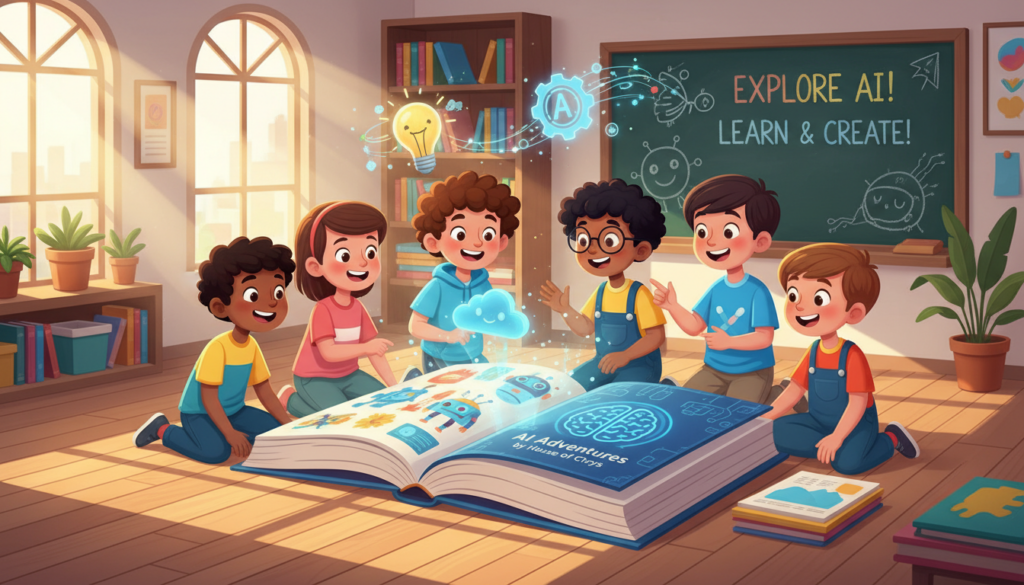
The project launched on a symbolic date—World Literacy Day. This timing was a deliberate statement.
It declared a deep commitment to tackling South Africa‘s literacy crisis. The tool for this fight was innovative storytelling.
Launching on World Literacy Day with a Purpose
Choosing this date was no accident. It anchored the project in a global mission for literacy.
Veronica Moleele, the CEO, framed it perfectly. She called it “ten teams, ten original children’s books, one bold experiment in AI-powered storytelling.”
This was corporate social investment with teeth. The agency committed to printing and distributing the physical books.
Distribution channels were strategic. They partnered with socio-economic development organizations.
This ensured resources reached the community that needed them most. The value was in tangible delivery, not just good intentions.
Celebrating 25 Years by Uplifting Communities
Marking twenty-five years is a significant time. Many companies look inward. Penquin chose to look outward.
Their celebration was the launch of Penquin Kids. This sub-brand represents a long-term pledge.
It focuses on education, creativity, and well-being. The agency leveraged its core skills for practical good.
This initiative is a scalable model. It’s not a one-off donation.
Partnerships enable maximum reach. The goal is sustained upliftment, creating a blueprint others can follow.
The collaboration built internal capacity, too. Staff from all departments participated.
They developed their own understanding of intelligent tools while creating resources. This was a dual-purpose investment of time and talent.
| Traditional 25th Anniversary | The Penquin Kids Impact Model |
|---|---|
| Internal gala events and parties | External project launch for community benefit |
| Retrospective focus on past success | Proactive investment in future readiness |
| Limited, short-term engagement | Scalable, partnership-driven distribution |
| Brand-centric marketing | Value-centric corporate social investment |
| Consumes resources for a single day | Leverages skills to create lasting educational tools |
| Often disconnected from core mission | Directly reinforces brand values: Bold, Creative, Purposeful, Innovative, Accountable |
The core value here is accountability. It mirrors the lesson in the winning story, “Captain Chaos.”
Corporate responsibility was woven directly into creative work. The signal to the industry is clear.
The creative sector can be a force for social change. It can use innovation to address real-world problems.
Your support as a parent or educator amplifies this impact. It helps scale distribution through awareness and potential sponsorships.
The South African context is specific. Yet the model is globally applicable.
Any brand can choose to align its values with projects that prepare the next generation. This story sets a new standard for contribution.
How AI Children’s Books Are Created: The Human-in-the-Loop Process
The journey from a blank page to a finished story your child holds is a deliberate dance between technology and human insight. This is not magic—it is a meticulous, step-by-step process.
Every narrative begins with a human spark. Intelligent tools then amplify that spark into a full flame. The final product is a carefully crafted story that feels both new and familiar.
Conceptualization and AI Integration with ChatGPT
Step one is always human. Creative teams draw from shared values and real experiences. They frame a narrative that will resonate deeply with young readers.
This conceptual phase sets the soul of the project. Then comes integration. Teams use ChatGPT to expand core ideas.
The tool assists with dialogue, character development, and plot structure. It accelerates the writing process without sacrificing the heart of the storytelling.
Think of it as a powerful collaborator. It handles the heavy lifting of structure. Human creators guide every decision with purpose and judgment.
Visuals and Audio: Using DALL·E and ElevenLabs
Words need a world to live in. That is where visual illustrations come in. DALL·E generates initial images based on detailed descriptions.
This provides a creative canvas. Human artists then refine every detail. They ensure characters look like children your kid might know from their own neighborhood.
Accessibility is key. The process often includes audio engineering. Tools like ElevenLabs create read-aloud versions.
This adds a layer for different learning styles. It makes the books engaging whether read or listened to.
Human Refinement for Cultural Authenticity
The most critical step is human refinement. Every output from artificial intelligence is scrutinized and edited. This ensures no generic stereotypes slip through.
Editors infuse cultural nuance, local humor, and relatable scenarios. They guarantee the final product is authentically South African—or authentically any community it represents.
This integration of technology and human creativity is the model. It shows how we can produce relevant, high-quality resources at scale.
Understanding this process should reassure you. These are not cold, algorithmic products. They are warm, intentional tools for your child’s development.
The human-in-the-loop approach is non-negotiable. It places cultural truth above all else. Your child deserves nothing less.
The Power of Representation in AI Storytelling
Representation in narrative isn’t just about inclusion—it’s about ignition.
The right story does more than entertain. It tells your child who they can be. This power shapes identity from the very first page.
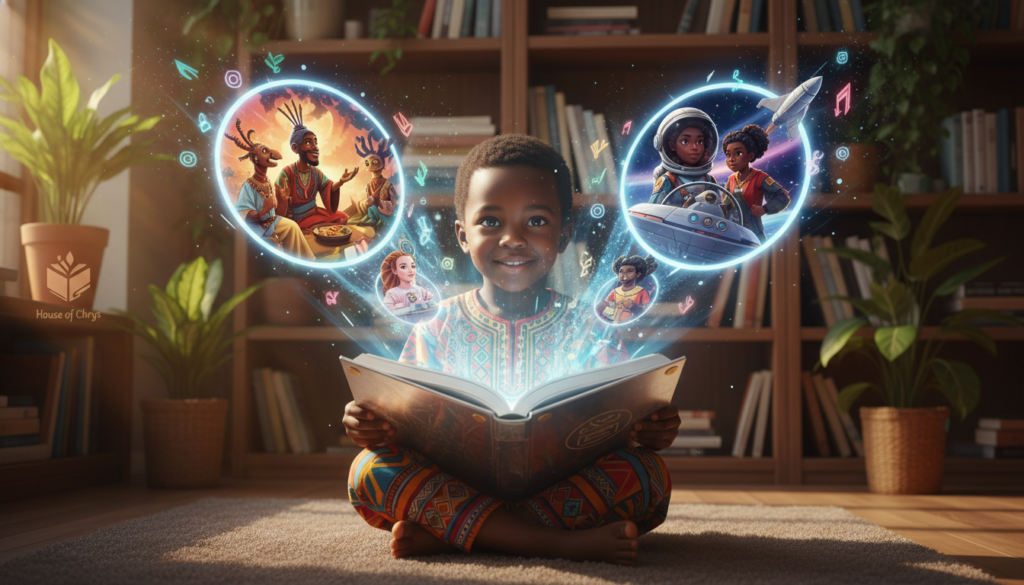
When a young reader sees a hero who looks like them, a door swings open. That moment is transformative. It turns distant concepts into personal possibilities.
Featuring Black Protagonists like Addy and Bontle
Consider the protagonists leading this change. Addy, from AI… Meets… AI, explores Baltimore with her digital companion.
Bontle Nkosi, from Captain Chaos, navigates leadership in her South African community. Both are Black girls at the center of their own adventures.
This is no accident. Author Amber Ivey made an intentional choice.
It’s a nudge to young readers, especially girls, and children of color, to imagine themselves in these roles.
Setting Addy’s story in Baltimore sends a clear signal. Tech leadership can start anywhere. Your starting point does not define your destination.
For Bontle, the narrative is grounded in local reality. Her challenges are relatable. Her triumphs feel earned.
These characters are not sidekicks. They are the drivers of the plot. Your child sees a reflection of their own potential staring back from the page.
Empowering Girls and Children of Color in STEM
This representation directly counters a historical absence. For decades, STEM fields presented a narrow image.
These new books rewrite that script. They place girls and children of color in the driver’s seat of innovation.
The message is direct and empowering. Your skin color or gender does not limit your potential. You can be a creator, a problem-solver, a leader.
This learning extends beyond technology. It builds confidence, resilience, and courage.
Every time you choose such a book, you cast a vote for a more diverse future. You help build a generation that sees itself as the architects of tomorrow.
| Traditional Narrative Gaps | Empowerment Through Representation |
|---|---|
| Generic, often homogeneous protagonists | Specific heroes that reflect diverse readers |
| STEM roles portrayed as inaccessible or exclusive | Tech exploration shown as a natural, achievable adventure |
| Passive consumption of someone else’s story | Active identification with a hero’s journey |
| Limiting beliefs about who belongs in innovation | Expanded self-concept and career aspiration |
| Learning focused solely on technical facts | Holistic development of confidence and identity |
| Stories as mere entertainment | Stories as tools for long-term social change |
For young readers, this is profound. Seeing themselves in books validates their dreams. It tells them their aspirations are not just valid—they are expected.
These stories act as both mirrors and windows. They reflect your child’s reality. They also open a vista to a future they can confidently claim.
The investment here is in a life of possibility. It’s about preparing kids not just to use technology, but to shape it.
Your choice today plants a seed. It nurtures the belief that they belong in every room they enter—especially the ones they build themselves.
Benefits of AI-Powered Books for Learning and Development
Think of a tool that doesn’t just teach your child facts, but rewires their approach to learning itself. The right narrative does more than inform—it transforms.
These resources build a new foundation. They turn apprehension into action and confusion into clarity. The payoff is a learner who is not just future-aware but future-ready.
Enhancing Creativity and Confidence in Young Readers
The best stories show technology as a paintbrush, not just a screen. Your child sees characters using tools to build, solve, and create.
This shifts their perspective from passive consumer to active inventor. That shift is profound.
Problem-solving within a plot isn’t just entertainment. It’s a rehearsal for real-world challenges. Each solved puzzle in a story builds a brick of confidence.
That confidence isn’t limited to tech. It becomes a belief in their own ability to tackle hard things. This is the core of a growth mindset.
Creativity is amplified because the narrative invites them to imagine “what if?” They learn that logic and imagination are partners, not opposites.
Making Complex Technology Accessible and Engaging
The primary benefit is demystification. Intimidating concepts become friendly characters with relatable goals. Your child understands a helpful robot long before they grasp the code behind it.
This accessibility is the gateway. When advanced technology is part of a fun adventure, fear dissolves. Curiosity takes its place.
Interactive elements, like audio versions, support different learning styles. Your child can engage on their own terms. This personal connection deepens the impact.
These books serve as a gentle primer for computational thinking. They introduce logic, sequences, and cause-and-effect—all wrapped in narrative excitement.
| Traditional Skill Building | Narrative-Powered Development |
|---|---|
| Learning through abstract instruction | Learning through relatable character journeys |
| Technology viewed as a complex external system | Technology framed as a friendly, creative tool |
| Confidence built through test scores | Confidence built through story-based problem-solving |
| Creativity often separated from technical learning | Creativity integrated as the core of technical exploration |
| Focus on consumption of information | Focus on application and creation |
For you, the parent, this creates a shared language. Dinner table talks can naturally turn to ethics, responsibility, and innovation. You’re not just giving a book—you’re opening a dialogue.
In a world where formal education often lags, these narratives are a proactive supplement. They keep your children‘s skills aligned with the pace of global change.
Each story is a building block. The ultimate benefit is future-proofing. You’re giving your child the emotional and cognitive tools to not just adapt, but to thrive.
How Parents and Educators Can Use AI Books Effectively
Owning the right resource is one thing; weaving it into the fabric of your child’s daily life is another. The power of these narratives is unlocked not on the shelf, but in your hands. You are the guide who translates a story into a conversation, a concept into a lived understanding.
Your role is crucial. You curate your young reader’s literary diet with intention. This moves beyond simple entertainment. It becomes an active strategy for building future-ready skills.

Tips for Selecting Age-Appropriate AI Stories
Start with the reader, not the technology. Your first filter must be developmental appropriateness. A mismatch here creates confusion, not curiosity.
For younger children (ages 5-9), seek picture-driven books with clear visuals. Simple concepts work best. A narrative about a friendly digital companion, like in AI… Meets… AI, makes the abstract feel friendly.
For older kids, look for more complex plots. Stories that weave in ethical dilemmas—like accountability in Captain Chaos—are perfect. They engage a maturing moral compass alongside technical curiosity.
Cultural authenticity is non-negotiable. Prioritize resources where characters and settings reflect your child’s world. This mirror effect maximizes engagement. It tells them this knowledge belongs to them.
| Ages 5-9 | Ages 10+ |
|---|---|
| Vivid, supportive illustrations | More complex narrative structures |
| Simple, relatable concepts (helpful tools) | Introduction of ethical questions |
| Short, engaging read-aloud text | Characters facing deeper challenges |
| Focus on familiarity and comfort | Focus on problem-solving and logic |
Integrating AI Books into Daily Learning Routines
Integration is the master key. Consistency transforms occasional exposure into lasting learning. Make intelligent storytime a ritual, just like a bedtime story.
Use audio versions during car rides or quiet time. Turn passive moments into immersive journeys. This caters to different learning styles and stretches your available time.
After reading, prompt a dialogue. Ask, “What do you think that tool could do?” or “How would you have solved that problem?” These questions foster critical thinking. They move your child from consumer to critic.
- Connect to reality: Point out intelligent systems in daily life—voice assistants, recommendation algorithms. This bridges the fictional narrative and the tangible world.
- Collaborate with educators: Suggest these books for classroom reading or library collections. You amplify their reach and create a shared learning language between home and school.
- Trust the process: Literacy is built through small, regular exposures. The profound benefit comes from cumulative time spent exploring these ideas together.
Your intentional use of these resources sends a powerful signal. It tells your child that understanding their world is a priority. You’re not just giving them a book—you’re opening a door they will walk through for a lifetime.
The Broader Impact: AI Books as Tools for Community Upliftment
A new standard is being set, where corporate celebration is replaced by tangible investment in the next generation.
The true test of any social project is not its creation, but its distribution. Getting vital resources into the hands that need them most—that is where real change begins.
This vision moves beyond simple charity. It’s about sustainable upliftment. Each narrative delivered is a seed planted in a young mind.
Corporate Social Responsibility in the Creative Industry
Penquin’s initiative redefines what a brand anniversary can mean. It shifts the focus from internal parties to external impact.
This model shows how corporate social responsibility can evolve. It moves past one-off donations. It becomes a sustained investment in human capital development.
The creative industry holds unique power. Its core skills are storytelling and innovation. Leveraging these for social good transforms an agency from a service provider into a community partner.
The value generated is twofold. There’s tangible progress in literacy for underserved groups. There’s also deepened brand equity built on authentic contribution.
This approach sets a powerful precedent. It proves that the industry’s talent can directly address educational disparities. The project in South Africa is a local case with global relevance.
Scaling Distribution through Sponsorships and Partnerships
Creation is just the first step. Scale is the engine for widespread change. Penquin is actively seeking sponsorships to maximize reach.
The goal is to print and distribute more copies of “Captain Chaos” and similar books. Partnerships with socio-economic development organizations are key. They ensure resources reach the right community.
Sponsorships are not just about funding. They are about building a coalition for change. Each partner amplifies the message and extends the network.
This collaborative model is the path to multiplicative impact. One donated book can inspire a future engineer or doctor. A thousand books can shift the trajectory of a generation.
| Traditional Charity Model | Sustainable Impact Model |
|---|---|
| One-time, transactional donation | Ongoing partnership and investment |
| Limited focus on long-term outcomes | Measurable focus on skill development and readiness |
| Brand-centric marketing opportunity | Community-centric value creation |
| Passive resource transfer | Active co-creation and distribution |
| Often disconnected from core business skills | Leverages core competencies (creativity, storytelling) for good |
Your awareness matters. Your support as a consumer, corporate client, or advocate helps drive this cycle. You become part of the solution.
Imagine the collective force if every creative agency dedicated a portion of its talent this way. The potential for innovation in education is staggering.
This is a clear call to action for other sectors. Use your resources. Apply your innovation. Address the gaps that hold young people back.
The broader vision is empowerment on a large scale. These tools are instruments of community upliftment. They prepare children not just to read about the future, but to build it.
Conclusion: Embracing AI to Inspire the Next Generation
Tomorrow’s innovators are sitting at your kitchen table today. The time for hesitation is over.
Embrace this intelligence not as a threat, but as a powerful storytelling partner. The resources we’ve explored prove its immense value for education.
Your choice of a single story is a direct investment. It builds the bridge from curiosity to capability. The goal is a generation of confident, critical thinkers.
You hold the power to shape the narrative. Use it to prepare, to empower, to inspire. Provide these tools and watch your children thrive.
This is your moment. Become the architect of their future-ready life.