
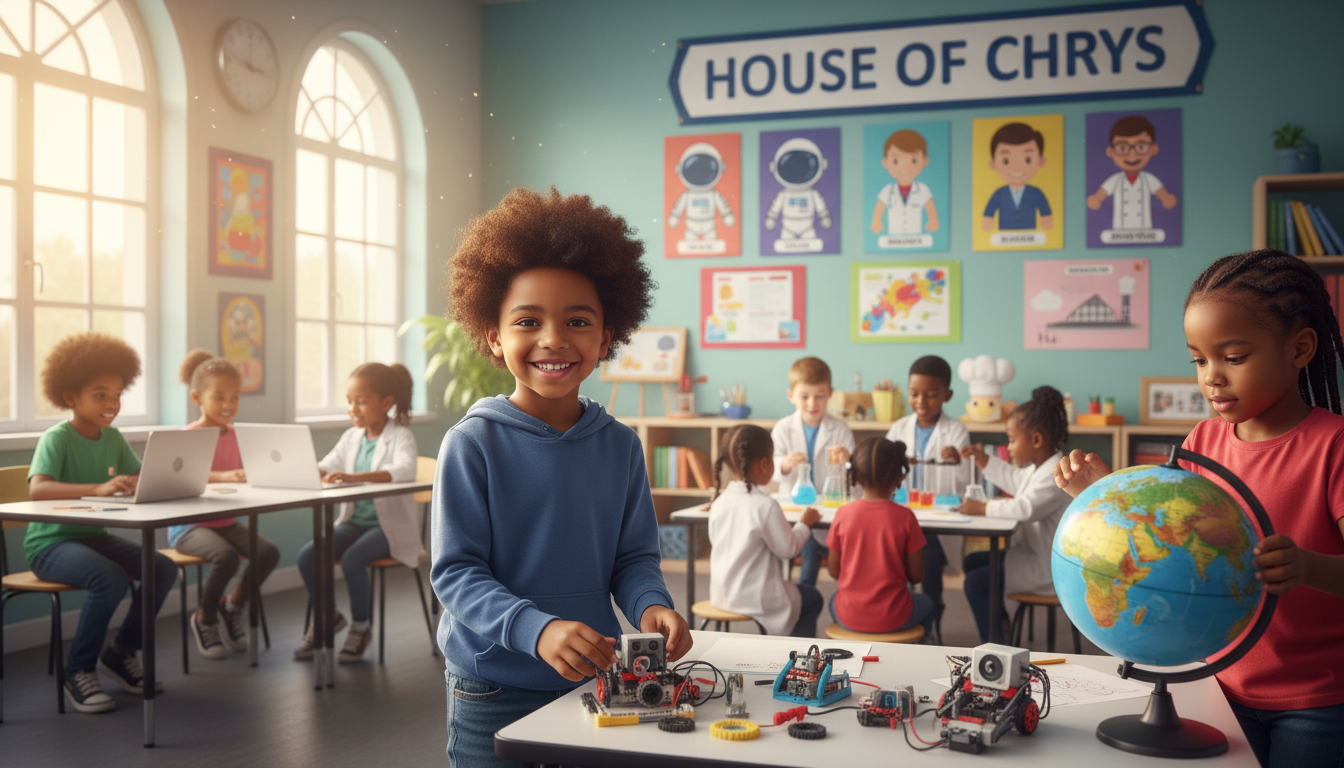
I watched my niece master a tablet before she could read. Her tiny fingers swiped with a confidence that felt both amazing and alarming.
That moment is a mirror for every parent. The world is changing at a speed no one predicted. Some experts believe the little ones in your home today will build careers that don’t even exist yet.
This isn’t a distant worry. It’s the reality shaping your family’s life right now. Technology evolves faster than any school system can update its books.
Your role is clear. Move from hope to action. Shift from anxiety to a plan. This guide is your first step.
We move beyond old education models. We build a mindset of adaptability, curiosity, and resilience. Your child’s tomorrow depends on the tools you provide today.
Embrace this truth. Automation will change work. But human creativity, critical thinking, and emotional intelligence are the new currency. Your action determines their readiness.
Key Takeaways
- The future is already influencing your kid’s life and opportunities.
- Many jobs for today’s young children have not been invented.
- Active skill-building beats passive hope in a fast-changing world.
- Parental guidance must focus on adaptability, not just information.
- Creativity and emotional intelligence will be highly valued.
- Starting now is crucial to avoid leaving readiness to chance.
- You can transform worry into practical, daily support.
Why Preparing Your Child for the Future Starts Now
Consider this stark fact: most of today’s young students will build careers we cannot yet name. The World Economic Forum estimates 65% of kids entering elementary school will eventually hold jobs that do not currently exist.
This is not a prediction for someday. It is the reality shaping their lives today.
Every day of delay is a day your child falls behind. The essential skills for tomorrow—critical thinking, creative problem-solving, collaboration—are built through consistent practice. You cannot cram them in later.
The timeline is brutally compressed. Childhood is the only window to instill the curiosity, resilience, and adaptive mindset that last a lifetime. Once this window narrows, instilling a new way of thinking becomes vastly harder.
Formal education moves at a glacial pace. School systems are slow to change. You cannot rely solely on them to equip your child for a world dominated by AI and complex global challenges.
Your intentional involvement bridges this gap. You become their most critical guide. Your support connects what is taught with what will be required.
The challenges ahead demand a new kind of ability. Solving complex problems, working with diverse people, and learning from failure are muscles. They strengthen with daily use.
| Aspect | Traditional Model | Future-Ready Model |
|---|---|---|
| Primary Source | School curriculum, delayed updates | Parent-guided exploration + real-world practice |
| Pace | Slow, standardized | Accelerated, personalized |
| Key Focus | Memorization and testing | Adaptability and project-based learning |
| Outcome | Grades and diplomas | Portfolio of skills and solved problems |
Starting early transforms your family life. It turns everyday moments into powerful opportunities for growth. A grocery trip becomes a math lesson. A family debate hones communication. This integration makes learning seamless and constant.
Technology is not waiting. Digital literacy and a basic understanding of AI are now as fundamental as reading and writing were for past generations. Early, responsible access to these tools is non-negotiable.
The future holds uncertainty. But your proactive stance today builds something unshakable: confidence. It gives your child the agility and purpose to face tomorrow, not with fear, but with the tools to build it.
You are not preparing them for a test. You are preparing them to write the rules for a game that hasn’t been invented.
The work starts now. The time for passive hope is over. Your action is the differentiator between being shaped by the future and shaping it.
Cultivating a Future-Proof Mindset: Curiosity and Adaptability
The most powerful tool your child possesses isn’t a device—it’s their innate curiosity. This mindset turns unknown frontiers into adventures. It transforms disruption into clear advantage.
Wisdom Weavers point to careers beyond Earth. Dr. Marcus Ranney explores lunar occupations with his kids. Dr. Dana Ardi focuses on unique talents and continuous learning tools.
Your child’s foundation is their perspective. Curiosity and adaptability are the core. They are more critical than any single piece of information.
Encouraging Playful Imagination About the Future
Playful speculation builds mental agility. Ask what jobs might exist on Mars. Discuss solving problems we haven’t yet encountered.
This practice does more than entertain. It stretches cognitive flexibility. It builds comfort with the unimaginable.
Protect their imagination from today’s limits. Science fiction often becomes tomorrow’s normal. Your support gives their ideas room to breathe.
Encourage questions without immediate answers. This trains the brain to explore, not retreat. Ambiguity becomes a familiar landscape.
Framing Change as an Opportunity, Not a Threat
Change is the only constant in their world. Your framing determines their reaction. Share stories of innovation and new possibilities.
Model curiosity in your own daily life. When you ask “why?” and seek answers together, you teach a vital lesson. Learning is a lifelong, joyful pursuit.
Shift your praise from fixed intelligence to effort. Celebrate exploration and persistence. A growth mindset is the engine of future-proofing.
Use small, everyday changes as practice. A new route to school or a different routine builds muscle. This prepares them for larger shifts with creativity.
You are not preparing them for a test. You are preparing them to write the rules for a game that hasn’t been invented.
This approach builds unshakable confidence. It provides the agility and purpose to face tomorrow. Your child learns to build the future, not fear it.
Building Essential Skills Beyond the Classroom
United Nations Global Goal #4 isn’t a distant ideal—it’s a daily call to action for every family. It champions equitable, high-quality lifelong learning. This is your blueprint.
The essential skills for tomorrow’s world are curiosity, problem-solving, critical thinking, and resourcefulness. They are not elective. They are the core curriculum for a future where answers are not in textbooks.
Your active role bridges the gap between school and life. You turn everyday moments into powerful learning labs.
Critical Thinking and Creative Problem-Solving
Move beyond memorization. Engage your child in real-world problems that demand analysis and innovation.
Ask “why” five times to find a root cause. Debate both sides of a family decision. These exercises build mental muscle.
Present a challenge with no obvious answer. A leaking water bottle, a crowded schedule. Guide them to evaluate options and design a solution.
This ability transforms them from consumers of information to architects of ideas. It is the bedrock of future-ready work.
Communication, Collaboration, and Self-Advocacy
Articulating ideas and listening actively are non-negotiable. Teach your child to express needs clearly and negotiate for support.
Role-play asking a teacher for help. Practice summarizing a story’s main point. These are foundational skills.
Collaboration means working as part of a team toward common goals. Family projects, like planning a meal, build this ability.
Self-advocacy is power. It builds confidence and ensures their voice is heard in any room.
Resourcefulness and Lifelong Learning
Resourcefulness is born from allowed struggle. Give your kids the tools to find answers, not the answers themselves.
When they face a setback, ask: “What’s one way you could try next?” This teaches resilience and learns from failure.
Lifelong learning is a habit, not a phase. Model it by pursuing new skills yourself. Share what you learn with your family.
Create a home culture where curiosity is celebrated. This mindset makes change an opportunity.
| Skill Area | Traditional Classroom Focus | Family Life Integration |
|---|---|---|
| Critical Thinking | Textbook comprehension, standardized test answers. | Analyzing an advertisement’s message, debating a news story at dinner. |
| Creative Problem-Solving | Prescribed project with a single correct outcome. | Designing a new game with household items, fixing a broken toy with available tools. |
| Communication | Writing essays, presenting on assigned topics. | Explaining their day in detail, negotiating screen time with clear reasoning. |
| Collaboration | Group work on a predefined school task. | Working with siblings to clean a room efficiently, planning a family outing together. |
| Resourcefulness | Rarely taught directly; reliance on teacher for information. | Researching a hobby question online safely, breaking down a chore into smaller, manageable steps. |
| Lifelong Learning | Implied end after graduation. | Parent learning a new language app alongside child, visiting museums, exploring technology tools together. |
These skills build upon each other. Cooking teaches measurement and chemistry. Budgeting teaches math and decision-making.
Everyday challenges become the perfect content for growth. This integrated practice creates a resilient, capable individual.
They gain the access and confidence to adapt and contribute in any scenario. Your support makes this way of learning a natural part of life.
The goal is not to fill a vessel but to light a fire. Your home is the kindling.
Introducing AI and Digital Literacy Early and Responsibly
The screen is a portal, not a pacifier. Your guidance determines whether it empowers or entraps.
AI literacy is now as fundamental as reading. Your child must grasp how technology works, not just how to use an app. This understanding keeps them in control.
Shawn Kanungo advises learning AI basics to spark logical thinking. This builds problem-solving skills. Balance is the crucial second part. Real-world play must anchor digital access.
Demystifying Technology: How Tools Work
Demystify the tools. Explore how algorithms make decisions. Discuss how data is collected and used.
Show them that AI can assist human potential. It can also create limits. This knowledge builds a critical mindset.
Turn a search engine into a teaching example. Ask, “Why did this result appear first?” Talk about recommendations on video sites.
This demystification removes fear. It replaces confusion with curiosity. Your child sees the mechanics behind the magic.
Developing Critical Consumers of Information
The digital world floods us with content. Your child must become a critical consumer.
Teach them to verify sources. Show them how to recognize bias. Encourage thinking before sharing anything online.
This ability protects them from misinformation. It turns them into savvy navigators of the information age.
Your guidance turns the digital world from a distraction into a workshop. Here, your child learns to harness technology for creation and positive impact.
Practice together. Check a news story against another source. Discuss why an advertisement might be persuasive.
These habits build lifelong confidence. They ensure your kids engage with ideas thoughtfully.
Balancing Screen Time with Real-World Experiences
Balance is non-negotiable. Creativity and social skills are forged in play and conversation.
Set clear boundaries for tech use. Prioritize human connection and outdoor play. Protect unstructured time for imagination.
Use technology as a creation tool, not just for consumption. Encourage coding or digital storytelling. Build projects that solve family problems.
This approach ensures healthy children develop. It blends digital learning with physical exploration.
Parents must model this balance. Your behavior sets the standard for the entire family.
This balanced way creates an ethical digital citizen. Your child gains the wisdom to navigate an online world.
They will see change as a series of opportunities. Your support makes this access to tools a source of strength, not stress.
Fostering Resilience and Learning from Failure
Future readiness hinges on a single, non-negotiable skill: the ability to fail well and learn faster.
Resilience is not inherited. It is built through direct experience. Your child must face challenges and navigate setbacks. These moments are the curriculum for a complex world.
Shawn Kanungo emphasizes this truth. “Fail fast, fail often, and fail forward.” This mindset turns stumbling blocks into stepping stones. It is earned, not taught from a textbook.
Your home must become a laboratory for safe failure. Here, mistakes are analyzed, not criticized. Every error provides valuable data for the next attempt.
Creating a Safe Space for Risk and “Failing Forward”
Create an environment where risk is encouraged. Protect your child from harsh judgment, not from difficulty. This is the safe space they need.
Reframe every failure as a source of information. A broken toy is a chance to explore repair. A lost game teaches strategy. This way of thinking builds incredible confidence.
Analyze mistakes together without blame. Ask, “What happened?” and “What could we try differently?” This process develops critical thinking skills.
Your reaction sets the tone. Celebrate the courage to try, regardless of the outcome. This support makes your family a fortress for growth.
Teaching Emotional Regulation and Grit
Emotional strength is a core ability. Teach your kids to name their feelings. Show them that all emotions are valid, but manageable with the right tools.
Practice simple calming techniques together. Deep breathing or counting can reset a frustrated mindset. These are life skills for any challenge.
Grit is cultivated through persistence. Encourage your child to stick with a difficult project. Let them wrestle with a tough puzzle or a new part of a sport.
Share your own stories of struggle. Talk about a work project that failed or a skill that took time to master. This normalizes the learning process.
Growth requires discomfort. Your perseverance is the most powerful example they will ever see.
Avoid the instinct to rescue them from every hardship. Instead, coach them through problem-solving. Ask, “What’s one other way you could approach this?”
Celebrate effort and progress over perfect outcomes. Praise the hard work on a science fair project, not just the grade. This reinforces that the journey holds the real value.
This foundation ensures your child navigates uncertainty with strength. They gain the confidence to adapt to any change. Your guidance turns failure into their greatest teacher.
Encouraging Uniqueness and Creative Problem-Solving
In a world racing toward automation, your child’s distinct perspective is their ultimate advantage. Algorithms excel at uniformity. Human brilliance thrives on originality.
Dr. Dana Ardi offers clear guidance. Help your kids identify their unique skills and talents. Shawn Kanungo urges them to find something they can be world-class at—something unique to them.
This isn’t about being the best at everything. It’s about discovering the one thing only they can do. Their unique ability becomes a superpower.
Helping Your Child Identify Their Unique Strengths
Observation is your most powerful tool. Watch what makes your child lose track of time. Notice which problems they naturally try to solve.
Engage in open conversations. Ask, “What feels like play to you, but looks like work to others?” Their answers reveal innate passions.
Provide diverse experiences. Exposure to arts, building, writing, and coding shows where their curiosity ignites. There is no single right answer in creative expression.
Connect learning directly to their interests. A love for animals can explore biology, conservation, and storytelling. This makes education personal and powerful.
Celebrate unconventional ideas immediately. The future belongs to those who see challenges from new angles. Your support validates their distinct view of the world.
Moving From Standardized Answers to Real-World Projects
Standardized tests measure memory. Life tests creativity. Shift focus from grades to tangible projects.
Real-world projects demand application. They blend knowledge, creativity, and personal passion. This is where true skills are forged.
Encourage deep generalism. Combine expertise in one area with broad curiosity across many fields. Innovation lives in making unexpected connections.
Find something you can be world-class at—something unique to you.
Design projects with authentic purposes. Build a garden to learn biology and math. Create a family newsletter to practice writing and technology.
These projects teach resourcefulness. They show kids how to find information and use available tools. Failure becomes a valuable part of the process.
This way of learning builds unparalleled confidence. Your child gains the ability to navigate any change.
| Aspect | Standardized Learning | Project-Based Exploration |
|---|---|---|
| Primary Focus | Recall of prescribed content and single correct answers. | Solving open-ended problems with multiple creative solutions. |
| Measure of Success | Test scores and comparison to peers. | Tangible outcome, ideas generated, and skills demonstrated. |
| Role of the Child | Passive recipient of information. | Active designer, researcher, and creator. |
| Development Focus | Compliance and memorization for school. | Initiative, critical thinking, and adaptability for life. |
| Connection to Future | Prepares for known job roles and existing exams. | Prepares for unknown roles by cultivating a unique, problem-solving mindset. |
This focus on uniqueness does more than get them ready. It builds a young person capable of shaping what comes next. They bring a perspective no algorithm can replicate.
Parents and the family provide the safe space for this growth. You offer the access and opportunities they need.
Your guidance turns everyday moments into laboratories for innovation. The goal is a child who doesn’t just fit into the future. They invent it.
The Role of Parents and Educators as Collaborators
Shawn Kanungo is right: “The future of education is a team sport.” This truth reshapes your role entirely.
You are no longer the sole source of knowledge. Your child’s growth now depends on a powerful network. This network connects home, school, and the wider community.
Your primary job shifts. You move from giving orders to providing strategic support. You become the lead connector in your child‘s learning ecosystem.
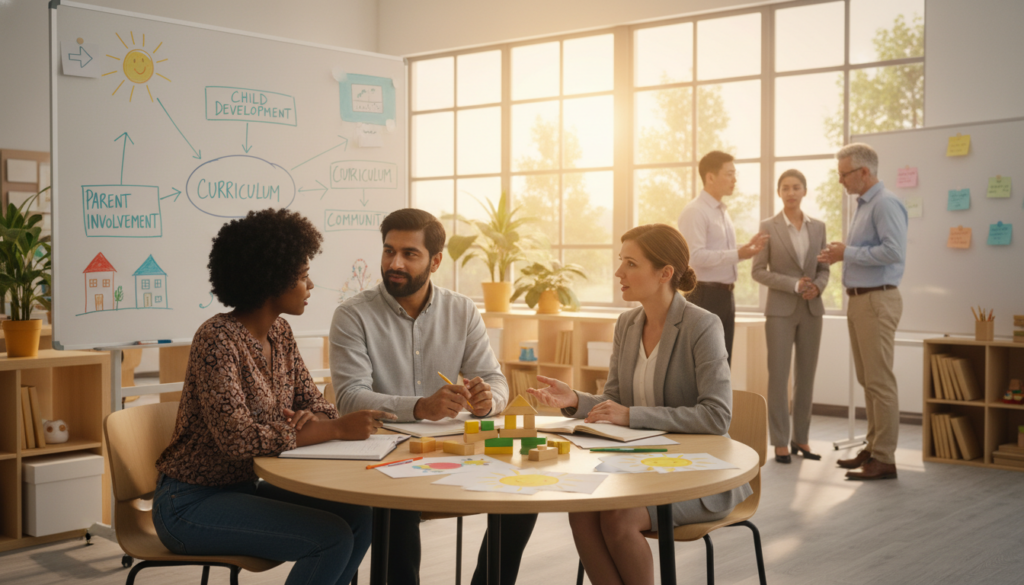
Dr. Dana Ardi emphasizes teaching work-life integration early. This starts with you modeling how education blends into daily life. It is the ultimate example of collaborative learning.
This approach builds unparalleled confidence. Your child gains access to diverse mentors and real-world challenges. They see change as a series of opportunities crafted by their team.
Shifting from Director to Coach and Guide
Stop seeing yourself as the director of your child‘s future. You are now their coach and guide. Your role is to provide resources and encouragement while they lead.
This means a fundamental change in communication. Shift from giving answers to asking powerful questions. Prompt reflection, independent research, and creative problem-solving.
“What do you think we should try next?” This simple question builds critical thinking skills. It hands the tools of discovery directly to your kids.
Your support becomes about creating a safe space for experimentation. Protect them from harsh judgment, not from difficulty. This is where true ability is forged.
Model the mindset you want to instill. Demonstrate curiosity in your own work and life. Admit when you don’t know something and show how you find information.
The future of education is a team sport.
This coaching way ensures your child develops internal motivation. They learn to navigate problems and failure with resilience. Your guidance turns every setback into a data point for their next attempt.
Integrating Learning into Family Life and Community
Learning must escape the classroom. Weave it into the fabric of your family routines. Turn everyday moments into rich explorations.
A trip to the grocery store becomes a lesson in economics and math. A discussion about a news story hones critical analysis skills. These integrated activities make education a natural part of life.
Collaborate with educators as genuine partners. Share insights about your child‘s unique strengths and interests. This creates a cohesive support system that spans both environments.
Engage actively with community resources. Libraries, museums, and local businesses are extensions of your child‘s world. They expose young minds to diverse role models and real-world content.
Create a family culture where learning is visible and celebrated. Make it a shared purpose, not a separate chore. This builds a powerful team dynamic at home.
Use technology to connect with online experts and global ideas. Balance this digital access with hands-on service and local activities. This blend provides a complete view of the world.
This collaborative network is your greatest asset. It ensures your child benefits from multiple sources of wisdom and inspiration. They gain the confidence and ability to adapt to any change.
Your decisions today build that network. Recognize the importance of every connection. You are not just preparing a student—you are cultivating a resilient, resourceful citizen.
Practical Tools for Future Planning and Goal Setting
Your child’s brightest future isn’t a mystery—it’s a project waiting for your blueprint. Practical planning transforms abstract worry into actionable steps. It gives your family a clear roadmap to follow.
This work moves you from reaction to creation. You stop fearing the unknown and start building it, one deliberate decision at a time. The right tools make this process collaborative and clear.
These frameworks turn hopeful conversations into structured plans. They identify the support and service your child needs. This is how you build their confidence for any change.
Initiating Visioning Conversations with Your Child
Start with simple, open-ended questions. Ask, “What makes you come alive?” or “If you could create any future, what would it look like?” These questions unlock ideas beyond today’s limits.
Involve important people in your child‘s life. Grandparents, teachers, and mentors offer diverse perspectives. Their insights reveal hidden strengths and opportunities.
Focus on your child‘s best imaginable life. “What are your talents and interests?” “What kind of work or activities feel meaningful?” This vision becomes your guiding star.
Listen without correcting their dreams. Your role is to capture their content, not edit it. This builds trust and ensures the plan reflects their true purpose.
Utilizing Person-Centered Planning Frameworks
Structured tools like PATH and MAPS give shape to these conversations. PATH (Planning Alternative Tomorrows with Hope) focuses on long-term dreams and backward planning.
MAPS (McGill Action Planning System) maps a child‘s gifts, needs, and necessary support. Both frameworks are especially powerful during major transitions.
Starting high school or moving toward employment are key moments. The information gathered can directly inform official education plans like IEPs. This creates alignment between home and school.
These activities are not one-time events. They are living documents. They evolve as your child grows and discovers new passions.
| Framework | Primary Focus | Key Process | Ideal Use Case |
|---|---|---|---|
| PATH (Planning Alternative Tomorrows with Hope) | Building a visionary, long-term future picture and working backwards to identify immediate steps. | Begins with a vivid description of a positive future, then charts the necessary “backwards” milestones to make it real. | Creating a 5-year vision for independent living, post-secondary education, or a career launch. |
| MAPS (McGill Action Planning System) | Comprehensively mapping a person’s history, dreams, fears, gifts, and needed supports. | Uses graphic facilitation to create a shared visual map of the individual’s story and the support network required for success. | Transition planning at key school stages, or when integrating new service providers into a child‘s life. |
| Common Outcome | Both produce a actionable, visual plan centered on the child‘s strengths. They transform vague hopes into a concrete sequence of learning activities, skill development, and community connections. | ||
Breaking Down Large Goals into Teachable Steps
A grand vision can feel overwhelming. The magic lies in decomposition. Break every large goal into small, teachable steps practiced daily.
If a long-term goal is “live independently,” a first step is “learn to prepare three simple meals.” This builds skills and makes progress visible. It transforms a distant dream into today’s learning.
Integrate goal-setting into family routines. Use visual charts on the fridge. Schedule weekly check-ins to celebrate milestones. This maintains momentum and shared purpose.
Flexibility is non-negotiable. Your child‘s path will evolve. New challenges and opportunities will appear. Adapt the plan as they grow.
This structured yet adaptable way ensures you are proactively building. You are not reacting to events as they occur. You are designing the world your child will step into.
A goal without a plan is just a wish. Your blueprint turns the wish into a warranty.
This process hands your kids the tools for lifelong navigation. They learn to set goals, overcome problems, and learn from failure. Your support makes this ability their greatest asset.
How to Prepare Your Child for the Future: A Step-by-Step Framework
You don’t need a crystal ball. You need a process. This five-step framework is your family’s blueprint.
It transforms overwhelming uncertainty into clear, actionable steps. You move from fear to focused action. Each stage builds upon the last, creating a resilient path forward.
This is not a one-time checklist. It’s a living, breathing system for growth. Your confidence grows as you see tangible progress.
Step 1: Assess and Discuss Interests & Strengths
Everything begins with deep observation. Watch your child in their natural state. Notice what captivates their attention for hours.
Engage in purposeful conversations. Ask open-ended questions. “What feels like play to you?” is more powerful than “What do you want to be?”
This assessment is your foundation. It reveals innate passions and unique talents. These are the raw materials for their unique path in the world.
Step 2: Co-Create a Vision for the Future
Dream together without limits. Imagine possibilities that don’t yet exist. This shared vision becomes your guiding star.
Document this picture of their best imaginable life. Use words, drawings, or a vision board. Make it tangible and visible in your home.
This co-creation builds ownership. Your child sees their own dreams reflected back. It transforms vague hopes into a shared family purpose.
Step 3: Identify and Develop Core Skills
Your vision reveals the necessary tools. Map the dream back to the essential skills required to achieve it.
Focus on timeless abilities. Critical thinking, creative problem-solving, and clear communication are universal currencies. Digital literacy is now fundamental.
This step moves from “what they love” to “what they need to learn.” It provides a targeted curriculum for your home learning lab.
| Approach | Linear, One-Time Plan | Cyclical, Evolving Framework |
|---|---|---|
| Mindset | “Set it and forget it.” Fixed destination. | Continuous navigation. Adaptable journey. |
| Response to Change | Seen as a disruption to the plan. | Seen as new data for the next cycle. |
| Role of the Child | Passive recipient of a predetermined path. | Active co-pilot in an ongoing discovery process. |
| Outcome | Can lead to rigidity and frustration when reality shifts. | Builds agility, resilience, and lifelong learning habits. |
Step 4: Integrate Practice into Daily Life
Skills are forged in action, not theory. Weave practice into your everyday routines. Turn chores into projects and conversations into debates.
A grocery trip teaches budgeting and nutrition. Planning a family outing hones collaboration and logistics. This integration makes growth seamless.
Your home becomes the most powerful classroom. Real-world challenges provide the best content. Your support turns moments into milestones.
Step 5: Review, Adapt, and Celebrate Progress
Schedule regular check-ins. Look at what’s working and what isn’t. This review is your system’s engine.
Adapt the plan without hesitation. New interests emerge. Challenges appear. Your framework must bend, not break.
Celebrate every step forward. Acknowledge effort and persistence. This reinforcement builds the mindset that effort leads to growth.
A goal without a system is just a wish. This framework is your operating system for their brightest tomorrow.
This process is beautifully cyclical, not linear. As your child grows, you revisit each step with deeper understanding.
You are not just preparing them for a single future. You are equipping them with a way to navigate any change. That is the ultimate gift.
Conclusion: Embracing the Unknown with Confidence
William Ayot sees beauty in the fire we pass through—a transformation that reshapes our humanity. Wisdom Weavers meet the unseen with playful curiosity. This is your path forward.
The unknown is not a threat. It is the space where your child‘s unique potential unfolds. You have laid the foundation together.
You chose intentional action. This journey continues, but the right mindset and skills equip your family. Your child will face the future with creative courage.
Your role evolves from guide to cheerleader. Trust in their ability to learn and adapt. The world will demand resilience and innovation—qualities you nurture daily.
Embrace not knowing. Human spirit shines brightest there. Continue learning alongside your kids.
You are not just getting them ready. You are empowering them to create the future. Move forward with confidence and hope.