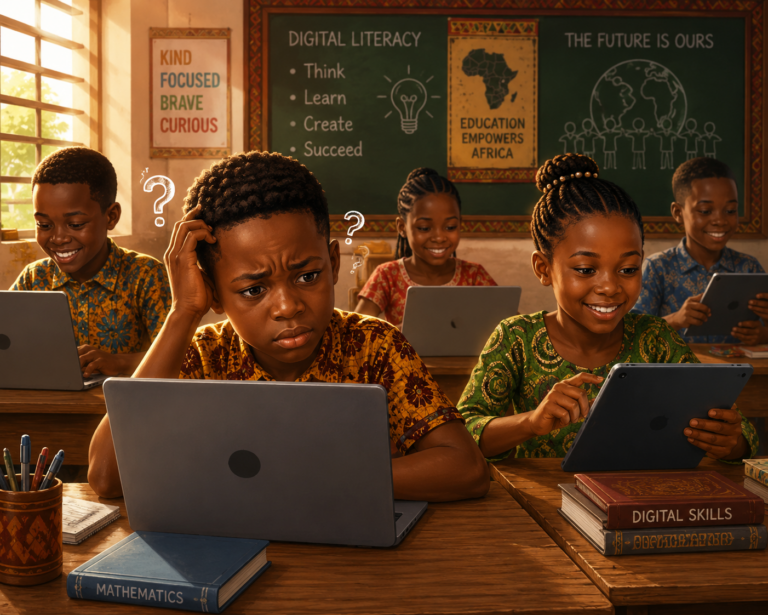


Seriously, can AI save Africa? Well, this is not a question that serious people are supposed to ask out loud. Yet whether AI can save Africa isn’t really the issue. The real question is whether Africans will use AI deliberately enough to shape their own future.
But I want to have it anyway. Because I think the question itself is slightly wrong and the wrong question produces the wrong answer every time.
Africa Is Not Dying. Let Us Be Clear About That First.
A wealthy man told me recently that Africa is a construction site. That the whole world comes here to get what they need and then takes it back to wherever they came from. He said it without shame. As a statement of fact. As though the structure of extraction was as natural and inevitable as rainfall.
I sat with that for days.
Not because it was new information. We all know this story. We have been hearing it since before we could properly understand what it meant. We are constantly reminded — sometimes loudly, sometimes through the quiet architecture of global economic systems — that our land is valuable but that we are somehow not capable of being the primary beneficiaries of that value.
And I keep asking myself the same question. Is it that we are not human enough? Is the gaslighting so complete that even Africans have started to believe it?
Because here is what I know. Africa is not dying. Africa is very much alive. Chaotic, contradictory, brilliant, frustrating, full of energy that has not yet found its most productive expression. But alive. Deeply, irreducibly alive.
The question is not whether Africa can be saved. The question is whether Africa will use what is available right now to do something that has never been done before on this continent at this scale.
And what is available right now is AI.
What AI Actually Has to Do With Africa’s Freedom
Here is the argument that nobody is making clearly enough and it is the argument I find most compelling.
They refused to give us security. But they gave us freedom. And they did it by accident.
The same negligence that left African infrastructure underdeveloped, the same dismissal that decided African populations were not worth the full investment of institutional attention, the same irritation that powerful people feel when they look at this continent and see chaos rather than potential — that very neglect produced something unintentionally valuable.
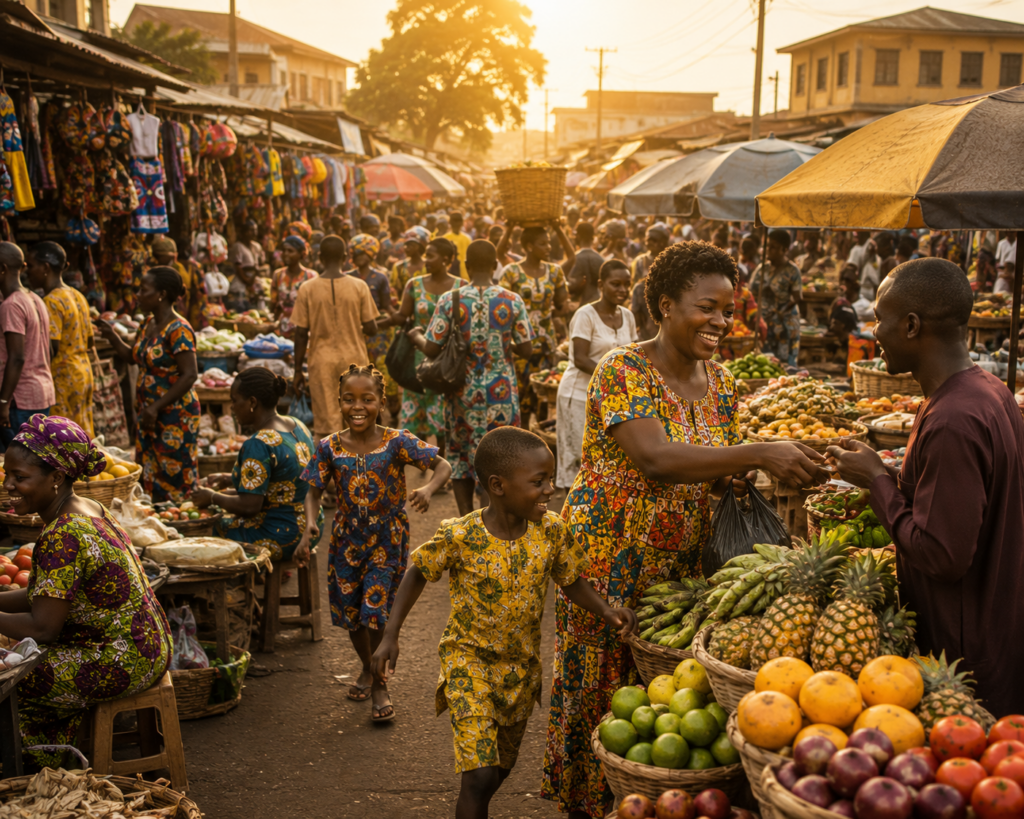
Africans live freely. We move freely. We speak freely. We create freely. We generate original data through the sheer unrestricted expression of how we live our lives — our languages, our arguments, our music, our humor, our grief, our celebrations, our street conversations, our family dynamics, our community negotiations.
And original data is exactly what AI needs to keep evolving. Not processed data. Not sanitized data. Not data that has been curated by committees. Original, messy, alive, human data.
Africa has been generating that without knowing its value. Without compensation. Without acknowledgment. Without any stake in the systems being built on top of it.
That changes the moment Africans understand what they are actually contributing to the AI economy and decide to participate deliberately rather than accidentally.
The Real Way AI Can Save Africa — Learning How to Learn
I want to be careful here because I am not making a naive argument. AI is not magic. It is not arriving to rescue a continent. It is not going to fix corruption, build roads, or make incompetent leaders competent overnight.
But here is what I genuinely believe AI can do for Africa that nothing else has managed to do at scale.
It can induce the spirit of learning.
Think about what made the countries that lead the world today. It was not natural resources. Africa has more of those than most of them combined. It was not geography. It was not even initial advantage. It was the accumulated habit of curiosity — of people who decided to keep asking questions, keep testing answers, keep building on what they learned until the learning itself became a way of life rather than a means to an end.
This is becoming even more important in the AI era. The World Economic Forum’s Future of Jobs Report highlights that analytical thinking, curiosity, lifelong learning, and AI literacy are among the capabilities that will define the workforce of the coming years.
AI is a willing teacher. Perhaps the most patient, most available, most democratically accessible teacher that has ever existed. It does not care where you are from. It does not charge school fees. It does not run out of time or energy or goodwill. It answers questions at two in the morning in a village with no library and questionable electricity. It explains complex ideas in simple language. It meets the learner wherever the learner is.
Yes, the AI we have today is imperfect. It is biased. It hallucinates. It reflects the priorities of the people who built it more than the needs of the people using it. All of that is true and none of it cancels the core argument.
Because the child who falls in love with learning through even an imperfect AI is developing something more valuable than any specific piece of knowledge the AI provides. They are developing the habit of inquiry. The comfort with not knowing that leads to the discipline of finding out. The understanding that learning itself is a skill — that knowing how to learn is more powerful than anything you currently know.
That skill — learning how to learn — is what separates the people who keep getting better from the people who plateau. It is what made the great civilizations great and what will make the next great civilization possible.
Africa can access that skill through AI right now. Today. Without waiting for curriculum reform, without waiting for better government, without waiting for the global economic structure to become less exploitative.
A child with a phone and a curiosity is already equipped. The only missing ingredient is the decision to use the tool deliberately rather than passively.
This Is Not Web3. This Is Not the Metaverse.
I want to say this clearly because Africans have been burned before by technology promises that evaporated.
The blockchain arrived with promises. NFTs arrived with promises. The metaverse arrived with promises. Most of those promises went quietly into the night and left behind mostly confusion and lost money.
AI is different in kind not just in degree. It is not a speculative asset. It is not a financial instrument dressed up as a technology. It is a fundamental shift in what a single human being can accomplish — in how much they can learn, create, analyze, communicate, and build — with the cognitive tools available to them.
The person who understands this technology deeply is not richer in the abstract sense of holding a token that might appreciate. They are richer in the concrete sense of being more capable, more productive, more able to create genuine value in the real economy.
That kind of wealth does not evaporate when the hype cycle ends. It compounds.

What This Means for African Children Specifically
Every argument in this post leads to the same conclusion and it is the conclusion that House of Chrys was built around before this conversation happened.
The African adult trying to learn AI today is doing so against decades of accumulated habit, against the psychological residue of being told this technology is not for people like them, against the very real friction of arriving late to something that rewards early familiarity.
The African child introduced to AI now — before the limiting beliefs form, before the habits calcify, before the school system convinces them that their job is to memorize rather than to inquire — arrives at adulthood in a completely different relationship with the technology.
They do not experience it as foreign. They do not experience it as intimidating. They experience it the way they experience language — as something that was simply always part of how they engage with the world.
That child is not just AI ready. They are the answer to the question this post started with.
Can AI save Africa?
Not by itself. Not automatically. Not without deliberate human decisions made at the level of individual families, individual parents, individual children who decide that the spirit of learning is worth cultivating and that the most powerful learning tool in human history is worth taking seriously.
But if enough African parents make that decision — and make it early enough — then yes. The generation being raised right now, in homes where a parent decided to start the conversation before the school made it compulsory, could become the generation that finally answers the wealthy man’s construction site argument with things he did not see coming.
Things that came from African minds that were prepared early enough to use the tools that everyone else underestimated them with.
Visit The Prepared Child page to begin that preparation today. Visit For Parents for practical guidance on raising a child who arrives at the AI age already equipped. Visit About House of Chrys to understand why we believe this is the most important work happening in African education right now.
AI will not save Africa. But Africa — armed with AI, deliberate about learning, and finally done waiting for permission — can save itself.
In all things, prepare.