
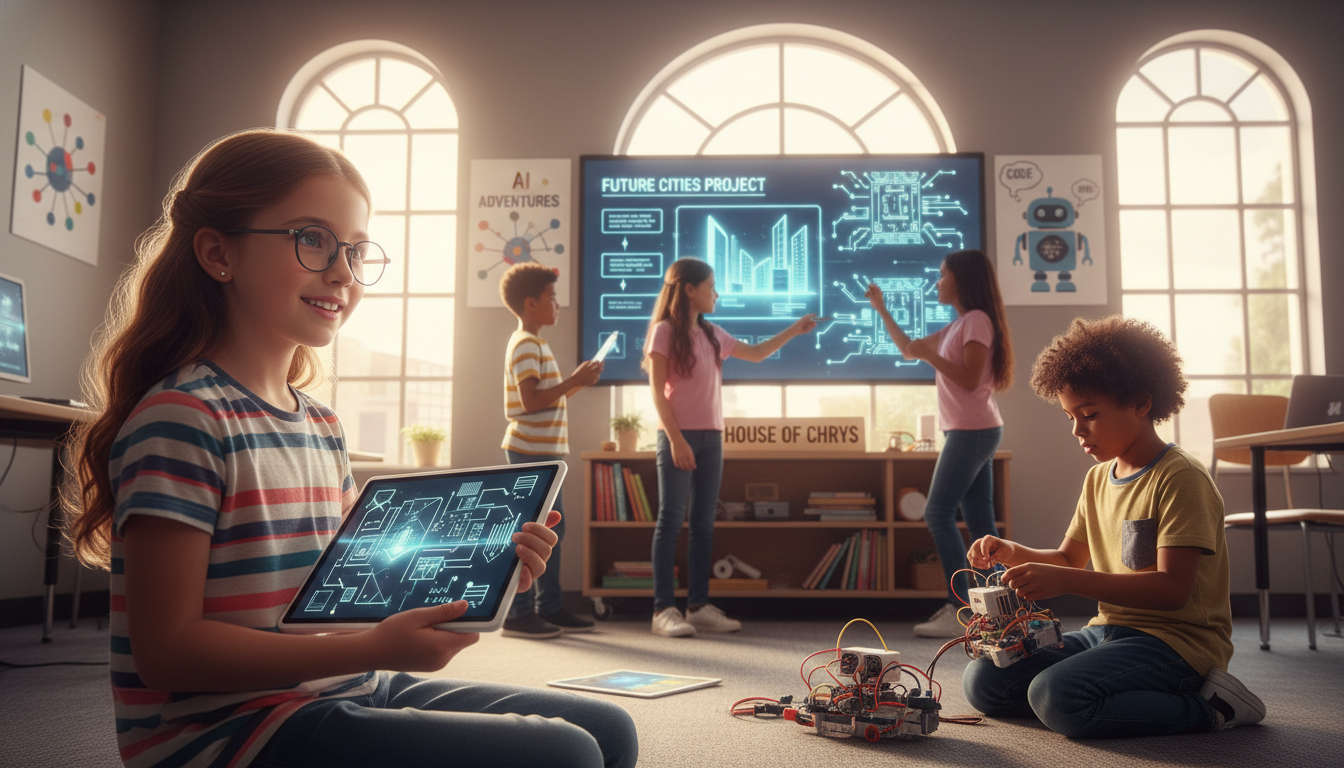
What if your child’s most important teacher isn’t in a classroom, but in the cloud?
The landscape of learning is shifting beneath our feet. Advanced technological tools are redefining what it means to be educated. For parents, this isn’t about gadgets—it’s about preparation.
This integration into daily life is happening fast. It’s a fundamental change in how the next generation approaches knowledge. Your responsibility is to guide your young ones through this digital transformation.
We must ensure they are future-ready. This article explores the critical intersection of cutting-edge tools and upbringing. It provides the knowledge you need to navigate this new reality with confidence.
Key Takeaways
- The rise of intelligent technology in learning is a fundamental shift, not a passing trend.
- Parents have a central role in guiding their child’s journey through this digital evolution.
- Advanced educational tools are being integrated at a rapid pace globally.
- Understanding this change is key to making informed decisions for your child’s development.
- Staying proactive and informed is essential for preparing the next generation.
- The goal is to build resilience and adaptability for a technology-driven future.
- Practical knowledge empowers families to turn inspiration into effective preparation.
Introducing the New Era of Education with china ai children
A quiet revolution is rewriting the rules of education, and it starts with the tools your child uses every day. The runaway success of models like DeepSeek and Qwen has spurred every industry to integrate advanced intelligence.
This isn’t a distant concept. The national push for a more productive generation makes this shift immediate and urgent for every family.
Setting the Stage: Why AI in Education Matters Today
You should recognize this new system is transforming daily school life. It’s designed to prepare students for careers where technology is foundational.
Teachers are now empowered. These new tools allow for deeply personalized learning experiences in the classroom.
The traditional model is being augmented. This is about ensuring every child has the support they need to succeed, not just efficiency.
The Role of AI in Preparing Children for the Future
This integration is about future-readiness. Artificial intelligence provides a scaffold for the next generation to build upon.
Schools embracing these changes are positioning themselves to lead. They are creating environments where students learn with the tools that will define tomorrow.
Your role as parents is to understand this shift. It’s the key to guiding your children through a world driven by intelligent models.
AI Integration in Classrooms: Tools, Trends, and Real-World Applications
Forget the static posters and dusty globes. Today’s classrooms are dynamic hubs of adaptive technology.
This isn’t science fiction—it’s your child’s Monday morning. Intelligent applications are now a standard part of the school day.
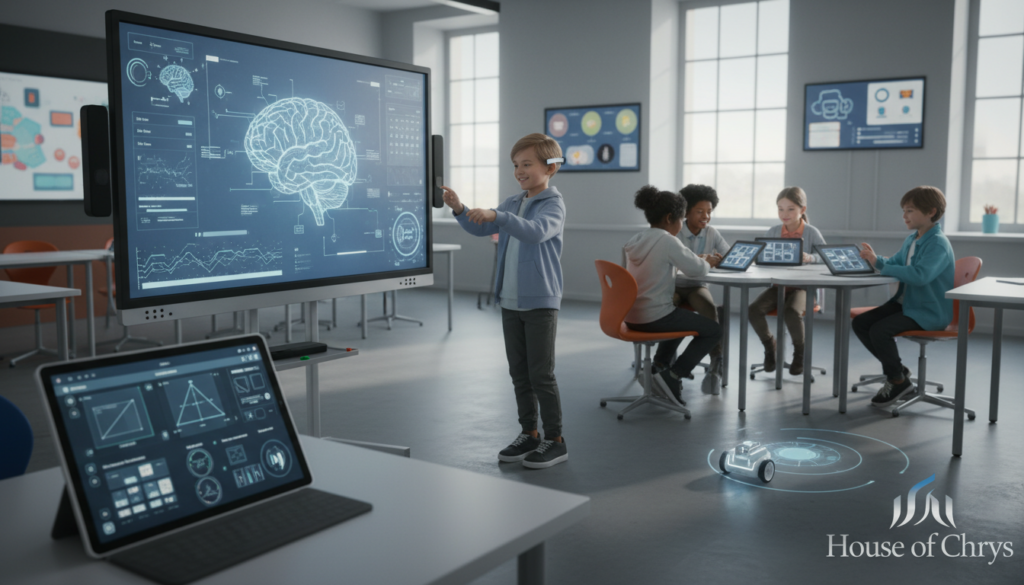
Your child’s school might already be using these systems. They are designed to support every student’s journey.
Innovative Devices and Software in Modern Classrooms
Consider the AlphaDog robot. It’s a companion that helps with English lessons and provides study-time support.
Many institutions use software to grade tests in minutes. This gives teachers valuable time back for direct interaction.
Advanced systems track student data in real-time. They identify exactly where a young learner needs help in the curriculum.
Case Studies: From AI Tutors to Companion Robots
At nearly 200 schools, therapy booths offer a confidential space. Students can talk to an agent about daily anxieties.
This use of technology allows for a deeply tailored approach. It ensures lessons remain engaging for every individual.
By analyzing behavioral data, these models give teachers crucial knowledge. They can then provide targeted support.
| Tool / Software | Primary Function | Key Benefit |
|---|---|---|
| AlphaDog Robot | Language practice & companionship | Provides personalized, engaging lesson support |
| AI Grading Software | Automated assessment of tests | Saves teachers hours for student interaction |
| Student Data Analytics | Tracks performance and engagement | Identifies specific learning gaps for intervention |
| AI Therapy Booth | Provides mental health conversation | Offers accessible, private support for student wellbeing |
These tools are here. They are working. Your role is to understand this shift in education.
It’s the first step in guiding your family through a world driven by intelligent models.
Government Policies and the Push for Intelligentized Education
Policy is no longer just a document—it’s the engine driving your child’s classroom.
A new era has officially begun. In May 2025, the Ministry of Education released a white paper declaring the start of “intelligentized” education.
This is a national directive. It aims to modernize the entire system for the next generation.
National Directives and the “AI+” Strategy
The government’s “AI+” strategy is a central part of the latest Five-Year Plan. It’s a blueprint for the future of learning.
“We must use data to monitor student progress, ensuring our young people remain globally competitive.”
Provinces are acting. Shandong has mandated that 200 schools adopt intelligent tools.
Every teacher there must complete training within three to five years. This isn’t optional—it’s policy.
Impact on Rural and Urban Schools
The focus is nationwide, but the impact differs. Digital education pilots have delivered over 10,000 hours of quality lessons to 252 rural schools.
This bridges a major resource gap. It gives students in remote areas access to excellent curriculum.
Yet challenges remain. Rural schools often lack the hardware for new applications.
Urban institutions typically get these technologies first. The goal is equity.
| Policy Initiative | Target Area | Primary Goal |
|---|---|---|
| “AI+” National Strategy | All Schools | Modernize the Education System |
| Shandong AI Mandate | 200 Schools | Train Teachers & Adopt Tools |
| Digital Education Pilots | 252 Rural Schools | Bridge the Resource Gap |
| Data-Driven Monitoring | National Curriculum | Refine Learning Outcomes |
These systems collect performance data. This helps policymakers improve the curriculum for all students.
The push reduces the average teacher‘s workload. It aims to improve the quality of education for every child.
Your local school is part of this transformation. Understanding these policy shifts helps you advocate for your children.
Balancing Innovation and Challenges in AI-Powered Learning
Balancing the scales between technological aid and human development is the central task for today’s parents. The promise is immense, but so are the pitfalls.
You must navigate this new terrain with clear eyes. It requires understanding both the light and the shadow.
Opportunities: Personalized Learning and Efficiency Gains
For students, these tools can tailor learning to their exact pace. This personalization helps close gaps that a one-size-fits-all system misses.
For teachers, automation saves precious hours. Grading and data analysis become swift, freeing educators for direct mentorship.
This efficiency allows schools to focus on building essential skills. The future demands problem-solvers, not just memorizers.

Concerns: Dependency, Reduced Critical Thinking, and Privacy
Researchers warn that overreliance may weaken critical thinking. If students always get automated answers, they can lose the ability to struggle through a problem.
Consider a stark 2025 finding: 82% of rural young ones showed developmental delays. This suggests technology cannot replace early human interaction.
Excessive screen use during school hours might hinder social skills. There is a real risk of dependency.
The collection of sensitive student data by these technologies raises major privacy questions. A robust government policy is needed.
Your role is to prioritize your child‘s holistic growth over mere convenience. Finding ways to integrate innovation wisely protects their future.
Global Perspectives and the Future of AI in Education
Look beyond your borders—the classroom of tomorrow is being built today in very different ways. This global conversation defines what skills your child will need.
The attitudes shaping these schools could not be more opposed. Your understanding of this split is crucial.
Comparing U.S. Skepticism with Chinese Optimism
A 2025 analysis reveals a stark contrast. Over 90% of people in one major country feel optimistic about these tools.
In the United States, that figure is just over 50%. This skepticism shapes their focus.
U.S. institutions like Alpha Schools use smart technology to teach math and entrepreneurship. It’s a targeted part of their curriculum.
Elsewhere, the integration is sweeping and national. The entire system is being redesigned around these new ways of learning.
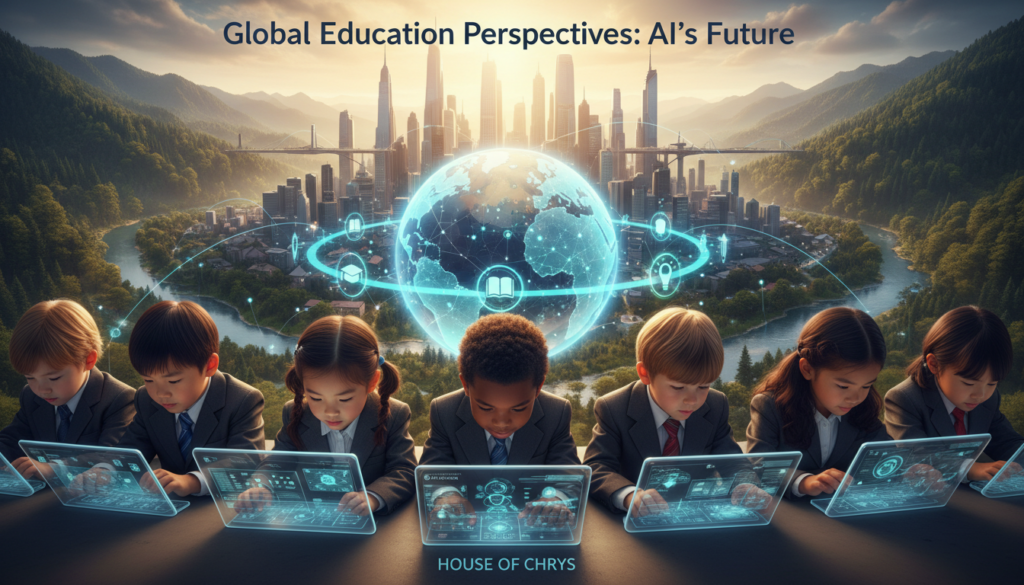
Preparing for a World of AI-Driven Learning
Your task is to find balance. Combine traditional knowledge with modern digital literacy training.
Educators worldwide debate a central question. Will these tools enhance learning or hinder critical thought?
As a parent, you must stay involved. Ensure the technology serves your young one’s best interests.
The future of education hinges on this balance. We must support students without sacrificing their independence.
By studying different global views, you gain vital knowledge. It prepares your family for the challenges of the coming years.
The goal is clear. Integrate smart systems into the school day while keeping the human connection vital for growth.
Conclusion
This journey through the changing landscape of learning ends where it must—with you, the parent, holding the map.
The rapid integration of smart tools into the education system is your new reality. We have seen how they reshape lessons and redefine the teacher‘s role in the school.
Your role is to guide your children through this digital world. Ensure they gain the practical knowledge needed for a future-ready life.
The human connection remains the core of any successful education. Technology offers powerful new ways for students to learn, but it must not replace critical thinking.
Stay informed. Ask how your local schools use data and new applications. Advocate for policies that put the long-term development of all students first.
Your informed choice is the most powerful tool of all.