
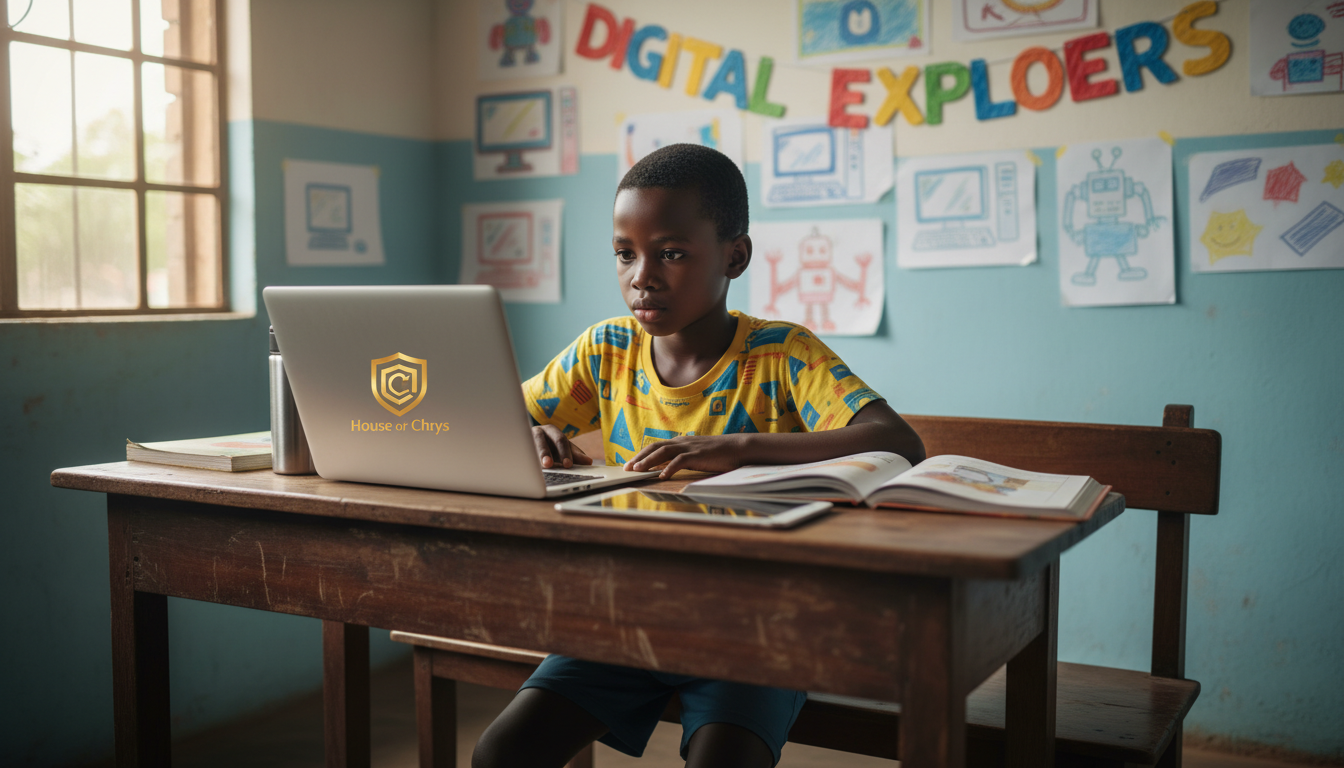
Remember watching your son or daughter swipe a screen before they could properly talk? That moment was a signal. It wasn’t just play. It was their first conversation with the new world.
That world speaks in code, data, and artificial intelligence. It is the primary language of opportunity now. Your child will either become fluent or struggle to be heard.
This is the truth we must face together. Not with fear, but with clear-eyed preparation. School curricula are racing to catch up, but the transformation is happening today.
Your child’s potential is a powerful seed. To grow, it needs new tools. Mastering technology is no longer a nice-to-have skill. It is the bedrock of survival, success, and shaping their own destiny.
We see the gap between the classroom and the real world. Waiting for the system to change is a luxury we cannot afford. The time to act is now. Equipping our children secures their future and unlocks opportunities we can only imagine.
Key Takeaways
- The future is already here, and it communicates through technology and data.
- Fluency in this new language is essential for a child’s success and ability to compete.
- Traditional education systems are often behind the pace of global technological change.
- Preparing a child with modern skills is an urgent, necessary act of care.
- A child’s innate potential requires the right tools to fully develop in today’s world.
- Proactive action by parents is critical to bridge the gap in learning and opportunity.
- Equipping a child today is a direct investment in their secure and empowered tomorrow.
The Critical Need for Digital Literacy in Africa
This need is not about keeping up with trends. It is about fundamental access to the modern world. Without these skills, a young person is trying to speak a language they have never heard.
They face immense challenges from the very start. The critical need is to turn this situation around—with urgency and precision.
Bridging the Digital Divide in Rural Communities
What does this divide look like on the ground? It means a school with no computers. It means a teacher without the tools to explain the online world.
It means your child has potential but no pathway. The challenges are concrete: lack of reliable internet, outdated equipment, and a curriculum that feels disconnected from reality.
When a whole community lacks access, opportunity moves elsewhere. Bridging this gap is the first, non-negotiable step.
We must connect these communities. Not just with cables, but with knowledge and relevant tools. The goal is to turn isolation into participation.
Why Digital Skills Are Key to Africa’s Future Workforce
Look at the numbers. According to the World Bank, 25% of the world’s population will be African by 2030.
This is our demographic moment. But a large population is not enough. We need a capable, prepared workforce.
Digital skills are the universal ticket. They are what employers everywhere will demand. A child’s ability to navigate technology today is directly linked to their economic power tomorrow.
This is about preparing young people for the work that actually exists. It is about ensuring they don’t just consume the global economy—they help build it.
Their keyboard skills are the foundation for innovation, leadership, and sustainable development.
Case Study: Transforming Education in Ghana with ICT Labs
Proof is better than promise. Let’s see what happens when we move from talk to action.
On August 11, 2023, the Digital Literacy and Mentorship Project launched at Enyan Maim DA Methodist Primary JHS in Ghana.
The project had a clear mission: transform an empty room into a gateway. They renovated an ICT lab, donated modern equipment, and provided hands-on training.
The result was not just a new computer class. It was a transformed mindset. Students who had never touched a mouse began creating. Teachers gained new methods.
This case study is a blueprint. It shows that the digital divide can be closed. It proves that with the right tools and guidance, any community can leap forward.
Your child’s school could be next. This is the model—tangible, proven, and ready for scale.
Essential Digital Skills for African Children Today
Mastery begins with command. It’s the difference between a passenger and a pilot in the digital world.
Vague talk about “tech skills” is not enough. Your child needs a concrete, age-appropriate curriculum. We translate the essentials for children aged 8 to 12.
This is the clear path from learning to control a mouse to building a simple game. These abilities separate a passive consumer from an active, future-ready creator.
Foundational Computer Operations and Digital Citizenship
It starts with the basics—how to command a machine, not just use it. Your child must understand the core hardware and software.
This includes file management, typing proficiency, and basic troubleshooting. These operations form their digital backbone.
But digital citizenship is equally critical. It’s the character they build online.
We teach respect in forums, understanding privacy settings, and thinking critically about online content. It’s about being a good neighbor in a global village.
Internet Safety and Cybersecurity Basics
Now, we address your deepest fear—the internet’s dangers. This is about building a digital immune system.
We outline non-negotiable rules for online behavior. Your child learns to create and guard strong, unique passwords.
They practice recognizing phishing scams and misleading links. Cyberbullying awareness and response is a key module.
The training covers privacy settings on social platforms. This knowledge turns anxiety into confident navigation.
Introduction to Coding and Creative Multimedia Tools
Survival is not enough. Your child must create.
We introduce coding not as complex science, but as a fun language of problem-solving. Using block-based platforms, they grasp logic, sequences, and loops.
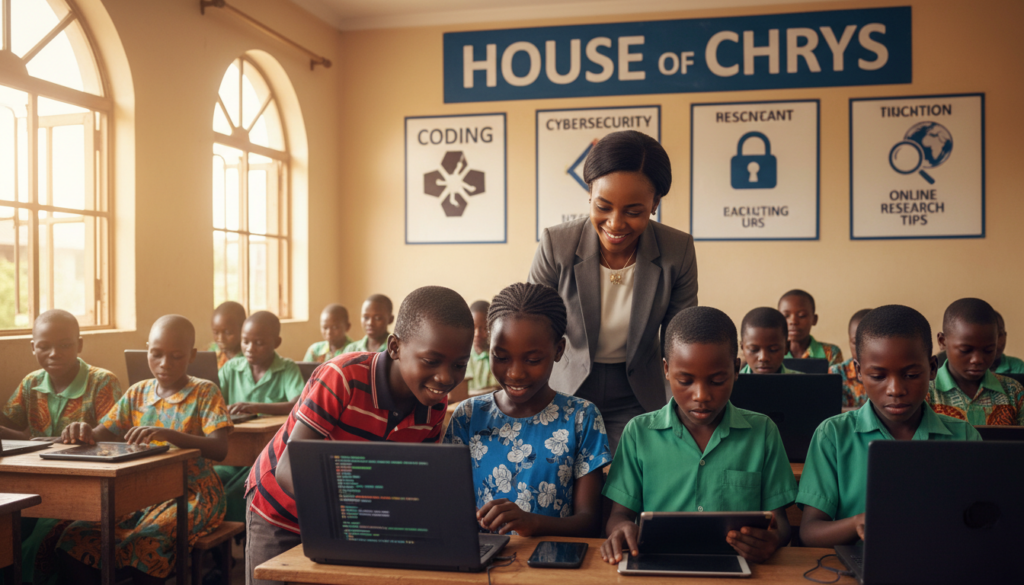
Next, creative multimedia tools turn their ideas into digital stories. They learn to edit images, record simple audio narratives, and assemble short video presentations.
This creativity with media is powerful. It transforms them from consumers of content to authors of their own narratives.
A sample course for this age group maps the journey clearly:
- Module 1: Introduction to Digital Literacy & Core Operations
- Module 2: Internet Safety & Responsible Citizenship
- Module 3: Introduction to Coding with Visual Blocks
- Module 4: Multimedia Creation (Graphics, Audio, Video)
- Module 5: Cybersecurity Basics in Practice
- Module 6: Digital Project Showcase
This is the essential toolkit. It equips your student with the skills to not just face tomorrow—but to design it.
Our Digital Literacy for Kids Africa Program
You’ve seen the gap. Now see the bridge we are building for your child.
This is where hope meets a structured plan. We present our program—built not on theory, but on proven models from Ghana and beyond.
Your child will not be lectured. They will be engaged, challenged, and empowered.
Program Overview: Interactive and Age-Appropriate Learning
Our philosophy is simple—learning must be alive. For children aged 8 to 12, we designed an 8-week journey.
Each session lasts one hour per week. It is interactive and age-appropriate from the first minute.
We meet your student where they are. The course respects their pace while building essential digital literacy skills.
This approach turns anxiety into excitement. It transforms complex technology into a playground for innovation.
Core Modules: From Digital Literacy to Project Showcases
The path is clear. Each module builds on the last, creating a complete toolkit.
Your child progresses through six core stages:
- Module 1: Introduction to Digital Literacy & Core Operations
- Module 2: Internet Safety & Responsible Citizenship
- Module 3: Introduction to Coding with Visual Blocks
- Module 4: Multimedia Creation (Graphics, Audio, Video)
- Module 5: Cybersecurity Basics in Practice
- Module 6: Digital Project Showcase
This structure ensures no skill is missed. The final showcase is where projects come to life.
Your child presents their own creation. This is applied learning—the proof of their new knowledge.
Hands-On Training with Equipment and Mentorship Support
A computer alone is not enough. Real training requires real tools.
Our Digital Literacy and Mentorship Project includes hands-on training with donated ICT equipment. We provide the hardware and the guidance.
Mentorship sessions are vital. A caring mentor makes the difference between confusion and mastery.
We extend this model to educators and youth. Our 5-day “Digital Literacy for 21st Century Learning” course covers tools, safety, creativity, and action plans.
This builds capacity across the entire community. It prepares young people for real work.
Partnering for Impact: How We Collaborate with Schools
Sustainability is everything. We partner deeply with schools to transform entire institutions.
Our collaboration starts with understanding local challenges. We then co-create a plan for access and development.
Effective program management ensures impact. We track progress and adapt to needs.
This partnership model creates lasting opportunities. It turns schools into hubs of digital transformation.
By the end of the course, your child won’t just have information. They will have a completed project, new confidence, and a clear next step.
This is the practical pathway we offer. It equips your child to not just face tomorrow—but to build it.
Conclusion: Equipping Children for Tomorrow
The path forward is no longer a debate—it’s a decision that sits squarely with you.
Equipping your child is the most profound investment. It nurtures their potential and fuels our continent’s transformation.
This journey reshapes entire communities. Our vision expands into Digital Skills Hubs—spaces where learning never stops.
Paulo Freire said it best: “Education does not change the world; education changes people; people change the world.” Your child is that person.
Do not let them watch from the sidelines. Enroll them. Partner with us.
Let’s build that future-ready generation, together. Their essential skills will shape our shared world.