
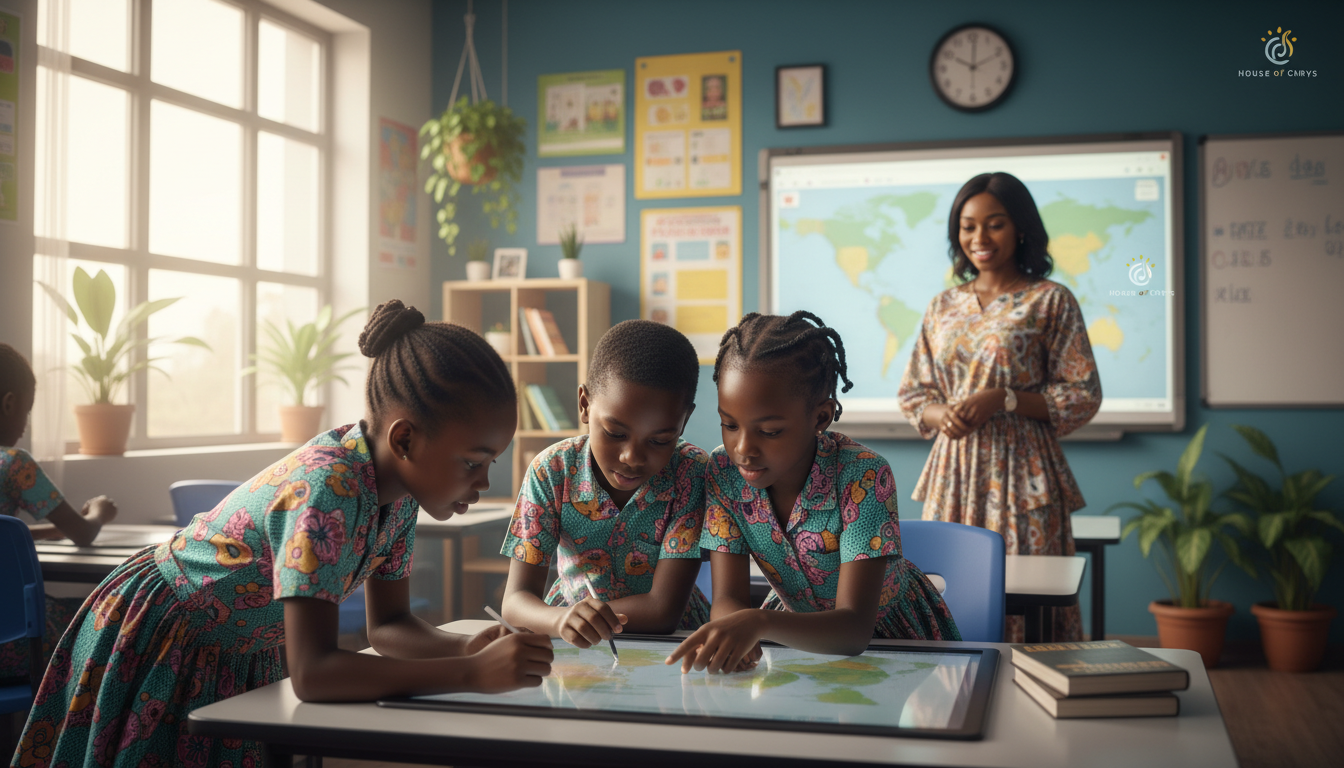
Imagine your five-year-old pointing at your laptop. “It’s a TV,” they say with certainty. The screen lights up, but the vast world inside remains a mystery. This isn’t a cute observation—it’s a starting line.
A recent study revealed this is the reality for many young ones. They see the device but not its power. The internet is a magic trick they watch, not a tool they command.
This gap is the urgent truth we face. Digital literacy is the new reading. Without it, a child is unprepared for the world ahead. The divide isn’t just about having a phone. It’s about understanding the logic behind it.
Your role is not to panic. It is to prepare. We must move from anxiety about the future to authority over it. Building future-ready kids means integrating tech understanding into daily life.
It starts with how we talk about devices at home. The goal is AI literacy—grasping the intelligence behind the apps. This is a call for parents and the whole community to act. Let’s build a foundation of skills and real opportunities.
Key Takeaways
- Many young children view complex devices as simple entertainment screens, missing their true potential.
- Digital literacy is as fundamental as reading for success in the modern world.
- The preparedness gap is more about understanding than just having access to gadgets.
- Parents have the power to transform daily tech use into foundational learning moments.
- Cultivating AI and digital intelligence is critical for future-ready youth.
- Building these skills is a collaborative effort involving families and communities.
- Practical, integrated learning at home is the first step to bridging the opportunity divide.
Why Digital Readiness Starts in Childhood: The Case for Technology for Children Nigeria
A critical window for shaping digital intelligence slams shut around your child’s eighth birthday. Their core ideas about computers, the internet, and AI are hardening based on what they see you do.
Consider a computer science education study from Ibadan. Researchers asked young children to draw and explain their thoughts. The results were revealing.
Devices looked like televisions. The web was just a place to watch cartoons. This is the baseline understanding for many kids.
If a device is only an entertainment box in their mind, that is all it will ever be. Their future role becomes passive consumption. Your task is to flip that script.
Digital readiness transforms the screen into a creation engine. It begins with the simple stories you tell about the tools in your home.
Early digital literacy is cognitive infrastructure. It’s not about fast typing. It’s building problem-solving logic and safe navigation.
These are the foundational skills modern society demands. The job market already requires this fluency. Your child’s future participation depends on it.
The divide is urgent because it starts in the mind. A boy who thinks “code” is a secret number is miles behind a girl who knows it gives instructions.
That cognitive gap widens every single year. Waiting for formal schooling to address it is a losing strategy.
Think back. Who first explained how a radio worked to you? That moment sparked your curiosity. You must now be that person for the smartphone and the AI assistant.
Your explanation builds their readiness. This is not about forcing a STEM career. It’s about granting fundamental literacy to choose any path.
Full engagement in our digital world requires this competence. It is the price of admission for meaningful opportunities.
The research is clear. These misconceptions are consistent everywhere. The good news? Solutions can be universal yet personally tailored.
Starting young allows for gentle correction. It builds a deeper, more intuitive grasp of systems. This is how you cultivate true intelligence.
Formal policy moves slowly. Your action at home is immediate. Informal settings—your living room, a community hub—are where these ideas stick.
You are the first and most influential teacher of this new literacy. Your daily guidance matters more than any curriculum.
Building future-ready children is an act of love and protection. You give more than a device. You grant agency, safety, and a voice.
You secure their seat at the table where tomorrow is being designed. That is the profound case for starting now.
The Nigerian Digital Divide: Contrasting Realities for Young Learners
Picture two classrooms separated by more than just miles.
The reality of growing up is split by a brutal digital divide. This gap isn’t just about who has a gadget. It’s about the entire learning environment—the language, the exposure, the very ideas a child can form.
Recent research holds up a mirror. The reflection shows two different childhoods in one nation.
What a Childhood Tech Study Revealed About Understanding and Access
A revealing study in Ibadan asked young learners to draw a computer.
Many sketched televisions or typewriters. They described the internet as “sending messages”—an action, not a vast system.
When asked about coding or AI, most faces went blank.
This wasn’t a test of intelligence. It measured access and the language available to explain it.
Kids from a community with more devices had slightly clearer views. Those with limited access struggled, especially when terms like “software” had no easy Yoruba equivalent.
Their understanding was a direct reflection of what they saw adults do daily.

Your child’s concept of this world is built from your behavior. Not from a formal lesson in a computer lab that might not exist.
The study proved a powerful truth. Early exposure shapes core logic.
Urban Access vs. Rural Barriers: A Tale of Two Experiences
The contrast is geographical and profound.
In urban centers, youth are digital natives by environment. They are surrounded by connectivity.
They use the internet for homework, play, and social connection from a young age. Devices are personal tools.
In many rural areas, the story changes. Limited or nonexistent internet is the norm.
Inadequate infrastructure and shared, outdated devices create a different experience. A smartphone can be a rare artifact, not a daily portal.
This isn’t about entertainment. It’s about the opportunity gap that starts the moment a child cannot Google a question.
They miss educational apps and models of the world beyond their village. The divide is in the quality of access, not just its presence.
The Rising Tide of Smartphone Penetration and Its Dual Edges
Smartphones are flooding in everywhere.
A national survey shows 45% of young urban kids aged 4-10 go online with their own mobile devices. The age of first use drops every year.
This tide is a double-edged sword.
One edge offers unprecedented access. It brings global information, learning platforms, and connection to young hands.
The other edge is sharp with risk. Unguided exposure opens doors to cyber threats and misinformation.
Owning a smartphone does not equal digital literacy. A child can be a master scroller but clueless about privacy or creative potential.
The penetration rises, but without guidance, it amplifies existing inequalities.
Your job is to navigate this tide. Harness the access while building the critical understanding.
Turn a portal of risk into a true platform for growth in your community. The divide narrows when we see the tool clearly—for all its power and its peril.
Building the Foundation: How Nigeria is Educating Its Future Tech Leaders
The current system often teaches how to use a tool. The future demands understanding how to build one. This is the core mission now—transforming digital literacy from a passive skill to an active intelligence.
Progress is being made. Many nations have started integrating computing into school curricula. Yet the focus remains narrow. Learning Microsoft Word is not the same as learning computational thinking.
Your advocacy changes this. You can demand more from educators and policymakers. The goal is a curriculum that breeds creators, not just users.
Integrating Computing and AI into Early Curricula
True integration starts with play. Concepts like sequencing and logic are not advanced science. They are the rules behind every game a five-year-old loves.
Artificial intelligence literacy is equally vital. Explain it simply. A phone recognizes a face like you recognize a friend’s voice. A voice assistant finds answers like you ask a wise elder.
These concrete explanations build a framework. They turn mysterious technologies into understandable systems. Early education must prioritize this conceptual grasp.
The pace of change is slow in formal settings. Your voice at the PTA meeting is a powerful catalyst. Push for programming concepts over mere button-clicking.
| Traditional Curriculum Focus | Future-Ready Foundation |
|---|---|
| Basic computer operations (turning on, using mouse) | Computational thinking (patterns, problem-solving) |
| Software application literacy (Word, Excel) | Creative programming concepts (block-based coding) |
| Internet as a research tool | Internet as a collaborative creation environment |
| Abstract, foreign terminology | Culturally-grounded analogies and local language |
| Individual, isolated learning | Group projects fostering creativity and teamwork |
| Focus on consumption of content | Focus on construction and idea generation |
The Critical Role of Parents, Communities, and Informal Learning
Policy documents move at a glacial pace. Your home moves at the speed of curiosity. The research from Ibadan confirmed a powerful truth.
A child’s idea of what a computer is comes from watching you. You are the first and most influential model.
Your role is not to be an expert. It is to be a guide. Ask “how does this work?” and search for the answer together. This models a learning mindset.
Communities must activate where formal education lags. After-school coding clubs are essential. Community tech hubs where old hardware is taken apart spark deep understanding.
These informal spaces are where passion ignites. They surround young children with a culture of making. This is how society builds a pipeline of innovators.
Parents and local leaders are the true educators in this space. Your active participation signals that these skills matter.
Creating Culturally Relevant and Linguistically Appropriate Materials
A major barrier was revealed. Young learners struggled when terms like “software” had no direct equivalent in their mother tongue. The concepts felt foreign and distant.
This is a profound challenge. If the language of innovation is only in English, it remains a foreign import. Building a true foundation requires localization.
We need stories that use market day to explain an algorithm. We need games that use local folklore to teach network logic. Culturally relevant materials bridge the comprehension gap.
They tell a young person this intelligence belongs to them. It is not a complex foreign science. It is a tool born from their own world’s logic.
Supporting creators who develop these resources is critical. It invests directly in your child’s ability to own their digital future. It turns abstract code into a familiar story.
The foundation is being built. It requires your hands, your voice, and your demand for relevance. This is how we educate leaders who will not just use the future—they will build it.
Conclusion: Bridging the Gap to Empower Every Child
The final step is not a distant policy goal—it’s the conversation you have tonight.
Empowerment is built daily. Every young person deserves the chance to grasp the digital literacy that defines our age. This means moving from passive use to creative understanding.
Your guidance is the key. Open up the devices in your home. Explain the internet as a web of people and ideas. Turn a simple smartphone into a ladder for new skills.
This is a collective effort. Parents lead at home. The community provides support and shared resources. Together, we build opportunities that leave no one behind.
Start now. Ask one question. Share one insight. You are preparing a generation that is truly ready for the future. Let’s build it, hand in hand.