

You watch your kid swipe a screen with instinctive ease. A mix of pride and worry hits you. Is this just a game, or is it the first step into their future?
The digital age is not coming—it’s here. Your child will live in a world shaped by AI. That screen in their hand is a gateway, not just a distraction.
Scientific studies confirm it. Early, guided exposure to technology can boost cognitive development and problem-solving skills. But handing over a tablet without purpose is a mistake.
Your role is clear. You are not a shield against the digital world. You are a guide walking beside them. Your guidance provides the boundaries and wisdom they need.
This is about intentional action. It’s about building AI literacy and future-ready abilities. The benefits are immense—confident, capable young minds ready to lead.
Your anxiety is real. But panic is not the answer. Purposeful, fatherly conviction is. Start now. Their AI-driven future awaits your leadership.
Key Takeaways
- The digital world is today’s reality; your child’s success depends on how well you prepare them now.
- Intentional, guided exposure to technology builds essential cognitive and problem-solving skills.
- Your primary role is to be a guide, not a barrier, providing wisdom and clear boundaries.
- Focus on developing future-ready abilities like AI literacy from an early age.
- Online safety and prudent use of parental controls are non-negotiable foundations.
- Transforming anxiety into purposeful action is the first step toward effective parenting in the tech age.
- Starting this journey now builds a lasting foundation for your child’s confidence and capability.
1. The Foundation Isn’t a Control App, It’s Connection
Your child’s first line of defense online isn’t a piece of software—it’s the strength of your relationship. Parental controls have their place, but they are a fence. The true foundation is the unshakable bond you build.
This connection is your child’s internal compass. It guides them when you’re not there to swipe and block.
Why Your Relationship is the Ultimate Parental Control
A child who feels seen and valued at home carries that security everywhere. They enter the digital world with a stronger sense of self.
This isn’t just a feel-good idea. It’s a practical shield. A connected child is less likely to seek validation from risky social media challenges or harmful content.
Your relationship becomes the ultimate filter. It teaches them to walk away from peer pressure and to bring their problems to you. No app can do that.
Software manages access. Connection manages choice.
This bond shapes their decision-making long after childhood. You are building their character, not just configuring their device.
Practical Ways to Build Connection in a Digital World
This foundation is built daily through simple, consistent actions. Your role shifts from enforcer to trusted guide.
Listen without judgment. Put your phone down. Make eye contact. Show them their words matter more than any notification. This opens the door for honest communication about their online life.
Spend quality time offline. Cook a meal together. Take a walk. Play a board game. These real-world moments fortify your kid against digital emptiness. They are the anchor.
Be curious about their world. Ask about the games they play or the videos they watch. Your genuine interest builds trust. It tells them their digital experiences are worth discussing.
This approach to use technology is proactive. You’re not just setting boundaries; you’re providing the guidance and context they need to thrive.
Start here. Build this connection, and you build the most powerful parental control system that exists—their own wise heart.
2. Master the Art of Balanced Screen Time
Forget the timer. The real question about your child’s screen isn’t ‘how long?’ but ‘how well?’
Screen time anxiety is real. It weighs on you, worrying about their eyes, their sleep, their social skills. This worry is a signal—not to panic, but to act with purpose.
Your goal is not elimination. It is intelligent integration. You must curate a healthy media diet for their mind.
Move Beyond Limits to Create a Healthy Media Diet
Screen time is not the enemy. Mindless, unbalanced consumption is. Your job shifts from warden to curator.
Think of it like nutrition. You wouldn’t just count calories. You’d ensure quality. Apply the same principle to digital content.
Move past simple hour counts. Focus on what they are doing, not just how long. Educational apps, creative platforms, and family video calls are nourishing. They build skills.
Passive scrolling through endless videos is junk food for the brain. Purposeful use of technology is a tool for learning.
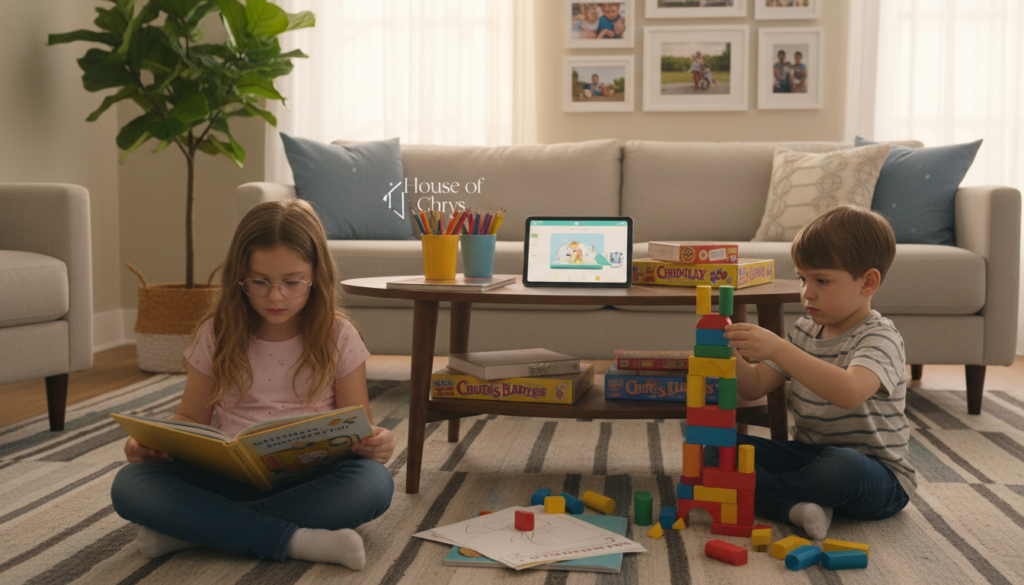
This is your new role. You provide the menu. You offer a mix of enriching games, stories, and creative activities. This curated approach reduces anxiety—for both of you.
Don’t just manage minutes. Manage meaning.
Balance Digital and IRL (In Real Life) Experiences
Balance is non-negotiable. For every hour of digital engagement, aim for an hour of real-world experience. Play. Conversation. Physical activity.
This rhythm protects their childhood. It ensures technology serves life, doesn’t replace it.
Schedule regular digital detoxes for your entire family. These are not punishments. They are vital resets for the mind and relationships.
Turn off the devices. Encourage bonding through board games, arts and crafts, or outdoor sports. This is where real communication thrives.
Most importantly, model this balance yourself. Your child watches your habits more than they hear your rules. Put your phone away during meals. Be present.
Create clear, consistent boundaries. Tech-free zones and times are essential. This is not control. It is teaching self-regulation.
This guidance prepares them for the future. You are not just raising tech-savvy users. You are nurturing humans where tech fluency pairs with emotional intelligence and real-world competence.
That is the true balance. That is your art to master.
3. Instill Digital Citizenship and Proactive Online Safety
Think of the internet as a vast city. Your child needs a map and a moral compass, not just a locked door.
Your role here is critical. You must move beyond simple blocking. You must build their internal firewall—their ability to think, judge, and choose wisely.
This is digital citizenship. It is the passport to a healthy digital world. It combines safety with ethics and responsibility.
Go Beyond Parental Controls with Open Conversations
Parental controls are a necessary fence. They are not the complete security system. The true protection comes from your voice.
Open, ongoing communication is your most powerful tool. Start these talks early. Keep them going as your kid grows.
This is how you build trust. Your child learns to bring concerns to you. They see you as a guide, not just an enforcer.
Filters can block a website. Only conversation can block a bad decision.
Discuss the social media they use. Talk about the pressures they feel. Explain the permanence of a digital footprint.
Make your home a safe space for reporting. Ensure they know they can come to you with any uncomfortable online encounter. There should be no fear of blame.
This proactive guidance transforms their use of technology. They become alert participants, not passive consumers.
Teaching Privacy, Critical Thinking, and Respect Online
Drill the basics into their daily life. Teach them the sacredness of privacy. Their personal information is not for sharing.
Explain the real-world consequences of oversharing information online. Show them how to create strong, unique passwords. Make it a family habit.
Arm them against scams. Teach them to recognize phishing attempts and suspicious links. This is a core skill for the digital age.
Critical thinking is their shield against misinformation. Show them ways to check sources. Distinguish credible news from clickbait and false claims.
Digital citizenship means acting with respect and empathy. Talk about cyberbullying. Teach them to be an upstander, not a bystander.
Discuss the human behind every screen. Respect for others’ opinions is non-negotiable. This is how they build positive online communities.
Your duty is clear. This education is not optional. It equips your children to navigate the world not as victims, but as confident, ethical leaders.
Start these lessons today. Your parental action builds their future-ready character. That is the ultimate online safety.
4. Foster Creativity and Future-Ready Skills
That glowing screen holds a secret. It’s not just a portal for play. It is the world’s most powerful workshop for your child’s mind.
Your role here is pivotal. You must shift their relationship with technology. Move them from passive viewer to active creator. This is how you build future-ready skills.
The digital age rewards those who can build and solve. It’s not about how much screen time they get. It’s about what they use that time to make.
Leverage Educational Apps, Games, and Coding Platforms
Transform consumption into creation. Start with the apps and games they already love. Choose ones that demand interaction, not just attention.
Platforms like Khan Academy and Duolingo are perfect. They turn learning into a rewarding challenge. Your kid masters math or a new language through play.
This is optimized screen time. Every minute adds tangible value to their development.
Introduce digital design tools and online music lessons. Let them compose a song or design a graphic. These activities spark genuine creativity. They learn that technology is a canvas.
Coding is the new literacy. It doesn’t just teach a computer language. It builds logical thinking and relentless problem-solving.
Start with simple, block-based coding games. Let them feel the thrill of making something work. For deeper guidance, consider structured programs.
Personalized, one-on-one coding classes, like Alphagen’s curriculum for ages 6-16, offer expert direction. They provide a community of young creators. This is how you raise tech-savvy kids who build, not just use.

Encourage them to share their creations. A simple game, a digital story, a robot project. Feedback fuels growth and confidence.
Explore STEM and Computational Thinking Early
The pillars of the AI future are STEM: Science, Technology, Engineering, and Math. Make these subjects engaging and fun from the start.
Computational thinking is a core skill. It’s about breaking big problems into small, solvable steps. You can foster this without a computer.
Use platforms that blend digital and physical play. Xplora’s activity platform encourages physical movement through game-like challenges. It teaches that technology and real-world action are partners.
Balance digital tutorials with hands-on building kits. Let them watch an online lesson, then construct a model bridge. This blend cements understanding. It shows the practical benefits of knowledge.
Your goal is to make them comfortable with the language of the world to come. Start early. Make it playful. The confidence they gain is priceless.
| Activity Type | Core Skills Developed | Example Platforms/Tools | Best For Age Group |
|---|---|---|---|
| Interactive Learning Apps | Academic proficiency, Self-paced learning, Discipline | Khan Academy, Duolingo | 5+ |
| Creative Design & Music | Visual creativity, Audio expression, Innovation | Canva for Education, Simply Piano | 7+ |
| Block-Based Coding Games | Logical thinking, Problem-solving, Sequencing | Scratch, Code.org | 6-12 |
| Structured Coding Classes | Advanced programming, Project development, Collaboration | Alphagen, Tynker | 8-16 |
| Hybrid STEM Kits | Engineering principles, Hands-on building, Computational thinking | KiwiCo, LEGO Mindstorms | 6-14 |
| Active Gaming Platforms | Physical coordination, Strategic play, Mind-body connection | Xplora, Nintendo Switch Sports | 4+ |
This is how you future-proof your child. You make technology a tool for expression and innovation. You help them master the skills that will define their careers.
Start this journey today. The benefits are not just for their future job. They are for building a capable, confident, and creative human being.
5. Model and Prioritize a Balanced Tech-Life Integration
Your most powerful teaching tool is not your words. It’s your daily example.
True integration happens at home. It is lived, not just lectured. Your child observes everything. Your habits become their blueprint for life.
This is your fundamental role. You are the chief model. Your screen time habits, your phone use at dinner, your choice to scroll or connect—these are the lessons that stick.
Be the Role Model: Your Habits Are Their Blueprint
Children mimic adult behavior. This is a biological fact. Your actions write the script for their future use of technology.
Start with a self-audit. Is your phone a third guest at the dinner table? Are you present, or is your mind lost in social media? Change begins with your own screen.
Demonstrate intentional use. Show how technology can enhance life. Use a step-counting smartwatch for family fitness challenges. Make video calls to distant relatives meaningful.
This moves media consumption from mindless to purposeful. It turns a device into a tool for learning and connection.
Your child will not follow your advice. They will follow your example.
Discuss your own tech choices aloud. Explain why you are putting your phone away. This creates a culture of conscious use technology.
Your leadership here is prophetic. It shows that tech is a servant, not a master.
Schedule Regular Digital Detox and Family Time
Balance requires a schedule. It needs protected, screen-free time on the calendar.
Make digital detox non-negotiable. Designate specific hours or even a full day each week. All devices power down. This is sacred family time.
Hearts open when screens close. This is where real bonding happens.
Fill this void with rich, engaging activities. Encourage family bonding through board games and creative arts. Plan outdoor sports and adventures.
These memories build emotional resilience. They fortify your kids against digital dependency.
Your home becomes a sanctuary. A place where human connection reigns supreme.
| Parental Action | Child’s Learned Behavior | Key Benefit |
|---|---|---|
| Audit and limit personal phone use during meals and conversations. | Values face-to-face interaction and presence over digital distraction. | Strengthens real-world communication and emotional connection. |
| Use technology visibly for productivity (fitness tracking, learning apps). | Views tech as a tool for enhancement, not just entertainment. | Fosters a purposeful, balanced relationship with devices. |
| Instate and protect scheduled “digital detox” hours for the whole household. | Learns to disconnect comfortably and appreciate offline moments. | Builds self-regulation skills and reduces screen time anxiety. |
| Initiate regular, device-free family activities (game nights, cooking, hiking). | Associates joy and bonding with non-digital experiences. | Creates lasting memories and a counterbalance to online life. |
| Verbally explain your own tech choices (“I’m putting my phone away to be with you”). | Develops metacognition about tech use and its impact on relationships. | Promotes a family culture of intentionality and open communication. |
This is the final piece of preparation. You are not just navigating the digital world. You are defining its place in your home.
You equip your child for the digital age. You build tech-savvy kids with a core of human skills. They enter the world knowing technology serves a full life.
Your role as a model is everything. This balance is the ultimate way forward. It ensures your tech-integrated home is also a heart-centered home.
Conclusion
The screen in your home is a classroom, not just a distraction. Your guidance turns it into a tool for building skills. This journey is continuous—it evolves as your child and the technology grow.
You now have the map. It is built on connection, intelligent balance, proactive online safety, and creative activities. True parental controls are the boundaries and wisdom you provide daily.
Start today. Take one step. Your consistent action prepares your family for the digital world. Embrace your role with warm conviction. You are the key to unlocking their potential.
The future is here. Your tech-savvy kids are ready to master it, not just use it. You have given them the compass for a full, capable life.