
What Problem Do You Most Hope AI Will Solve? Sam Altman Asked — Here Is Africa’s Honest Answer

Sam Altman asked a question that generated millions of responses from some of the most influential minds on earth.
What problem do you most hope AI will solve?
Cancer. Climate change. Mental health. Poverty. Aging. Loneliness. The answers came from scientists, entrepreneurs, philosophers, and ordinary people who have been quietly carrying the weight of a specific unsolved problem and finally had somewhere to put it.
Every answer was legitimate. Every answer reflected a genuine human wound that AI might one day close.
But scrolling through millions of responses I noticed something. Something that should not have surprised me but did anyway.
Nobody said Africa’s education system.
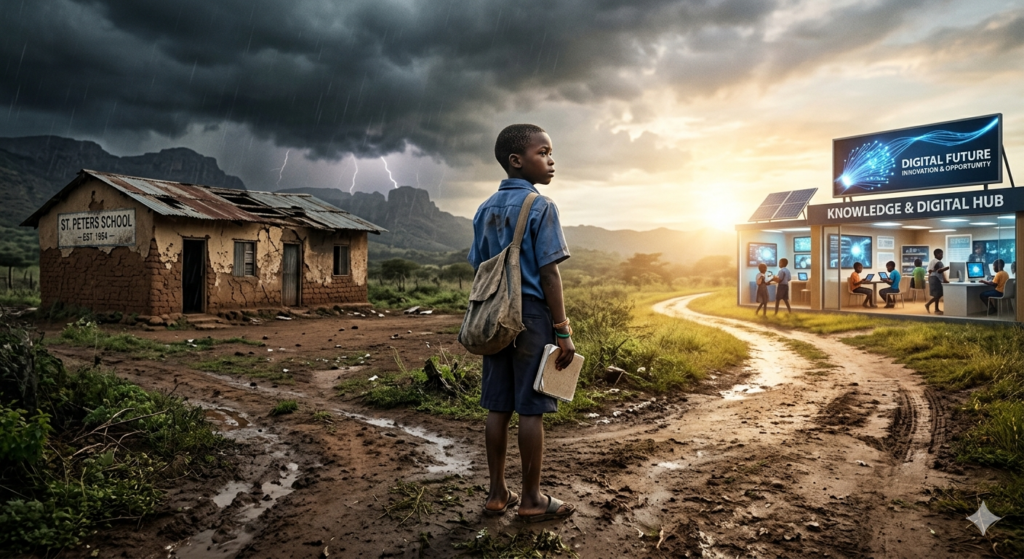
Nobody said the forty million African children who will never finish primary school. Nobody said the classroom in rural Nigeria where one teacher manages eighty students with no electricity and no realistic path to preparing any of those children for the economy they are about to enter. Nobody said the continent with the youngest population on earth and the least prepared education infrastructure to meet that population’s actual future.
The silence was not malicious. It was simply the natural consequence of who gets to speak loudly in global conversations and whose problems get treated as the problems worth solving.
This post is Africa’s answer to Sam Altman’s question. And it is more controversial than anything the millions of Western respondents said — because the problem Africa most needs AI to solve is one that implicates not just technology but power, history, intentionality, and the uncomfortable question of whether the people building AI actually care whether Africa benefits from it or simply tolerates it.
The Problem Africa Most Needs AI to Solve Is Not What You Think
The obvious answer is poverty. Healthcare. Infrastructure.
Those are real and they matter. But they are downstream problems. They are the consequences of something more fundamental that AI has a unique capacity to address in a way no previous technology has managed.
The problem Africa most needs AI to solve is the preparation gap.
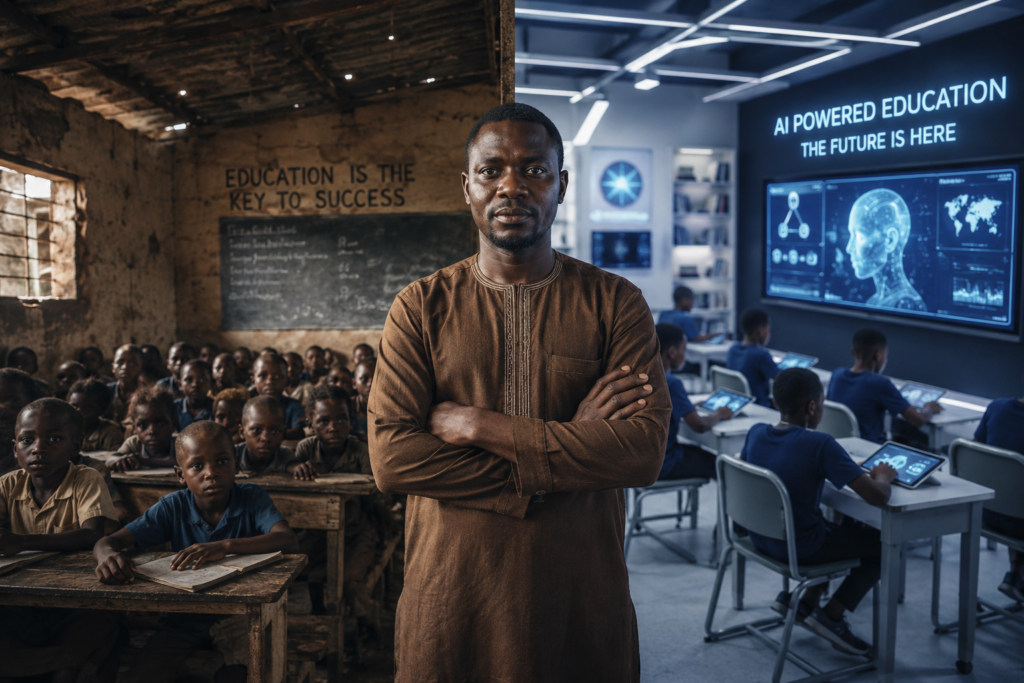
The distance between what African children are being prepared for and what the world they are entering actually requires of them. The gap between the curriculum being taught in African classrooms and the skills, mindsets, and literacies that determine whether a person can build a life of genuine agency and contribution in the 21st century.
That gap is not a resource problem at its root. It is an imagination problem. African education systems are largely still imagining the future their students are entering through the lens of the past their designers inhabited. The colonial curriculum that prioritized compliance over creativity, memorization over reasoning, and certification over genuine capability has been updated cosmetically without being transformed fundamentally.
AI has the capacity to transform this in ways that no government education reform program has ever achieved — because AI does not require the slow machinery of institutional change to deliver genuinely personalized, genuinely adaptive, genuinely relevant education to a child sitting anywhere on the continent with a basic device and an internet connection.
That is the problem Africa most hopes AI will solve. Even if Africa has not yet said so loudly enough for Sam Altman’s algorithm to surface it.
The Controversial Part — Why This Problem Has Not Been Solved Yet
Here is where this post goes somewhere most AI optimism pieces refuse to go.
The preparation gap in African education is not unsolved because the technology to address it does not exist. Adaptive AI learning platforms that personalize education to individual students exist today. They are accessible today. They work today.
The preparation gap persists because solving it at scale in Africa is not currently profitable enough for the companies building AI education tools to prioritize it. The African student market does not have the purchasing power that makes it the primary target for EdTech investment. So the tools get built for American students, licensed to European schools, and eventually trickle into African markets years later at price points designed for economies that are not Africa’s.
This is not a conspiracy. It is just capitalism operating according to its internal logic — capital flows toward the highest return, and the highest return from AI education tools is currently not in Lagos or Lusaka or Lilongwe.
The controversy is this — the continent most urgently in need of what AI can do for education is the continent least likely to be at the center of how AI education tools are designed, priced, and deployed. Unless Africans build those tools themselves or demand specifically that the tools built elsewhere serve African children genuinely rather than peripherally.
Sam Altman’s question implicitly assumes that the problems most worth solving are the ones the people answering the question already care about. Africa’s education crisis does not make that list automatically. It has to be put there deliberately by people who understand what is at stake and are unwilling to wait for global tech priorities to accidentally align with African children’s needs.
The Second Problem Africa Needs AI to Solve — And Why It Is Even More Controversial
The preparation gap is the first problem. The second one is harder to say out loud in polite company.
Africa needs AI to solve the problem of African self belief.
Not as a psychological intervention — though that framing is interesting. As an economic and cultural infrastructure problem.
The most expensive limitation on African development is not the absence of natural resources. Africa has those in extraordinary abundance. It is not the absence of intelligent, capable, motivated people. Africa has those too in quantities the rest of the world is beginning to notice and compete for.
The most expensive limitation is the internalized belief — running through institutions, families, professional cultures, and individual psychologies across the continent — that the solutions to African problems will ultimately come from somewhere else. That the technology worth using was built elsewhere. That the standards worth meeting were set elsewhere. That the validation worth having comes from elsewhere.
AI cannot directly fix a belief system. But it can do something almost as powerful — it can provide undeniable evidence that contradicts the belief by making it possible for African children, African entrepreneurs, and African institutions to build things at world class quality and global scale from African soil using African perspectives.
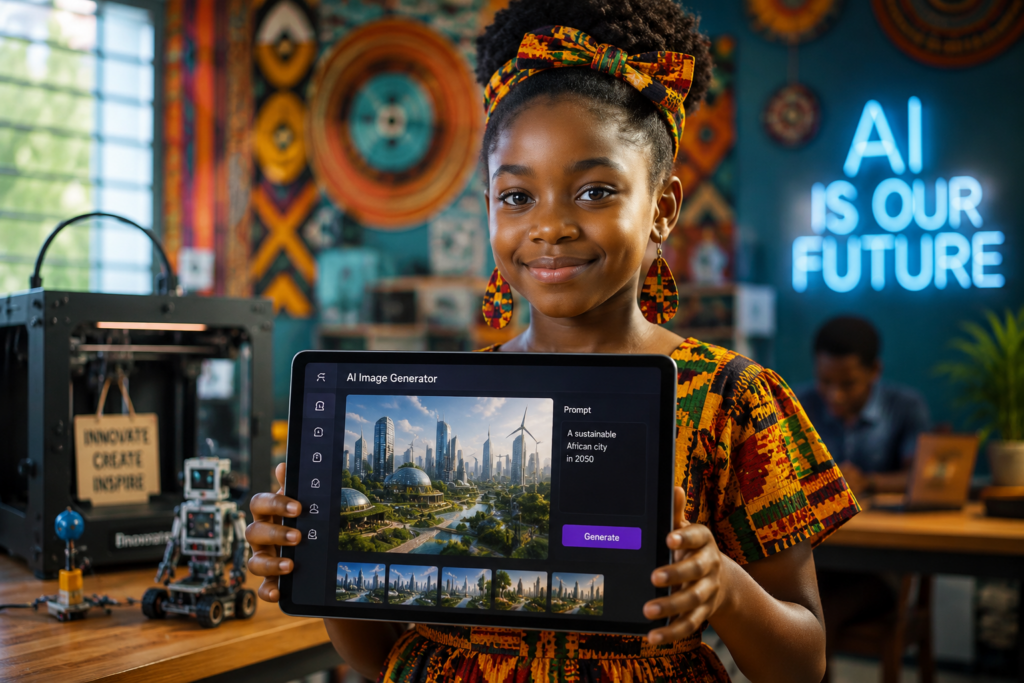
When an African child uses AI tools to build something genuinely impressive — a business, a piece of content, a solution to a local problem — and receives recognition for it from the global internet, something shifts in that child’s relationship with what is possible for someone who looks like them and comes from where they come from.
That shift, multiplied across millions of African children who grow up with AI as a tool for building rather than just consuming, is the second problem Africa most needs AI to solve.
House of Chrys exists precisely at this intersection. The Prepared Child is not just a picture book about artificial intelligence. It is a declaration that African children deserve to be introduced to the tools of the future with the same seriousness and the same early investment that children anywhere else on earth receive.
Visit our For Parents page to understand how this preparation begins at home before any school catches up with what is actually needed.
What AI Cannot Solve — And Why This Matters for Africa Specifically
Sam Altman’s question assumes that the right framing is problems for AI to solve. That framing contains a subtle danger that is worth naming directly — the assumption that AI is the agent and humans are the beneficiaries rather than the other way around.
AI cannot solve the problem of African agency. It cannot solve the problem of African institutions that prioritize the appearance of development over its substance. It cannot solve the problem of African parents who believe their child’s future is someone else’s responsibility. It cannot solve the problem of African leaders who understand the AI transition intellectually and respond to it bureaucratically.
These are human problems. They require human decisions. AI can accelerate the consequences of those decisions in either direction — amplifying the impact of good choices and deepening the damage of poor ones — but it cannot make the choices themselves.
The most important problem Africa needs AI to solve is ultimately inseparable from the most important decision African parents need to make. And that decision is whether to treat the preparation of their children for an AI world as urgent, as personal, and as non negotiable — or to treat it as someone else’s problem that will eventually be addressed by someone with more resources, more influence, and more proximity to the people building the technology.
That decision cannot be automated. It cannot be prompted. It cannot be solved by any AI system regardless of how capable those systems become in one, two, or three years.
It is a human decision. A parental decision. A now decision.
Africa’s Answer to Sam Altman

So what problem does Africa most hope AI will solve?
The gap between the child Africa is producing and the world Africa is entering. The distance between what African classrooms teach and what the African future requires. The silence in global AI conversations where African children’s needs should be loudly represented. The self belief deficit that makes Africa a continent of extraordinary potential perpetually waiting for external validation before acting on that potential.
These are not small problems. They are not simple problems. They are not problems that any single AI tool, any single government programme, or any single children’s book solves alone.
But they are problems where intentional action — taken now, taken seriously, taken by parents and educators and leaders who understand what is actually at stake — creates compounding change that reaches the scale required.
Sam Altman asked what problem you most hope AI will solve. Africa’s answer is the one nobody gave but everyone on this continent should recognize immediately.
Prepare our children. Make the tools accessible. Build the infrastructure for a generation that does not have to choose between being African and being prepared for the future.
That is the problem. AI has the capacity to help solve it. The only question is whether the people building AI care enough to try — and whether Africans care enough about their children’s future to demand it loudly enough that the answer has to be yes.
The Prepared Child is one answer to that demand. A small answer built with the conviction that small answers compounded across enough families produce large change.
Visit The Prepared Child page to be part of that answer. Visit For Schools to bring this conversation directly into your child’s classroom. Visit About House of Chrys to understand why we believe Africa’s most urgent investment right now is not infrastructure, not policy, and not foreign aid.
It is the minds of her children.
In all things, prepare.