
What Pope Leo XIV Said About AI and Why Every African Parent Needs to Hear It Right Now


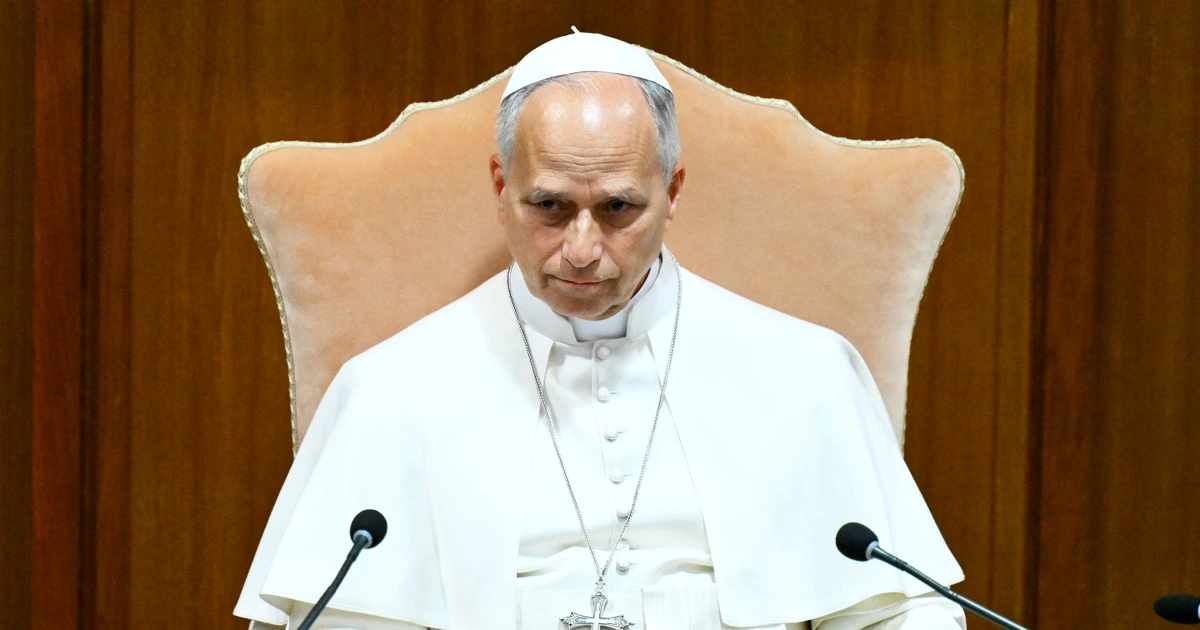
On May 15 2026 Pope Leo XIV signed a document that the technology industry would prefer most people never read carefully. This is what Pope Leo XIV said about AI and why every African parent needs to hear it right now.
Magnifica Humanitas — the first encyclical of the new pontificate — is not a religious text in the narrow sense that most people would expect from the Vatican. It is a moral indictment of how artificial intelligence is currently being built, deployed, and governed globally. And it is an urgent call for something that the people with the most power over AI development have shown the least interest in — putting human dignity at the center of every decision about where this technology goes next.
The Pope said AI must serve the common good not profit or power concentration. He called for urgent legal frameworks prioritizing social justice. He warned specifically about job displacement, misinformation, the erosion of human thinking and creativity, and the risk of AI becoming what he called an instrument of domination. He singled out children specifically — insisting that AI must never interfere with children’s development, human relationships, or moral agency.
He said lethal autonomous weapons must be banned or heavily restricted. He said AI content should be clearly labeled. He warned against over reliance on AI as an omniscient friend that risks eroding the cognitive, emotional, and creative skills that make human beings human.
And in a line that stopped me completely when I read it — he said let communication be conducted by real human beings not AI.
This is the leader of 1.4 billion Catholics on earth. Speaking with more clarity about the specific dangers of AI than most technology regulators have managed in a decade of trying. And for Africa — a continent where Catholicism and Christianity more broadly represent the faith tradition of hundreds of millions of people — his words carry a weight that goes beyond theology into the practical questions of how African families, African institutions, and African governments should be thinking about AI right now.
What the Pope Got Exactly Right
Pope Leo XIV’s framing of AI as an exceptional product of human genius is worth pausing on because it is neither technophobic nor naive. He is not saying AI is evil. He is not saying the technology should be abandoned. He is saying something more precise and more useful — that the product of human genius must remain under human ethical control or it stops serving humanity and starts serving something else.
That something else is what he identifies as the real danger. Not the technology itself but the concentration of power it enables. The displacement of workers it accelerates without adequate protection. The erosion of human thinking it produces when people outsource cognition to systems that process without understanding. The domination it makes possible when autonomous weapons systems remove human judgment from decisions about life and death.
Every one of these concerns is real. Every one of them is documented. Every one of them is being raised by serious researchers, ethicists, and technologists who are watching the trajectory of AI development with genuine alarm rather than reflexive opposition.
The Pope is not saying anything that the most honest voices in AI development have not already said. He is saying it with the moral authority of an institution that has been thinking about human dignity for two thousand years and has watched enough civilizational transitions to understand what happens when powerful tools are deployed without adequate ethical frameworks.
According to Vatican News the encyclical specifically calls for strong international regulation of AI systems with social justice as the primary organizing principle rather than economic efficiency or national competitive advantage.
That call is directed at governments. But its implications reach all the way down to individual families making decisions about how their children relate to AI — and that is where it connects most directly to what House of Chrys is building.
Why This Message Has a Specific African Resonance
Pope Leo XIV’s warnings about AI as an instrument of domination will land differently for African ears than for European or American ones.
Africa has direct and living memory of what instruments of domination look like when deployed by those with more technological power against those with less. The colonial encounter was precisely the story of technology — military, administrative, and economic — being used to concentrate power in the hands of those who built the tools and extract value from those who did not.
The Pope’s warning that AI must not serve power concentration rather than the common good is not abstract for a continent whose natural resources have been extracted, whose data is being harvested without compensation, whose languages are underrepresented in AI training sets, and whose populations are increasingly subject to AI systems designed elsewhere by people whose primary accountability is to somewhere other than Africa.
His specific concern about job displacement hits particularly hard in African economies where the entry level professional roles most vulnerable to AI automation represent the primary aspiration of millions of university graduates who have invested years and family resources into preparing for employment that the AI transition is quietly eliminating.
His warning about AI interfering with children’s development resonates in a continent where smartphone penetration is accelerating faster than digital literacy education, where children are being shaped by algorithmic recommendation systems their parents do not understand, and where the cognitive and emotional development risks of unguided technology exposure are being experienced without the regulatory protection that more affluent societies are at least attempting to build.
And his insistence that communication be conducted by real human beings not AI speaks to something Africa understands instinctively — that relationship, community, and the irreplaceable texture of human connection is not a feature to be optimized away in pursuit of efficiency. It is the substance of a good life.
The Tension Africa Has to Hold
Here is where this post has to say something that pure agreement with the Pope’s position does not accommodate.
Africa cannot afford to simply adopt a posture of AI caution without simultaneously building AI capability. The Pope’s call for ethical AI governance is addressed to the people with power over how AI is developed and deployed. Africa currently has very little of that power — not because Africans lack the intelligence or creativity to build AI systems but because the investment, infrastructure, and institutional support required to build them has not been directed toward African soil at anywhere near the scale required.
A continent that responds to the Pope’s warnings by retreating from AI engagement while the rest of the world accelerates AI development is not protecting its people from AI domination. It is ensuring that the AI systems which will inevitably arrive are built entirely by others with entirely other priorities.
The tension Africa has to hold is this — take the Pope’s ethical warnings seriously and build AI capability anyway. Build it with the values he articulates at the center. Build it for the common good. Build it with African languages, African data, and African problems as primary design considerations rather than afterthoughts. Build it with human dignity as the non negotiable constraint rather than the optional consideration.
That is harder than either uncritical adoption or principled rejection. It requires exactly the kind of sophisticated, informed, ethically grounded engagement with technology that House of Chrys believes African children need to be prepared for — and that The Prepared Child begins building the foundation for at the earliest age where that foundation can be durably laid.
What the Pope’s Words Mean for African Parents Specifically
Pope Leo XIV said AI must never interfere with children’s development. He said it must never erode human relationships or moral agency. He said the cognitive, emotional, and creative skills that make human beings human must be actively protected rather than passively surrendered to systems optimized for engagement metrics rather than human flourishing.
For an African parent reading these words the practical question is immediate and personal. What is AI doing to my child’s development right now? What is the algorithmic content my child consumes shaping in their cognitive habits, their attention span, their capacity for deep focus and genuine relationship? What am I doing deliberately to ensure that my child’s relationship with AI tools is one of direction and agency rather than passive consumption and dependency?
These are not questions the school system is asking on your behalf. They are not questions the technology companies deploying AI tools to your child’s devices have any structural incentive to ask. They are questions that only a parent who understands what is at stake can ask — and act on.
The Pope’s encyclical is directed at governments and institutions. But its most urgent practical application is at the level of the African family deciding right now what relationship their child will have with the most powerful technology ever built.
Visit For Parents to understand how to build that relationship deliberately rather than accidentally — how to introduce AI to your child in ways that develop their agency, their critical thinking, and their genuine intelligence rather than simply their passive familiarity with tools they do not understand.

The Common Good and What It Means for Africa’s Children
The phrase the Pope uses most consistently across all his statements about AI is the common good. AI must serve the common good. Regulation must prioritize the common good. Development must be oriented toward the common good rather than profit or power concentration.
The common good is a concept with a specific meaning in Catholic social teaching — it refers to the conditions that allow all people, not just some people, to flourish. Not the good of shareholders. Not the good of nations with the most computing power. Not the good of the generation currently alive at the expense of the generations following. The good of all people including the most vulnerable, the most marginalized, and the least represented in the rooms where consequential decisions are made.
Africa’s children are precisely the population the common good framing is designed to center. The youngest population on earth. The population with the most years of life ahead in an AI shaped world. The population least represented in the design decisions, the regulatory conversations, and the investment priorities that will determine what AI actually does to human lives over the next fifty years.
When the Pope says AI must serve the common good he is — whether he intends it this way or not — making a direct argument for African children being at the center of how AI is designed, regulated, and deployed rather than at the periphery of decisions made for other populations and applied to them afterward.
That argument is one House of Chrys has been making since before this encyclical was signed. Not from theological conviction but from the practical observation that a technology shaping the future of humanity cannot be genuinely beneficial if it leaves the youngest and most populous part of humanity behind.
Holding Two Things at Once
The Pope’s message and the mission of The Prepared Child are not in tension. They are saying the same thing from different starting points.
The Pope is saying AI must serve human dignity and remain under human ethical control. The Prepared Child is saying African children must grow up with enough understanding of AI to exercise that human ethical control rather than simply receiving what the technology delivers.
You cannot exercise control over something you do not understand. You cannot protect human dignity in an AI world without raising children who comprehend what AI is, what it is not, what it can do, and what human beings bring to their relationship with it that no machine can replicate.
The Pope is addressing the architects of AI governance. House of Chrys is addressing the architects of the next generation — African parents who are deciding right now, in ordinary moments at home, what kind of relationship their child will have with the technology reshaping the world.
Both conversations are necessary. Neither one is sufficient without the other.
An Africa that has ethical AI regulation without AI literate citizens is an Africa with rules nobody understands well enough to enforce. An Africa with AI literate citizens but no ethical framework is an Africa that can use the tools without knowing whether what it is building serves the common good.
The prepared African child is the citizen who holds both — the technical literacy to understand AI and the ethical grounding to ask the right questions about what it is being used for and whose interests it is actually serving.
That preparation does not come from a government policy. It does not come from a papal encyclical however important and however right. It comes from a parent who decided that their child would understand the world they are entering rather than simply arrive in it unprepared.
Visit The Prepared Child page to begin that preparation today. Visit For Schools to bring this conversation — AI literacy grounded in human dignity and the common good — directly into your child’s classroom through House of Chrys workshops. Visit About House of Chrys to understand why we believe the most important thing Africa can do right now is prepare her children to be the ethical, capable, dignified participants in an AI world that the Pope is calling for and that the continent deserves.
Pope Leo XIV signed Magnifica Humanitas on May 15 2026. The world’s most powerful religious institution went on record saying AI must serve humanity not dominate it.
The question for every African parent reading this is simpler and more personal than global governance.
Will your child be prepared to hold AI to that standard?
In all things, prepare.



Thanks for the useful tips, very practical.